

There are nights when the NBA feels almost too perfect. The spacing is immaculate, the shooting extraordinary, the analytics impeccable—and somehow the whole thing can feel bloodless. What once seemed impossible is now routine: seven-footers launching threes, guards scoring from thirty feet, offenses engineered to produce the mathematically correct shot.
The WNBA, for all its imperfections, rarely feels bloodless.
With smaller rosters and players who seem to empty the tank every night, the league has become a magnet for drama. And with young stars like Caitlin Clark, Paige Bueckers and Olivia Miles bringing new audiences with them, more people are paying attention than ever before.
The drama doesn’t stay on the court.
Sophie Cunningham has become a particular favorite in some right-wing circles—the self-appointed protector of Caitlin Clark, outspoken on social issues and glamorous in her pregame arrivals. She is a useful role player, but her celebrity now considerably exceeds her importance on a basketball court. Without the Clark-enforcer mythology, most casual fans probably wouldn’t know her name.
Her supporters increasingly invoke her martial-arts background as though the rest of the league should be grateful she hasn’t unleashed it.
This weekend gave the mythology another chapter.
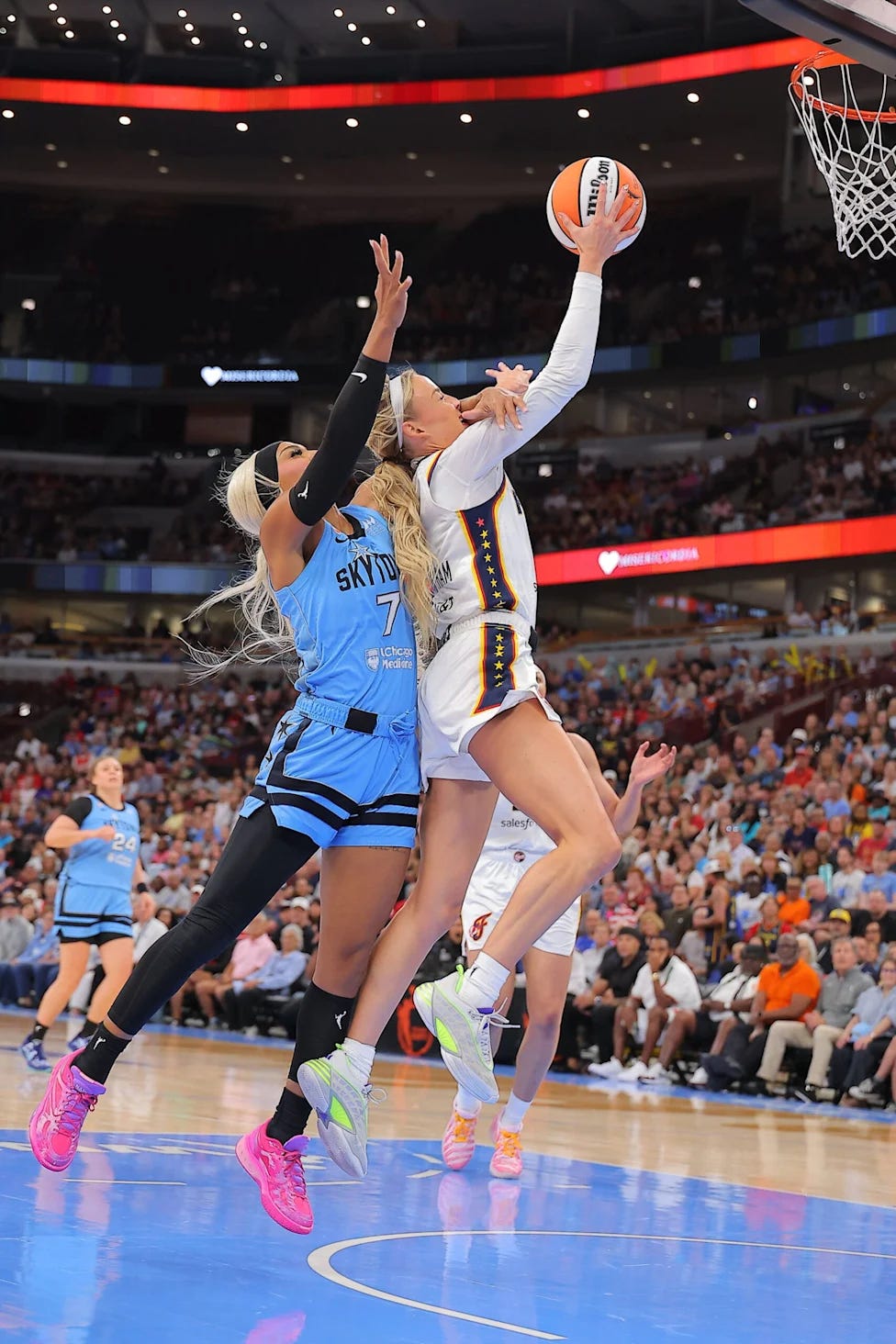
Cunningham drove to the basket and took a hard foul from DiJonai Carrington, who caught her high around the face and neck. After review, officials upgraded the foul to a Flagrant 2 and ejected Carrington. Cunningham had to be restrained—or perhaps allowed herself to be restrained—from retaliating.
Carrington soon posted that the episode reflected “white privilege.” Perhaps she believed Cunningham had escaped punishment for an earlier hard foul. Whatever the grievance, the officials got the important part right. At full speed, contact that hard and that high warrants an ejection.
And really, that should have been the end of it.
It wasn’t.
Social media attacks on Carrington became relentless. Cunningham’s defenders talked darkly about what might have happened had she not been restrained, particularly given her martial-arts background. This is about as serious as the kid on the playground warning everyone that he knows karate.
Then Florida’s attorney general entered the discussion, suggesting that such a foul could constitute assault if committed in his state—which is generally a reliable indication that a basketball foul has acquired more cultural significance than it deserves.
But perhaps this is simply what the WNBA has been asking for.
Sports have always sold more than athletic competition. They sell heroes and villains, grudges and rivalries, personalities and revenge. Muhammad Ali understood it. The NFL understands it. Professional wrestling built an industry around it. What has changed is the speed with which social media can create the mythology. One hard foul can become a national argument about race, politics, privilege and violence before the players have finished showering.
Cunningham is a useful player. Carrington is a good one. Neither needed this incident to define her career. Yet by the next morning, their collision had become an argument about American culture, complete with commentary from a state attorney general.
And from the league’s perspective, there is an uncomfortable truth in all of this.
People are watching.
For years, critics wondered why the WNBA couldn’t generate the obsessive attention surrounding men’s professional sports. Now fans choose sides, defend their heroes, despise their villains, scrutinize every foul and spend hours arguing about a single possession.
Well, this is what obsessive sports attention looks like.
The WNBA wanted attention. It has it.
The challenge now is making sure the basketball remains the reason for the drama, rather than merely the stage on which the drama is performed.