

The curious fate of public debate in our time is that intensity is now treated as extremism, and clarity as aggression.
Modern political media increasingly operates on a tacit agreement. Guests are invited to express views; hosts respond with mild skepticism; and the exchange concludes with everyone’s position intact. The purpose is not persuasion but performance. Civility, in this arrangement, does not mean mutual respect so much as mutual protection.
The interview once served a different role. It was a mechanism of scrutiny — a public form of cross-examination. A claim was offered; it was tested. Evidence was requested. Contradictions were explored. The point was not to embarrass the speaker but to clarify the statement. Accountability depended less on commentary afterward than on questioning in the moment.
That function has quietly weakened. A media system built on recurring guests, access, and audience loyalty rewards smoothness over substance. The successful interviewer maintains tone, avoids awkward silences, and preserves the relationship. The hardest question in television is the one that risks ending the interview.
Yet democratic accountability depends precisely on that risk. Courts operate through cross-examination. Legislative hearings depend on persistent inquiry. The public interview was meant to perform a similar civic task: not to provide a platform, but to make statements testable.
This is why journalists who press beyond the first deflection often appear disruptive. Persistence is easily mistaken for hostility. A question sounds aggressive when it cannot be comfortably answered.
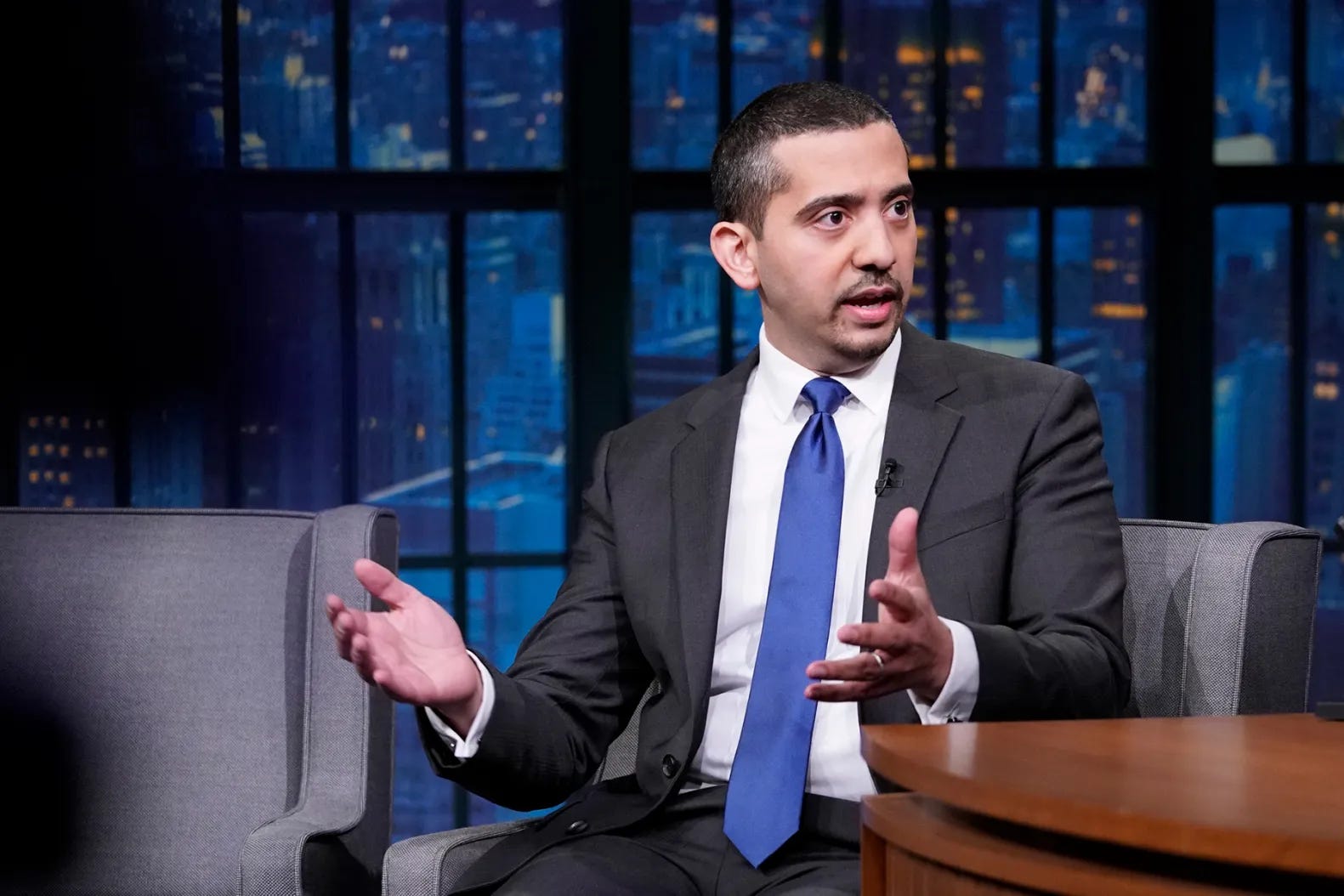
In recent years, one visible example of this style has been Mehdi Hasan. His interviews frequently follow statements to their logical conclusions. When a politician offers a talking point, he asks for evidence. When a spokesperson invokes national security, he asks what policy follows. When a guest contradicts earlier remarks, he quotes the prior words and asks for reconciliation. The discomfort that results is often described as incivility, yet it is closer to accountability.
Critics sometimes describe such interviewing as “bad faith.” Traditionally, bad faith in journalism means distortion, selective editing, or misrepresentation. Here the complaint is usually different: the guest’s prepared language does not survive sustained questioning. What troubles viewers is not manipulation but interruption — the interruption of a familiar ritual in which public figures speak and are not seriously challenged.
We have grown accustomed to equating moderation with tone. The calm voice seems reasonable; the insistent one partisan. Yet moderation is a matter of conclusions, not decibels. A soft voice can conceal an absurd claim, and a sharp question can illuminate a simple fact.
None of this makes any interviewer invariably correct. No journalist is. The value lies elsewhere: restoring a function largely forgotten in political broadcasting — the adversarial question asked in real time, in front of an audience, without the shelter of prepared messaging.
The criticism directed at such questioning therefore reveals less about any single host than about our expectations. We prefer discussion to resemble conversation, and conversation to resemble agreement. But public accountability has never depended on comfort. It depends on clarity.
The interview, once a mechanism of scrutiny, has become a ceremony of affirmation. When a journalist declines to participate in that ceremony, the departure feels jarring. Yet the role of the questioner is not to make guests comfortable; it is to make statements answerable.
In an age of messaging, inquiry inevitably sounds impolite.