

There is something about a true conference rivalry that resists logic. Form, records, even recent momentum can feel secondary. Some matchups carry their own history—and with it, their own patterns.
Oakton arrived at Westfield on Tuesday night looking like the more stable side. At 9–2 and unbeaten in district play, they have been one of the most balanced teams in Northern Virginia. Junior Liam Tutu continues to set the tone as a true box‑to‑box midfielder, and the return of forward Dev Agarwal has added another layer of attacking threat.
On paper, the edge belonged to Oakton.
But Westfield, for Oakton and for most others, has rarely been about paper. The Bulldogs have dominated the Concorde District over the past two seasons and, despite a 6‑4‑1 record, have played one of the most demanding schedules in the region. With junior striker Ethan O’Connor leading a deep and fluid attack, they remain one of the area’s most dangerous sides.
The intrigue was tactical.
First‑year head coach Drew Wiltse made a notable adjustment, moving senior midfielder Reyes Torres into central defense. It’s not often that a No. 10 lines up as a center back, but Torres brought more than defensive solidity. He offered composure—less a clearance‑first defender, more a player intent on starting moves. Westfield’s shape resembled a compact 4‑4‑2 box, narrowing central space and making buildup more deliberate. Chandresh Duraisamy stepped into midfield, a role that suited him more naturally than the back line.
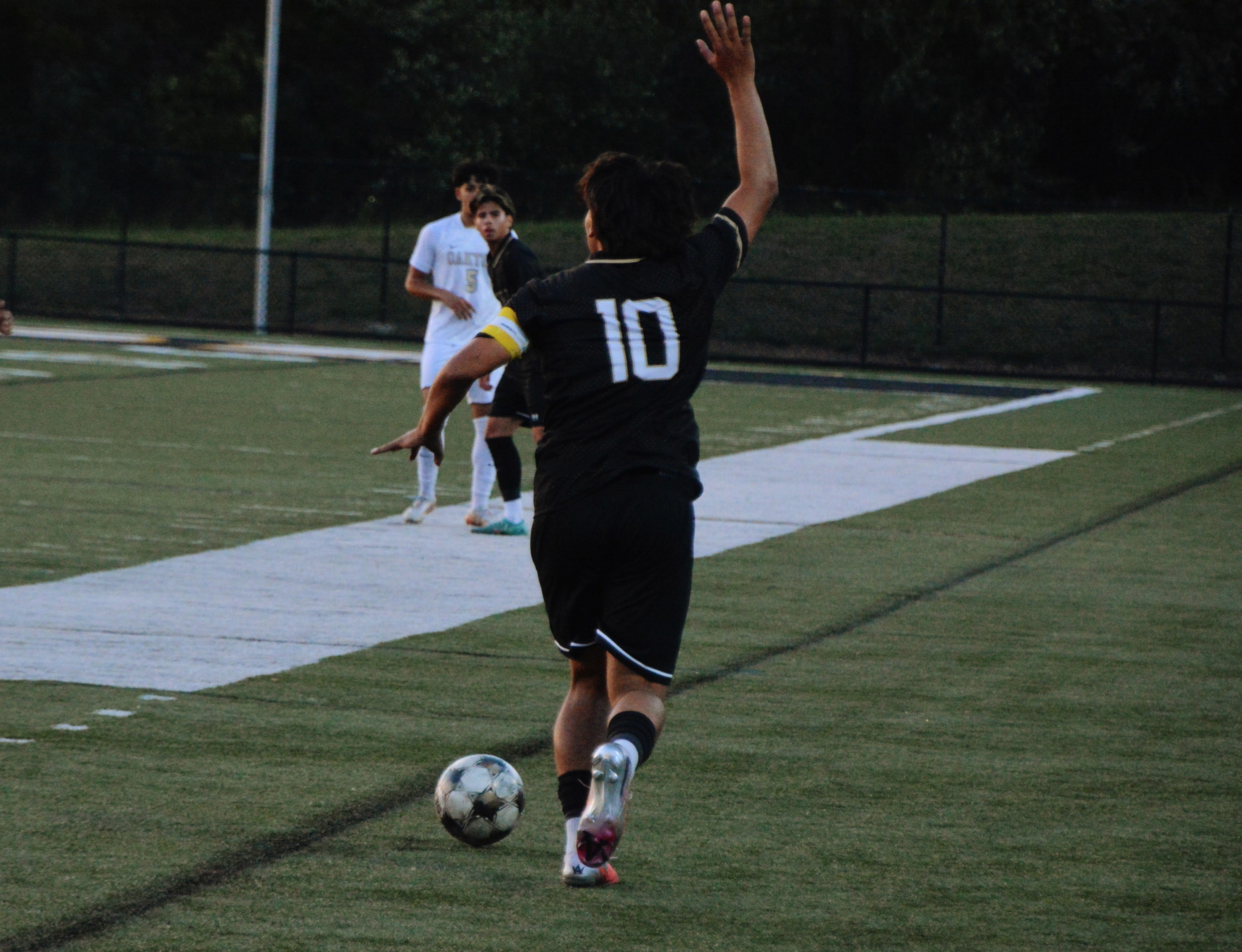
Oakton lined up in their customary 3‑4‑3, aiming for a numerical advantage in midfield. In theory, it was there. In practice, it never quite materialized.
The game settled into a cautious rhythm. Space was limited, mistakes were rare, and neither side seemed willing to open itself unnecessarily. Given both teams’ recent high‑scoring outings—Westfield’s 5–4 win over Centreville still fresh—this was something else entirely: controlled, measured, and increasingly tense.
Westfield began to assert itself late in the first half.
The breakthrough came, fittingly, from a set piece. After an Oakton clearance fell poorly, senior left back Elroe Takele reacted quickest, meeting it on the volley and driving a skidding finish into the near corner. The bounce made it awkward, the timing decisive—exactly the kind of goal the game suggested it would require.
From there, Westfield took control.
The second half never fully opened up. Oakton had moments, but not sustained pressure. Westfield, by contrast, looked increasingly comfortable—managing possession, limiting risk, and creating the better chances. O’Connor found space on a few occasions and might have added a second, while Joel Geraban was denied late by a save that kept the scoreline tighter than the flow of play suggested.
The margin remained 1–0.
It felt larger.
Part of that was tactical. Torres’ presence at the back gave Westfield both defensive stability and a cleaner first pass forward. Duraisamy added balance in midfield. As the game wore on, Westfield’s structure looked increasingly settled, while Oakton never quite found rhythm—disrupted in part by injuries, including Tutu’s departure.
But part of it was something less tangible.
There is form built over a season. And then there is form within a matchup.
Oakton entered with control of the district firmly within reach. Instead, Westfield once again proved a difficult problem to solve—organized, patient, and sharp at precisely the right moment.
And if history is any guide, that often matters more than the table suggests.