

Managers tend to hope for goals from midfield, even if they do not always plan for them. The primary responsibilities remain control, distribution, and defensive balance, but when midfielders contribute consistently in front of goal, it changes the complexion of a side. Over the course of a season, those goals accumulate in ways that often separate contenders from the rest.
Westfield’s 2–1 win at McLean offered a clear example.
In a fixture that has grown increasingly charged over the past three years, it was the Bulldogs’ midfield that provided the difference. Reyes Torres and Joel Geraban each found the far corner with well-constructed finishes, turning a tightly contested match in Westfield’s favor and securing a second significant road result in the same week.
This rivalry has not lacked for edge. Meetings between these two have featured high stakes, red cards, and the occasional spillover beyond the pitch—most memorably in 2024, when McLean players celebrated a knockout victory directly in front of Westfield supporters, collapsing the outer fence in the process. The competitive intensity has rarely been in doubt.
What stood out this time, though, was something different.
The match remained physical, as expected, particularly in midfield, where McLean’s Charlie Lannin and Luke Hamel imposed themselves with a series of firm challenges and constant movement. But the tone never tipped into disorder. Hard tackles were followed by helping hands, and there was a sense—subtle but noticeable—that both sides understood the line and chose not to cross it. Hamel escorting Torres off after a first-half knock was a small moment, but a telling one.
McLean, still adjusting after the graduation of a particularly strong senior class, relied heavily on that midfield core. Lannin and Hamel covered ground relentlessly, shaping both phases of play and giving structure to a younger side finding its way. Behind them, sophomore goalkeeper John Uzun delivered a composed performance, parrying a pair of powerful efforts from Ethan O’Connor and keeping McLean within reach.
The equalizer came through opportunism. A defensive miscue from Westfield allowed Joshua Barnes to capitalize, bringing the match level before halftime and reinforcing the sense that, for all Westfield’s control, the margins remained narrow.
Yet Westfield never appeared unsettled.
They continued to circulate the ball with patience, stretching play across McLean’s narrower pitch and waiting for the right moment rather than forcing one. When it came, it was characteristic: Geraban curling a left-footed effort into the far corner—precise rather than dramatic, but decisive all the same.
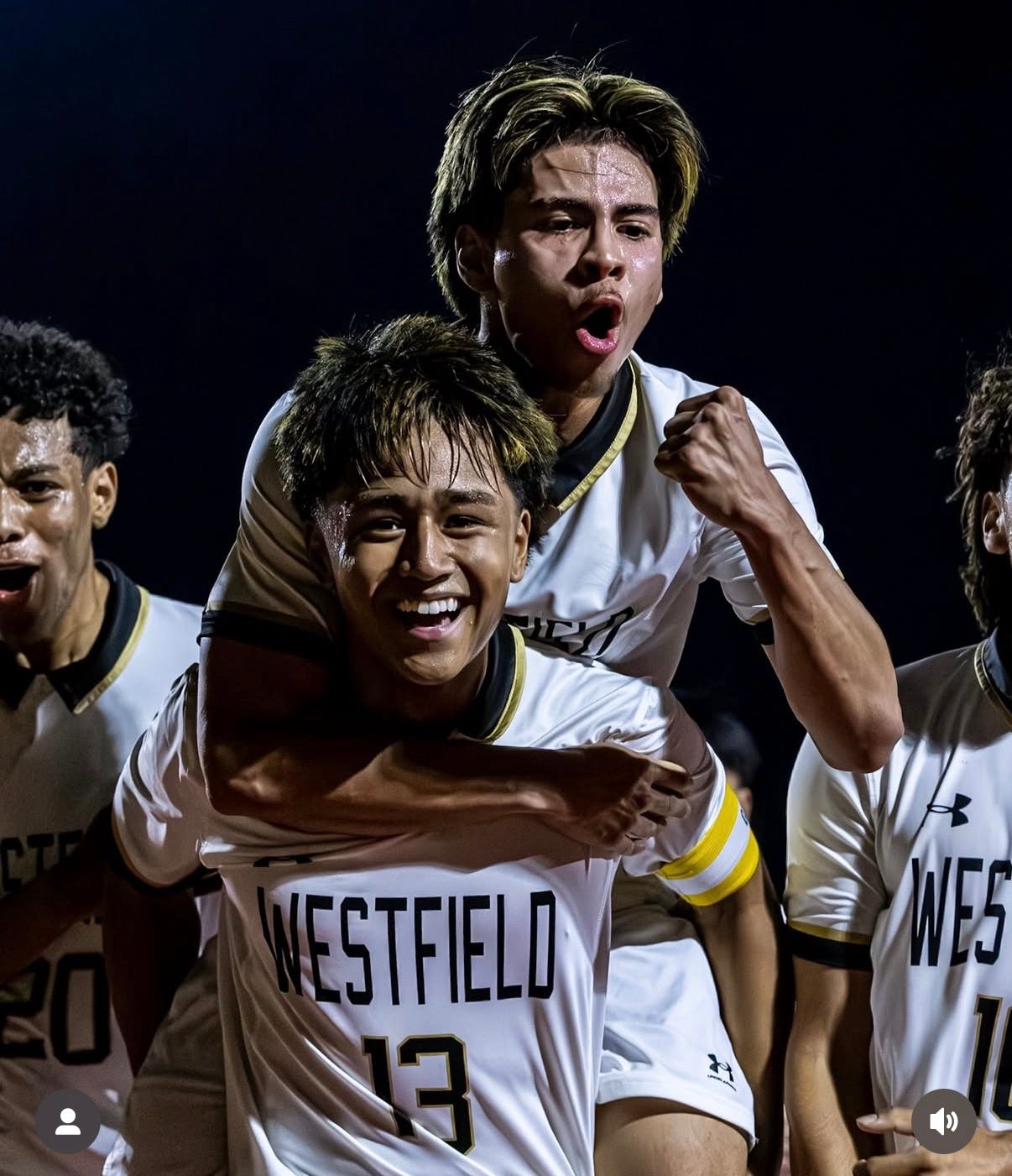
From there, the game settled into a familiar rhythm. McLean pressed, creating moments without quite sustaining pressure. Westfield responded in kind, generating chances of their own and managing the tempo with increasing assurance. The closing stages were competitive but not chaotic, and the result, when it arrived, felt proportionate to the balance of play.
There will be more to come from both sides.
McLean, anchored by an excellent midfield, will develop as the season progresses. Westfield, with its depth and composure, looks again like a side capable of contending at the highest level. But it is still early, and early-season matches often reveal as much about direction as they do about destination.
What lingered most, perhaps, was not simply the result, but the tone.
For a rivalry defined in recent years by its intensity, this was a match that suggested a degree of maturity. The edge remains. But for now, at least, it appears to have been tempered rather than sharpened.
photo cred: @shotsbyhenry on IG.