

As we examine our slide toward authoritarianism, there is a temptation to treat it as fate. Trump, after all, is a particular kind of figure—charismatic to some, ruthless, impulsive, driven by grievance and loyalty rather than restraint. One begins to wonder whether this was always going to happen.
There are arguments for inevitability. A country born with slavery embedded in its economy, followed by Jim Crow and long-standing exclusion, always possessed the machinery to brutalize and marginalize. Yet that observation cuts two ways. Nearly every modern democracy emerged from histories of racism, patriarchy, and inequality. What distinguished the last seventy years was not moral purity, but effort—slow, imperfect, and contested movement toward inclusion and institutional restraint.
Something else changed along the way.
The assault on government itself became fashionable. Reagan’s declaration that government was the problem was not authoritarian in intent, but it seeded a suspicion of public institutions that later generations would weaponize. Leaders increasingly appointed officials hostile to the missions of the agencies they ran—a precursor to today’s performative sabotage.
In the late 1980s and 1990s, media underwent a quieter but decisive transformation. Rules that once separated news from advocacy were loosened. Information became persuasion. Outrage became profitable. The idea that citizens should be informed gave way to the idea that they should be mobilized.
Then politics hardened. Rush Limbaugh and Newt Gingrich did not merely attack policies; they attacked legitimacy. The impeachment of a president over private misconduct mattered less than the precedent it set: politics as permanent moral warfare.
The Bush–Cheney years completed another turn. Executive power expanded. Foreign policy became unmoored from prudence. Conflicts of interest were tolerated so long as they were effective. Accountability became optional.
Trump did not invent this trajectory.
He exposed it.
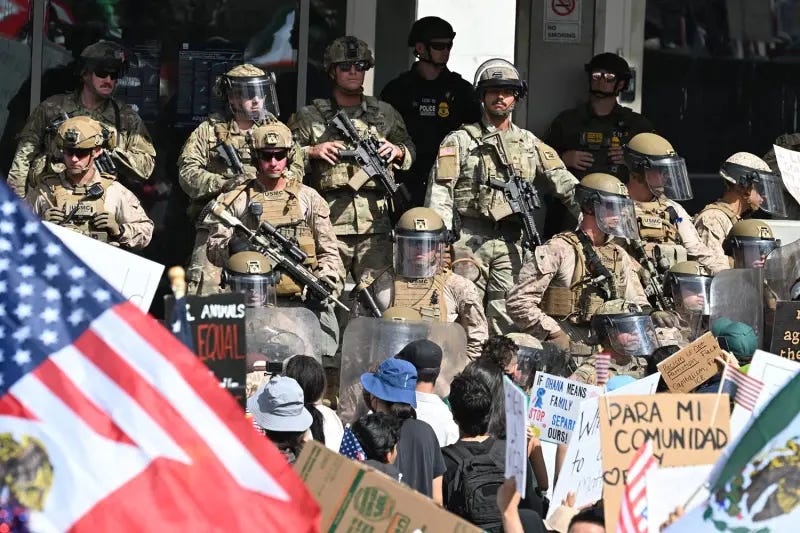
Mocking military service. Boasting of impunity. Recorded contempt for women. Indifference to a pandemic. Disdain for election law. Encouragement of an insurrection. And now what once would have shocked—masked agents, self-dealing, loyalty tests, attacks on institutions, hostility toward minorities, threatening NATO allies, and the casual defense of violence committed in his name.
Still, inevitability is the wrong word.
Democracy is not a condition; it is a practice. The Weimar Republic had an excellent constitution. What it lacked was sufficient civic commitment to defend it. Systems matter, but they are not self-executing.
The United States has particular vulnerabilities: a Senate that is profoundly unrepresentative; an Electoral College that allows minority rule; a two-party system that rewards loyalty over conscience; a media environment designed to inflame rather than inform; and a judicial appointment process that relies on good faith long after good faith has eroded.
These are not fatal flaws.
They are stress fractures.
Authoritarianism is not destiny. It requires alignment—a charismatic figure, institutional weakness, civic exhaustion, and a public willing, out of fear or resentment, to trade responsibility for reassurance. The republic began, after all, with a man who was offered something like a lifetime throne and chose instead to relinquish power and return to Mount Vernon—setting a precedent not of innocence, but of restraint.
It can happen here.
But it did not have to.
And it does not have to continue.
Democratic societies survive not because they are innocent, but because enough people remain willing to do the unglamorous work of restraint—accepting loss, defending institutions they did not design, and choosing responsibility over purity.
Democracy is effort, renewed daily.
When that effort falters, strongmen appear inevitable.
When it resumes, they do not.
That is not optimism.
It is history, properly read.