

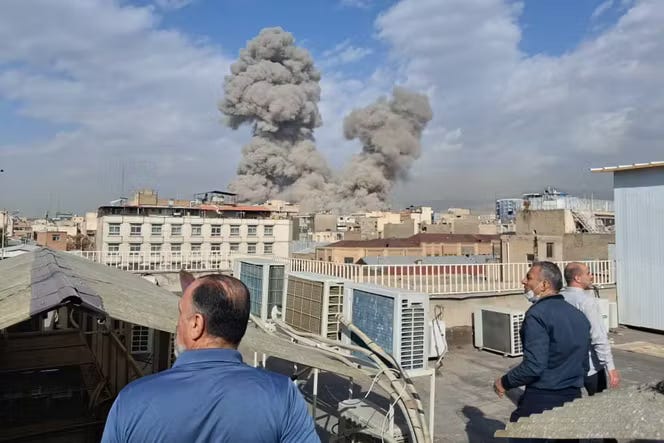
This weekend President Trump informed Americans, through a social media video, that Americans had been killed and that more casualties could follow. The message was direct. The explanation was not.
There has been no sustained, public effort to persuade Congress, the United Nations, or the American people why this conflict was necessary, why it could not be avoided, or what objective defines success. War appears to have begun without the architecture of explanation that constitutional government requires.
Military force may at times be justified. But justification is never self-evident. It must be articulated before blood is shed, not afterward.
Entering a conflict with Iran demands more than resolve. It requires deep institutional knowledge — of proxy networks, retaliation doctrine, regional alliances, and the dynamics of escalation. Iran is not a conventional superpower, but it has demonstrated sophistication in asymmetric retaliation, cyber operations, and targeted violence. Engaging such a state requires clarity about limits as much as strength in action.
No such framework has been publicly presented. No clear statement of aims. No defined end state. No visible coalition-building. No articulated doctrine beyond determination.
The Constitution did not vest the power of war in one office for precisely this reason. War requires deliberation not because debate is elegant, but because bloodshed is permanent. Even when speed is required, seriousness must follow.
American soldiers will serve with courage. They always do. But courage does not substitute for strategy. Sacrifice does not excuse vagueness.
The burden of war is not borne only by those who fight. It is borne by a republic that must decide whether force is necessary, proportional, and lawful. That decision cannot be implied; it must be made openly.
War is sometimes unavoidable. It is never casual.
If Americans are to endure loss, they deserve clarity before conflict — not explanation after it has begun.
Straight up, Julian. This war was ill-conceived at best, and now it’s up to Congress to end it. But now that Trump has loosed the dogs of war in a volatile region, how long the bloodshed will last and how it escalates may be out of our control.