

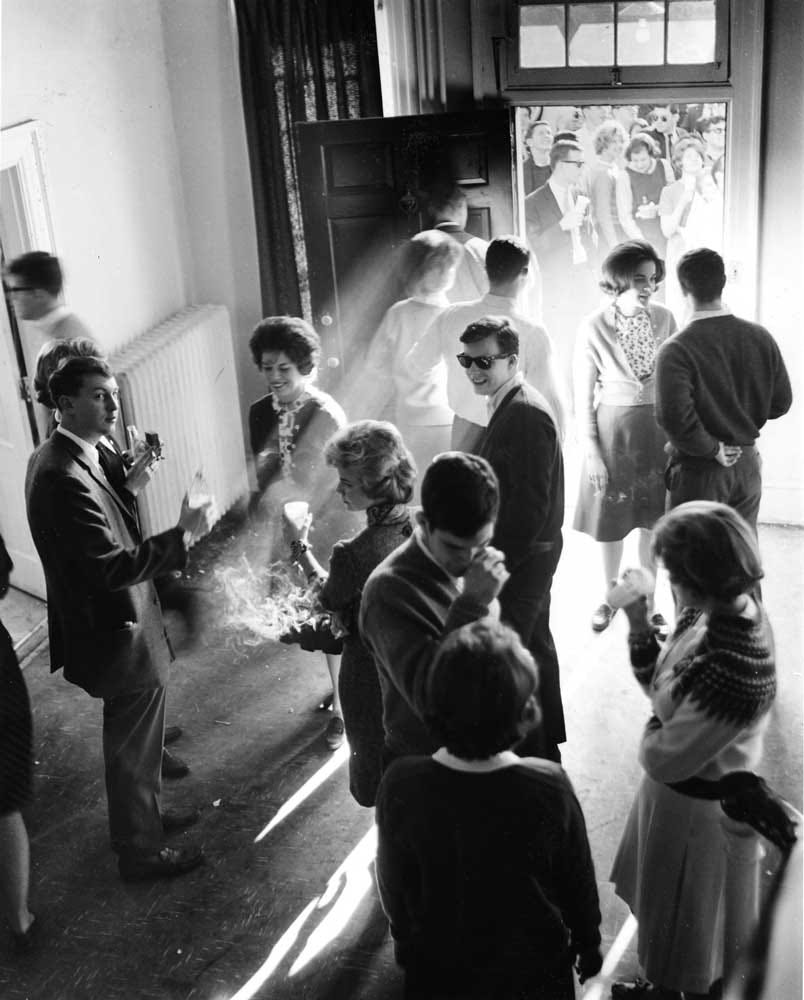
I learned something important about a republic not from a book, but from a party.
I attended the University of Virginia as part of its early generations of Black students, when the institution was still learning what integration meant in practice. The classrooms were serious and often welcoming. The social world changed more slowly. At fraternity parties that defined much of student life, I often felt not hostility exactly, but distance — a polite awareness that I was present without quite belonging. No rule excluded me, yet acceptance did not naturally follow admission.
I had understood segregation as law and signage. There I learned the difference between law and habit. Law can open a door; only habit determines whether a person is welcomed through it.
I found community, of course, among Black students on Grounds, and that space provided both comfort and clarity. It did not make the university smaller; it made my place within it intelligible. Only later did I appreciate how recent the change was. The same university that had only recently been closed to students like me led to major law firms — professional spaces my father, born only thirty years earlier, could not easily have entered and in some places could not comfortably have visited. The republic had not changed in theory. In practice, it had. And practice is where citizens live.
What I was seeing at the university was not unique to a campus. The university had been founded in a slave society, shaped by traditions older than the country itself, and yet it was adjusting — unevenly, sometimes awkwardly — to a broader definition of who belonged. In that way the university was less an exception than a smaller version of the state around it.
Virginia offers a clear view of how a republic works when it is neither idealized nor dismissed. Many defining moments of American history pass through the Commonwealth not by accident but by continuity. The same state that helped write the language of liberty also sustained slavery and later led a rebellion against the nation it had helped design. Its history is less a straight line than an argument carried across generations.
In time it elected the first Black governor in the modern South and twice supported Barack Obama. The circle of citizenship widened while the institutions remained. The buildings, traditions, and rituals stayed largely unchanged even as more people could inhabit them fully. What altered was not the structure but participation.
A republic survives not because it becomes perfect, but because people who were once outside its institutions gradually find a place within them — and those institutions are strong enough to absorb that change without losing themselves.
An insightful commentary, JB. Nice. In a lot of ways the Marine Corps was similar.