

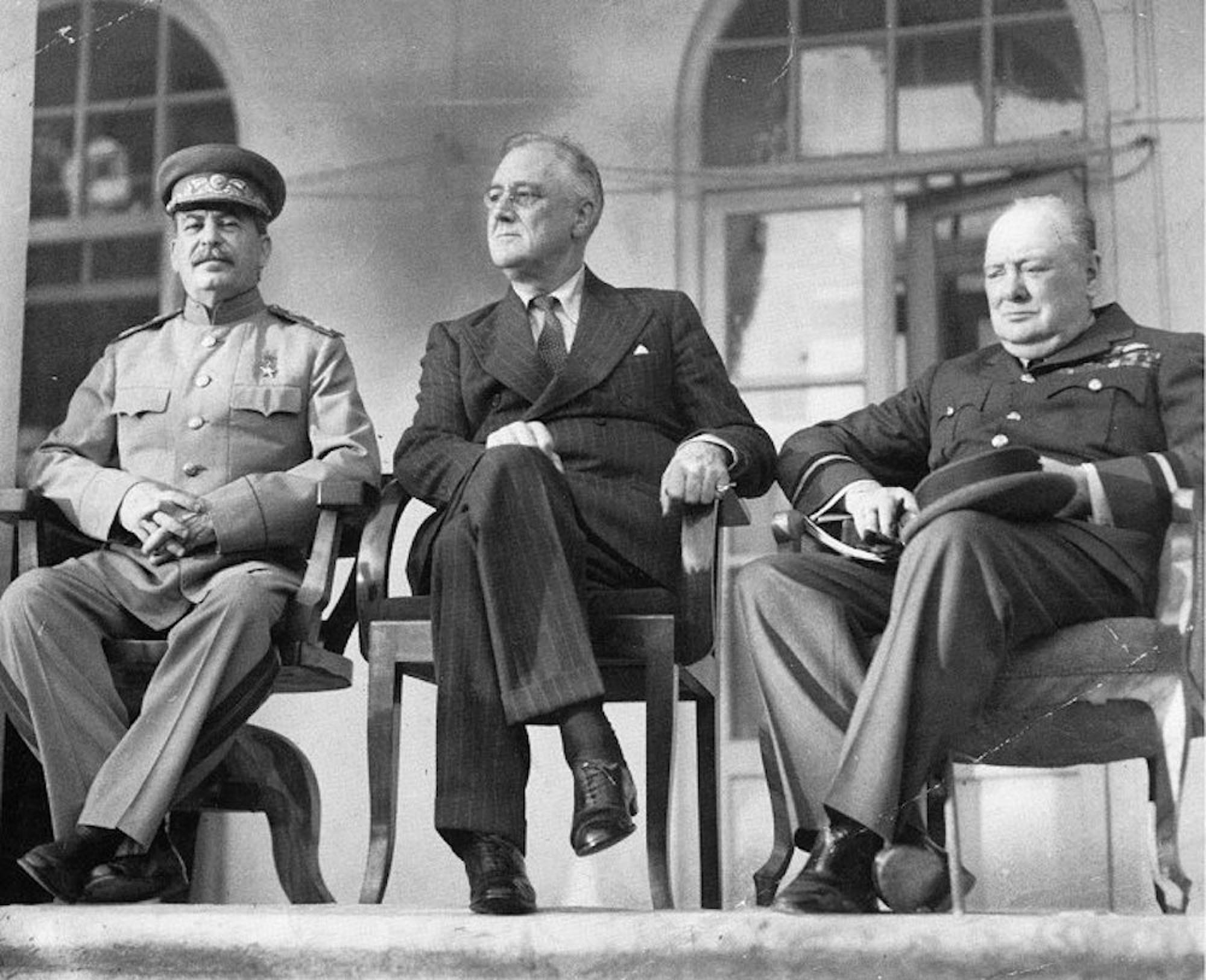
Late in World War II, the Allied powers agreed that Nazi Germany would be offered no negotiated settlement—only unconditional surrender. The decision served a purpose. It reassured the Soviet Union that the Western allies would not seek a separate peace in the west while the Red Army bore the brunt of the war in the east. Whatever its moral clarity, the policy ensured the war would end only with Germany’s total defeat.
President Trump this week suggested applying a similar principle to Iran: nothing short of unconditional surrender.
The comparison is dramatic. Whether it is also strategic is another question.
Iran today is not Nazi Germany in 1945. It is a regional power with a complicated internal structure, a layered succession plan, and decades of accumulated distrust toward the United States. That distrust has not arisen from one moment but from many—sanctions regimes, shifting diplomatic positions, and the collapse of the 2015 nuclear agreement after the United States withdrew from it. Negotiations had only recently resumed when this conflict began.
In such an environment, credibility becomes the central currency of diplomacy. A demand for unconditional surrender offers an adversary little incentive to compromise, because surrender implies that no concession will alter the outcome.
The strategic danger is obvious. If a government believes that negotiation cannot improve its position, it may conclude that resistance—however costly—is the only rational option.
Iran’s leadership may well calculate exactly that. The country has endured sanctions, isolation, and internal pressure for decades. Its political system was built in part to survive external threats. A regime that believes it faces elimination may accept extraordinary levels of punishment while attempting to impose costs of its own.
Wars often continue not because victory is likely, but because retreat appears worse.
This is the paradox of absolute demands. They clarify moral intent, but they narrow political options. A state that is told it has nothing to gain from surrender may decide it has nothing left to lose by fighting.
History suggests that conflicts end not when one side announces its conditions, but when both sides perceive some path—however narrow—away from catastrophe.
The challenge of statecraft is therefore not simply to declare the terms of victory, but to ensure that an adversary can still imagine a reason to stop fighting.
Without that possibility, wars tend to run their course the hard way.