

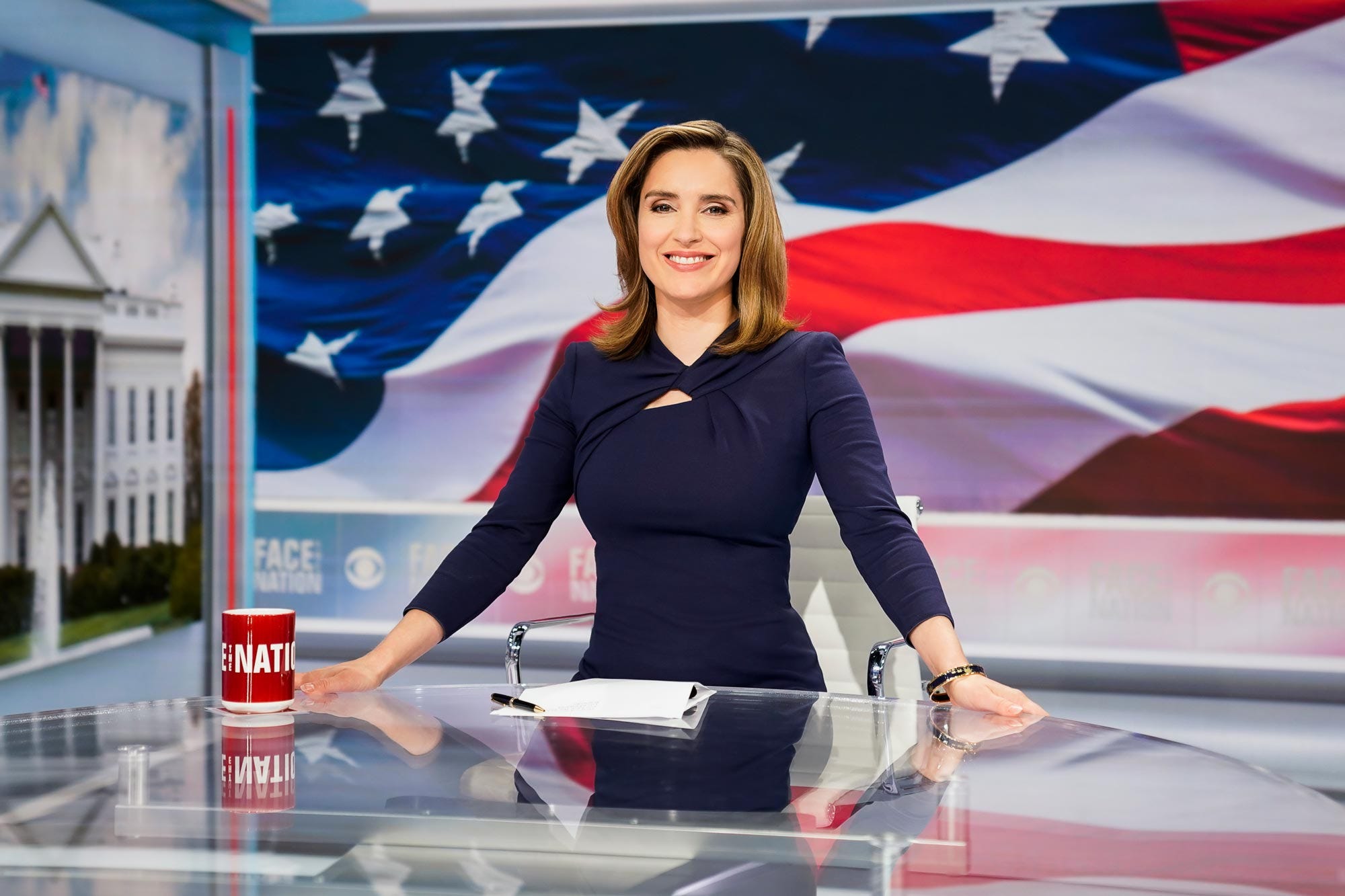
Last week, Donald Trump suggested that the United States might strike Iran’s Kharg Island oil facility “for fun.” When Iranian Foreign Minister Abbas Araghchi was asked by Margaret Brennan about the possibility of negotiations, he responded with a question of his own: how can one negotiate with a country that speaks of war in such terms? Brennan, largely unmoved, returned to the practical necessity of negotiation given the stakes for Iran.
The exchange was revealing.
It has become a familiar feature of American political life that statements by Donald Trump are treated as provisional—rhetorical, interpretive, not entirely meant. His words are filtered through a second layer of analysis—what he “really” intends, what should be taken seriously, what can be dismissed as performance. Foreign officials, however, are not afforded that luxury. Their words are treated as policy.
This creates a peculiar asymmetry.
In effect, an American president may speak loosely while others are expected to respond precisely. The result is not merely confusion, but distortion. Language ceases to function as a reliable guide to intent. It becomes instead a field of interpretation, where meaning is assigned after the fact.
Yet for those listening abroad, the words themselves are the policy.
Araghchi’s response, whatever one thinks of Iran’s government, followed a simple logic. If threats are framed as casual or even recreational, then the credibility of negotiation is necessarily weakened. Diplomacy depends not only on interests, but on the seriousness with which those interests are expressed.
This week provided another example. Trump remarked that the United States might “take” Cuba. No formal justification accompanied the statement—no reference to an imminent threat, no invocation of international law, no articulated objective beyond the suggestion itself. The remark passed quickly through the news cycle, treated less as doctrine than as another instance of rhetorical improvisation.
But words of this kind do not travel lightly.
Executive language carries consequences beyond domestic interpretation. It is heard in other capitals, translated into strategic calculations, and incorporated into decisions made far from the context in which it was spoken. What may be intended as offhand can be received as deliberate—and acted upon accordingly.
A republic depends, in part, on the discipline of its language.
When leaders speak, their words are not merely expressions; they are signals. They establish expectations, define boundaries, and shape the behavior of others. If those signals become inconsistent, the system built around them begins to weaken. Allies grow uncertain. Adversaries test assumptions. Miscalculation becomes more likely.
The responsibility therefore runs in two directions.
Leaders must speak with an awareness that their words carry weight beyond their immediate audience. And those who question them—journalists, citizens, officials—must resist the temptation to normalize imprecision simply because it has become familiar.
To treat language casually at the highest levels of government is not a stylistic choice.
It is a strategic choice.
And it is a choice whose consequences are rarely confined to the moment in which the words are spoken.