

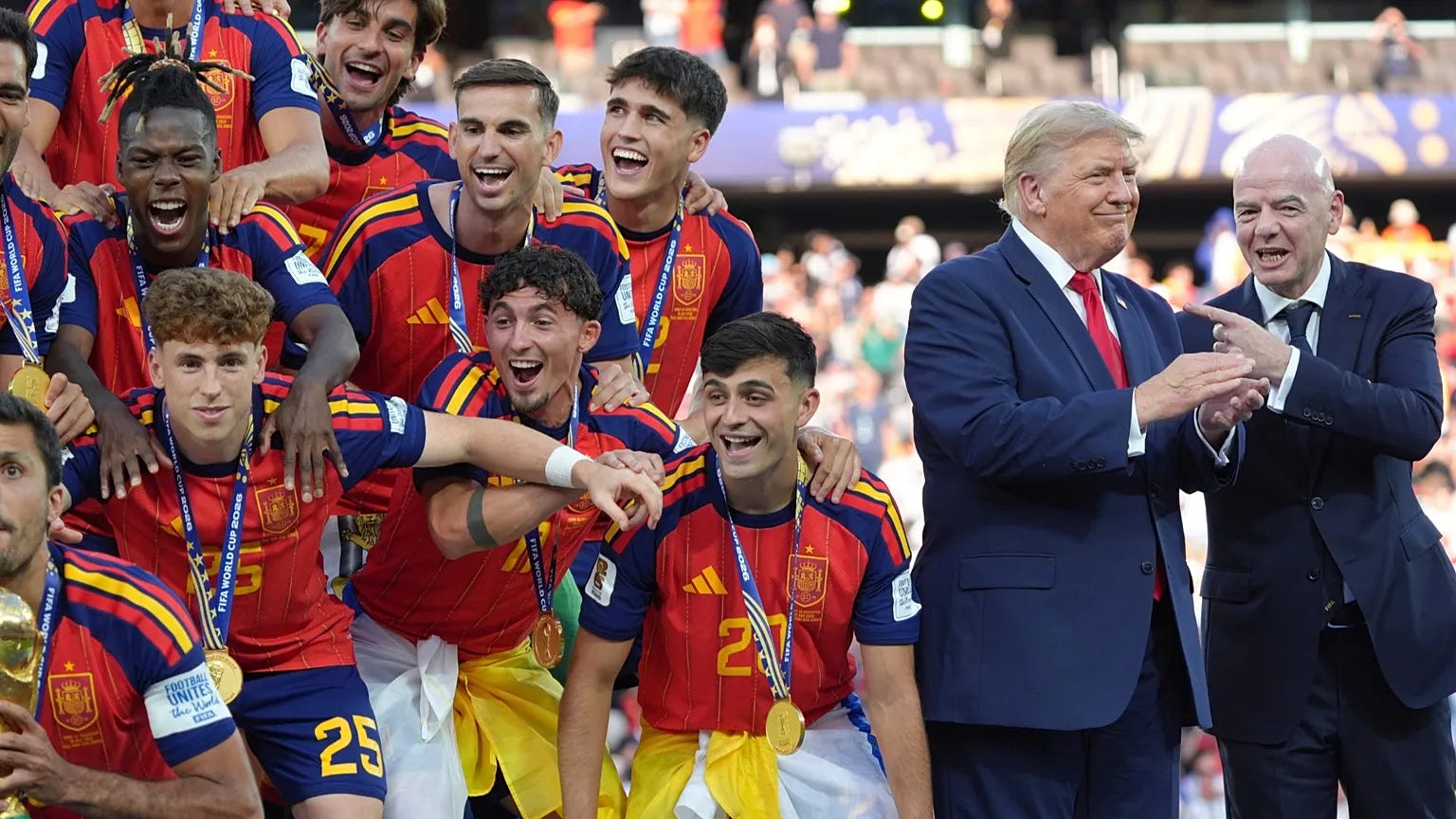
When President Trump wandered into Spain’s team celebration at the World Cup, it was more than his instinct to occupy the spotlight or drain the oxygen from any room he enters. It reflected something deeper: a fascination with people who achieve victory in ways fundamentally different from his own.
Trump has enjoyed undeniable success, but not the kind associated with sustained operational excellence. His failures are well known—Atlantic City, the USFL, Trump Steaks, Trump University, multiple bankruptcies, and a succession of ventures that flared brightly before fading. His greatest successes have come elsewhere: branding buildings and resorts, transforming himself into a television celebrity through The Apprentice, and converting political power into extraordinary personal wealth through licensing, cryptocurrency, stock ventures, and other opportunities. His career has depended less on building better products or better organizations than on branding, publicity, leverage, litigation, political influence, and an extraordinary instinct for commanding attention. It is the old American habit of winning by influence rather than by craft.
Spain’s players had no such advantages. They had to win the match. No persuasion, no deal‑making, no procedural improvisation. They had to concentrate, stay healthy, defend, finish chances, endure inconsistent officiating, and perform under suffocating heat. Elite sport is one of the few arenas where influence eventually gives way to merit. When the final whistle blows, there is no negotiation. Trump appears genuinely drawn to people who prevail under those conditions because their victories are earned in a way that cannot be brokered, branded, or bargained into existence.
He has long displayed admiration for elite athletes, even those from communities that parts of his political coalition often regard with suspicion. He recognizes greatness when he sees it. And in moments like Spain’s celebration, he cannot resist moving toward it—drawn by accomplishments that no amount of influence, wealth, publicity, or political power can manufacture.