

When the United States reached the atomic threshold before the Axis powers, President Harry S. Truman was left with a decision that has resisted tidy moral classification ever since: whether to use a weapon whose consequences could not be fully measured, but whose immediate effects would be unmistakable.
There exist, even in war, certain rules—imperfect, inconsistently applied, and at times honored more in language than in practice. They resemble, in form if not in force, the rules observed in less formal conflicts: attempts, however strained, to limit what is otherwise without limit. From Sherman’s March to the Sea to the bombing of Dresden, and in more recent conflicts in Gaza and Ukraine, the line between military necessity and civilian consequence has never been entirely stable.
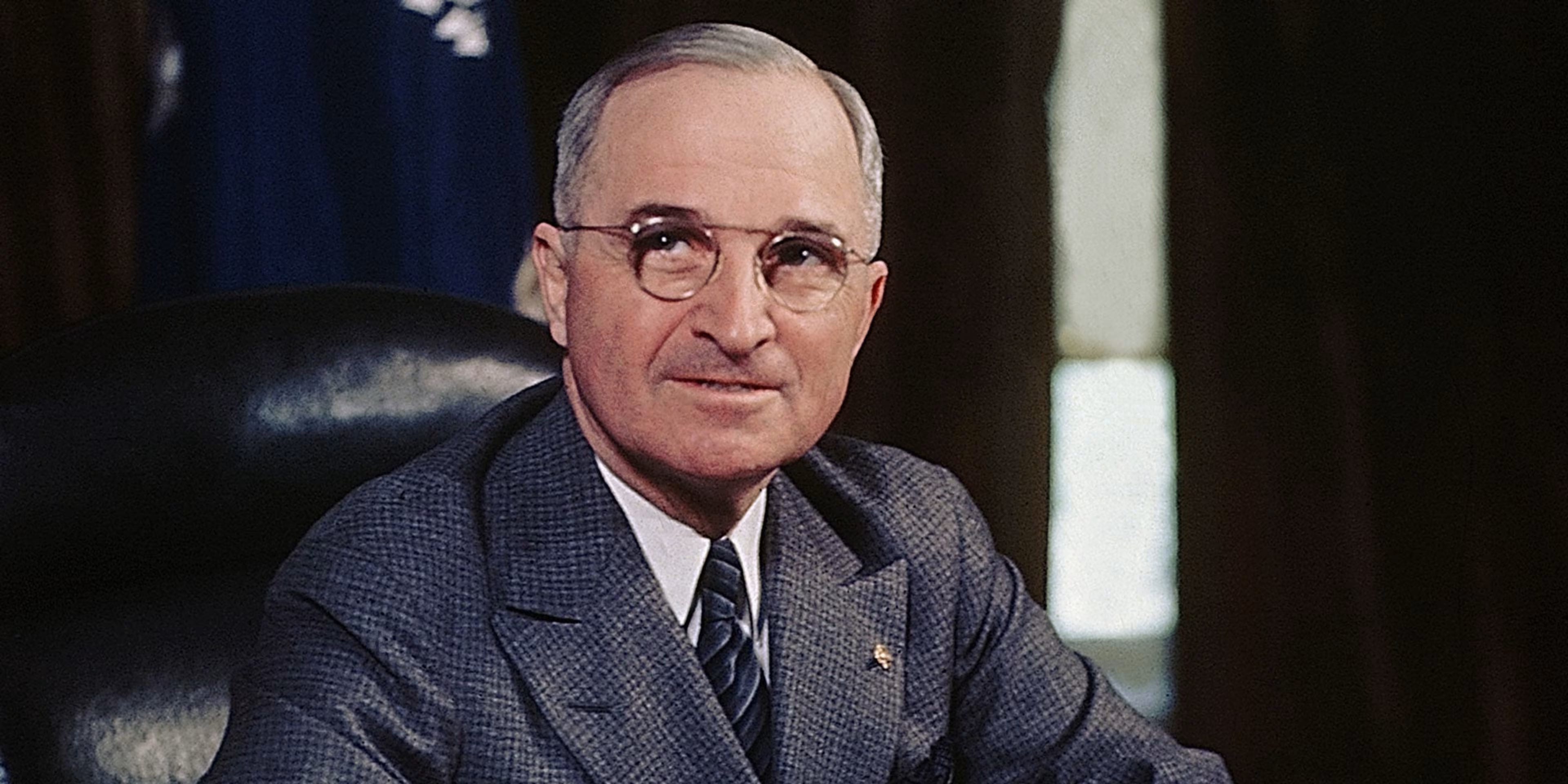
Truman concluded that the use of atomic weapons against Hiroshima and Nagasaki would shorten the war and reduce American casualties likely to accompany an invasion of the Japanese mainland. There was also, undeniably, a context: the attack on Pearl Harbor had brought the United States fully into the conflict. Whether these considerations justify the decision remains debated. That they framed it is beyond dispute.
Today, there are suggestions—once unthinkable, now increasingly audible—that nuclear weapons are not entirely off the table in a potential conflict with Iran. This is not merely escalation. It is the consideration of crossing a threshold that, once crossed, does not easily reestablish itself. It alters not only what is done, but what is thereafter considered permissible.
The rationale is difficult to sustain. The United States has not suffered losses comparable to those that framed Truman’s decision. The arguments offered—Iran’s internal repression, its nuclear ambitions—may be serious, but they do not present the same immediacy of existential threat. To invoke nuclear weapons in such a context would not be an extension of precedent, but a departure from it.
It is worth noting that even Vladimir Putin, despite significant losses in Ukraine, has thus far refrained from crossing this particular line. That restraint, however calculated, underscores the gravity of the threshold itself.
The more immediate concern is procedural as much as strategic. The current conflict with Iran has unfolded with limited public deliberation. Congress has had little opportunity to weigh in meaningfully. Nor has there been sustained engagement with the broader international community—through the United Nations or allied frameworks—that might clarify both the necessity of the conflict and the limits within which it is to be conducted. Objectives have been stated only in general terms, and the definition of success remains indistinct.
In such an environment, the introduction of nuclear considerations is not merely premature—it is destabilizing.
There has been discussion of targeting infrastructure, and there have been reciprocal threats. Such exchanges are not new. What is new is the casual proximity of nuclear language to them.
If there is to be a discussion of nuclear weapons—and it appears there is—it must be elevated. Not in volume, but in seriousness. These are decisions that require clarity of purpose, articulation of objectives, and an understanding of consequences that extend beyond the immediate.
War has always tested the boundaries of judgment. Nuclear weapons eliminate them.
And once eliminated, they are not easily restored.