

The world is watching us.
When President Trump and Secretary Hegseth speak of destroying the infrastructure of Iran, the world listens—not only to the substance, but to the manner.
When American officials speak casually of acquiring Greenland, or of Cuba as a possibility, or describe Gaza in terms of beachfront, the world hears something beyond policy.
It hears disposition.
And when masked agents operate in American cities—when detention expands, when the language of sacrifice turns toward sustaining foreign conflict—the world does not merely observe.
It takes measure.
Nations, like individuals, are judged not only by their strength, but by how they carry it.
There was a time when American leadership understood this instinctively. During the Second World War, Dwight D. Eisenhower commanded not only armies, but alliances. He managed ego and ambition—Bernard Montgomery, brilliant and difficult; Charles de Gaulle, proud and exacting—not by force of personality alone, but by patience, consultation, and respect.
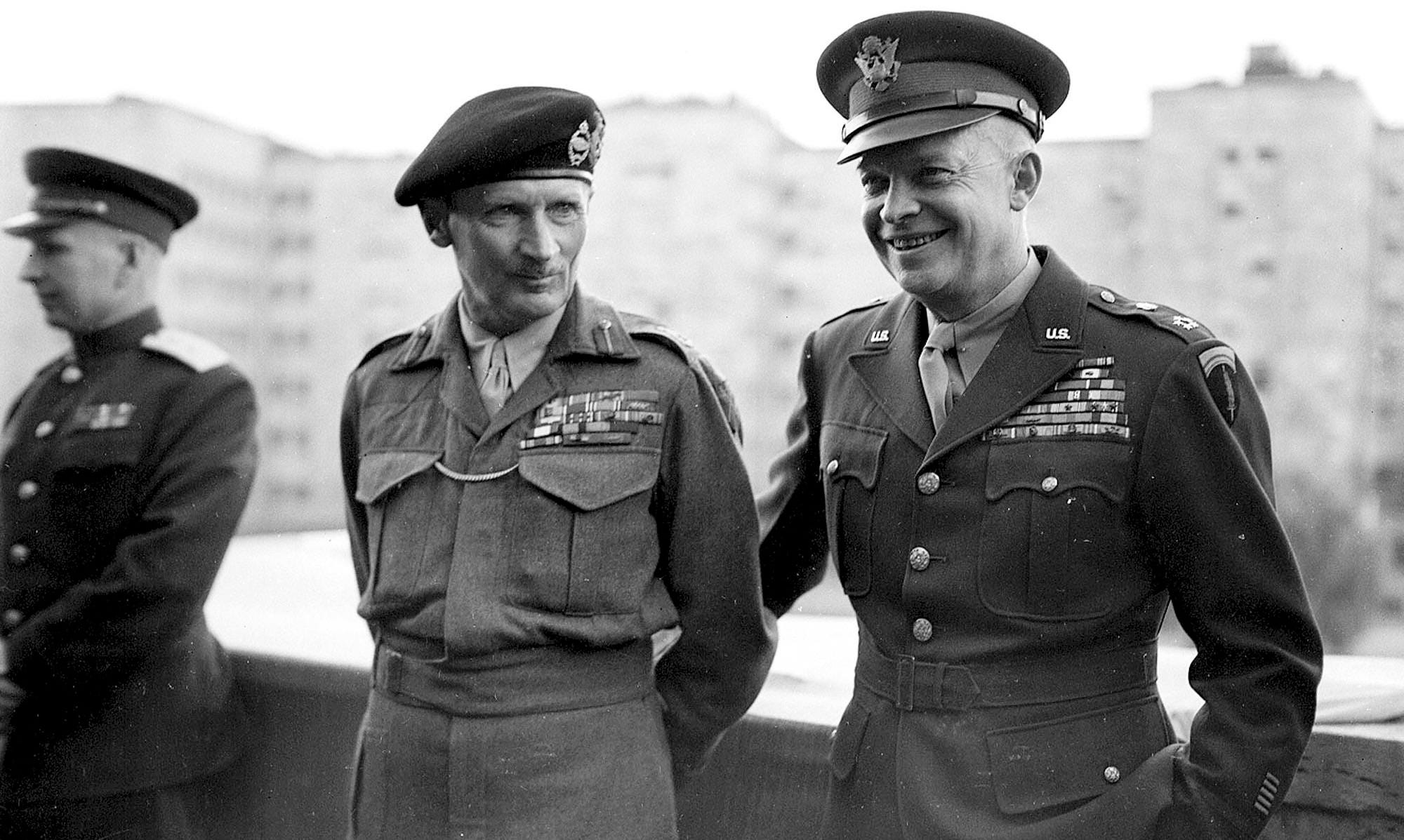
He understood that coalition warfare required something more than tactical brilliance.
It required trust.
It is not incidental that George S. Patton, for all his gifts, was not entrusted with that role.
Nor did Franklin D. Roosevelt approach the world as a stage for American dominance alone. In his dealings with Winston Churchill and Joseph Stalin, there was recognition—of burden, of sacrifice, of the hard realities each nation faced. American power was evident; it did not require constant declaration.
At home, too, the country moved—unevenly, imperfectly—toward coherence. Institutions functioned. The military, over time, integrated. The United States, even amid conflict, aspired to reflect the principles it claimed to defend.
That example carried weight.
Today, the world again finds itself making choices—and it watches American leadership with increasing care. Allies continue to seek partnership, but with greater independence of judgment.
France navigates the Strait of Hormuz on its own terms. Japan explores energy arrangements with Russia, weighing necessity against alignment. Saudi Arabia engages where it finds advantage, including with Ukraine.
These are not acts of defiance.
They are acts of adaptation.
The question is not whether the United States remains powerful. It does.
The question is whether it remains predictable—and therefore reliable.
When predictability erodes, influence does not disappear—it fragments.
In such an environment, perception is not cosmetic. It is structural. If American leadership appears erratic—if it unsettles not only adversaries but allies, and even its own citizens—then the burden shifts elsewhere. Nations hedge. Institutions strain. Assumptions loosen.
And yet, the American system has always rested on more than its executive voice.
Congress debates. Sometimes imperfectly, but publicly. Journalists inquire, often at real cost. Citizens assemble, protest, insist. The Constitution—remarkably durable—continues to operate, not flawlessly, but persistently.
These are not signs of weakness.
They are sources of strength.
If the world is uncertain how to read America in this moment, it is because it sees more than one version of it at once: the declarative and the deliberative, the impulsive and the institutional.
The task is not to persuade the world with rhetoric.
It is to demonstrate, through conduct, which version will endure.
The world is watching.
It will not be persuaded by what we say.
Only by what we show.