

It is often said that the World Cup mirrors life. Every four years, cultures, players, and styles converge in one place to decide who plays the world’s favorite game best. But in 2026, the world did more than watch football. It watched America—our enthusiasm, our contradictions, and a president who is never far from the frame.
The tournament began with a message to visiting fans that was unusually blunt: some travelers were welcome, others were not, and no one should linger too long. It is difficult to recall another host nation adopting that approach. Mexico and Canada, by contrast, were models of hospitality.
Iran qualified and, despite the war, played admirably. After Egypt’s victory, its coach said they had won “on behalf of the Iranian team.” Yet Iranian players—many of whom live abroad and have no demonstrated connection to the government—found their lives made inconvenient. Some were asked to leave the country immediately after matches. Spain’s government, which has asserted its sovereignty by declining to support the war effort, behaved with dignity. Its players were gracious even as President Trump inserted himself awkwardly into the winner’s ceremony.
He also intervened in the rules of the game, claiming to contact FIFA president Gianni Infantino after U.S. leading scorer Balogun received a red card and became ineligible for the Round of 16 match against Belgium. Trump has never been shy about contacting judges, justices, or attorneys general. He follows the rules that suit him.
And so, at the end, he placed himself at the center of the medal ceremony—unlike the presidents of Mexico and Canada, who understood the moment belonged to the players. When Spain’s captain Modri gently redirected him so the team could celebrate, Trump lingered at the edge of the frame, obliging Spain and FIFA to edit him out of official photos.
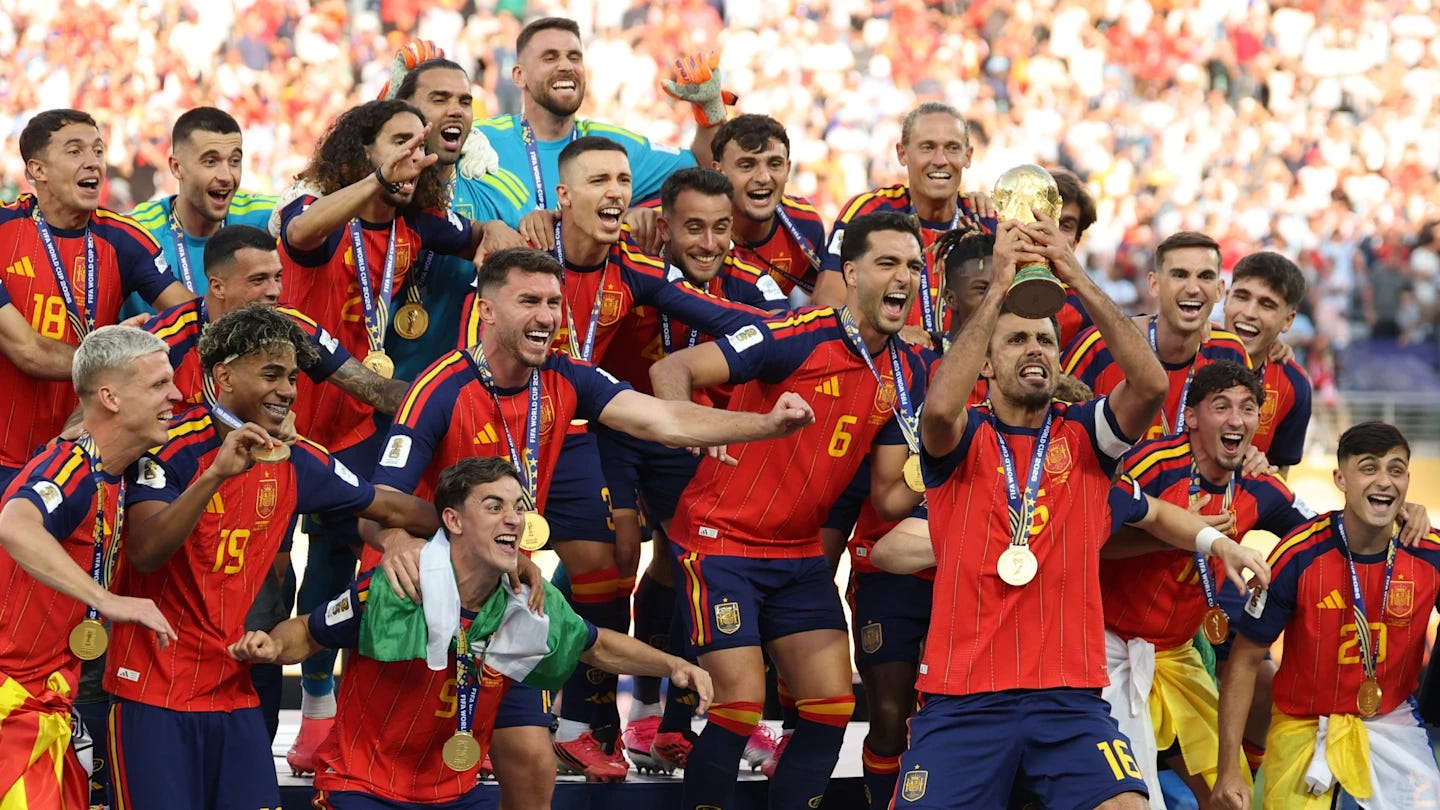
He later praised the World Cup extravagantly. But the World Cup requires no praise. It is the largest sporting event on earth, and soccer is growing rapidly in the United States. The question is not whether the event was great—it always is—but whether he improved it. Intervening in officiating, unsettling guests, and disrupting the closing ceremony do not qualify. The tournament succeeded in spite of him.
This is the pattern of the Trump presidency. We have a formidable military—one of the strongest in the world—and it continues to perform well. But firing senior officers, lecturing them about their weight, and involving them in a conflict without a clear strategic end does not strengthen it. We don’t need the president to brag about the economy either; adding tariffs, manufacturing uncertainty, and terrorizing parts of the low‑cost workforce simply means the economy is succeeding in spite of the harm being done. The resilience of American institutions does not elevate the person who meddles with them.
If the world did not already understand this, the 2026 World Cup offered a blunt reminder.