

Karoline Leavitt announced this week that she will step down as White House press secretary at the end of the month. There’s nothing unusual about that; few people in the job last a full term. And she was effective enough, if one assumes the job is to present the administration’s preferred version of events.
But the role itself has been shrinking for years. When a president posts hundreds of times a month on social media and speaks to reporters constantly, the press secretary becomes almost ornamental. Message discipline is hard to enforce when the message is already coming straight from the top — unfiltered, impulsive, and often astonishing. When the president declares himself Jesus, threatens to annihilate a society, or celebrates someone’s death, the carefully curated briefing-room script simply doesn’t matter. It becomes irrelevant by design.
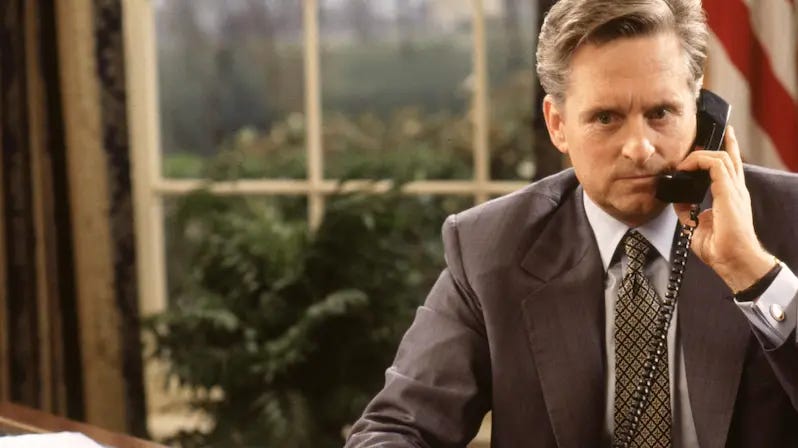
Many of us miss the era when presidential communication carried a certain dignity — when the White House spoke sparingly, and the press secretary mattered because the president did not narrate his thoughts in real time. In The American President, Michael Douglas’s Andrew Shepherd has to be begged to address the public, to respond to smears. It’s fiction, of course, but it reflects a world in which presidential words were rare enough to matter.
It’s hard not to feel nostalgic for that world. Hard not to wonder whether we’ll ever return to a time when the White House valued the craft of communication, when the press secretary’s podium meant something, and when the president’s voice was used with care rather than constant volume.
A fantasy, perhaps — but a worthy one.