

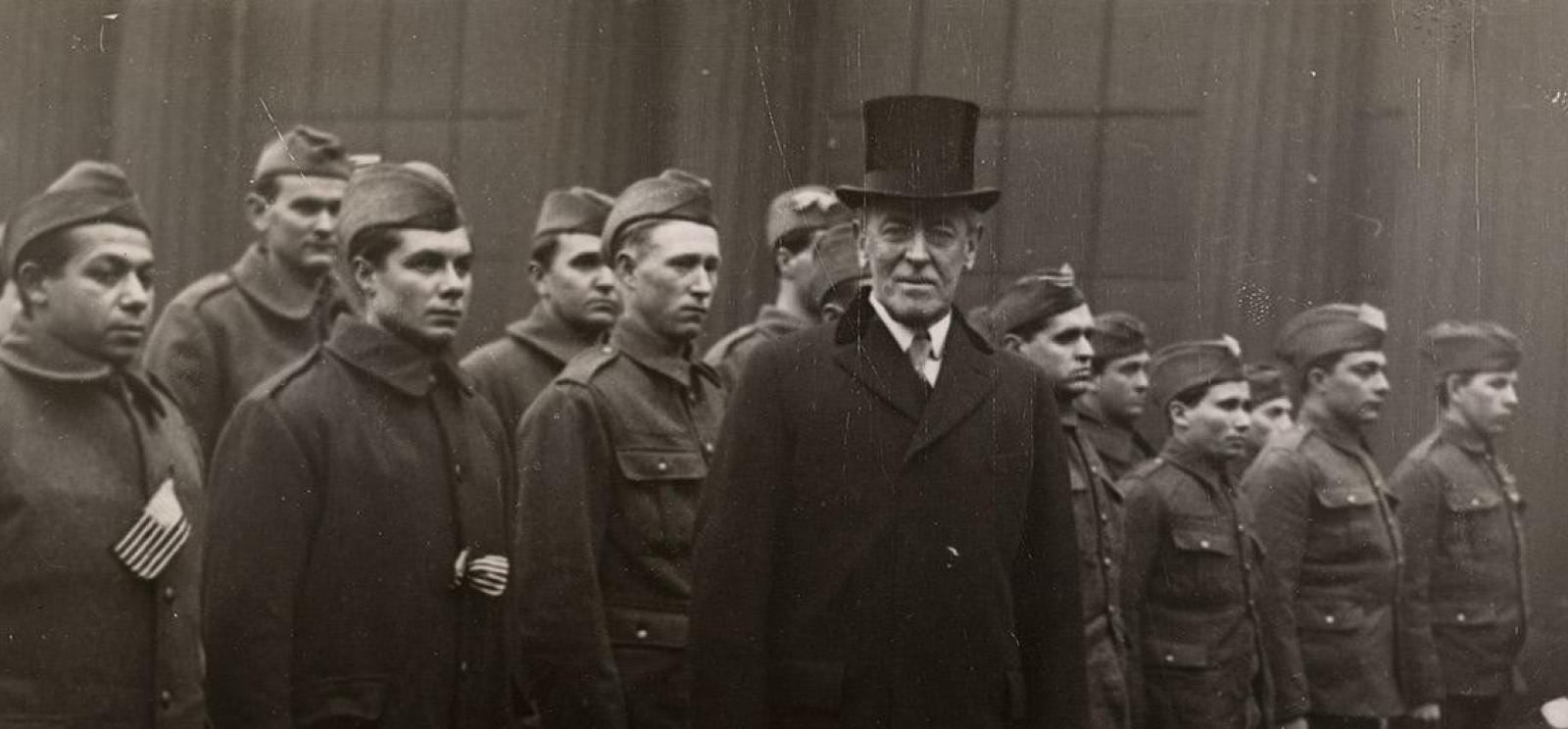
Woodrow Wilson imagined a League of Nations that could adjudicate disputes and spare the world the bloodshed he had witnessed. The United States was not ready for his vision, and Wilson did not live to see anything like it fully realized.
Only after an even more catastrophic war did the United Nations emerge — an institution created to give countries somewhere to take their disputes before they became wars.
Its record has hardly been perfect. The UN has failed to prevent wars, atrocities, and invasions. The Security Council gives extraordinary power to five permanent members, each of which can block action with a veto. Powerful countries have ignored the institution when it suited them.
But the basic idea was remarkably simple.
If one country believed another threatened its security, it could bring the matter before the United Nations. It could make its case. Other nations could hear it. The Security Council could act. Diplomacy, sanctions, inspections, peacekeeping, and, in some circumstances, collective military action could follow.
The alternative was the old one.
A powerful country could decide for itself that another country was dangerous and attack it.
That is precisely what the United Nations was created to avoid.
The UN Charter begins with countries determined to spare future generations the “scourge of war.” It calls for disputes to be settled peacefully and restricts the threat or use of force against another country’s territorial integrity or political independence. It does not prohibit all military force. It recognizes self-defense and gives the Security Council authority to respond collectively to threats to international peace.
In Korea, that process mattered. After North Korea invaded South Korea, the Security Council condemned the invasion and called upon member states to provide assistance. American troops fought as part of a multinational command under the UN flag.
The United States did not simply say that military action was necessary and expect the world to accept its judgment. It went through the institution created for precisely that purpose.
Today, President Trump stood before that same institution and threatened to “annihilate” Iran if a peace agreement was not reached.
The contrast could hardly be clearer.
If the United States believes Iran presents a threat to international peace, the United Nations is not an obstacle standing inconveniently in the way. That is what the United Nations is for.
The United States can present evidence. It can ask the Security Council to act. It can seek inspections, sanctions, resolutions, negotiations, or collective action. Iran can answer. Other countries can judge the competing claims.
The result may be frustrating. Russia or China may veto American proposals. Other nations may disagree with us. The process may fail entirely.
But disagreement is not a defect in the system.
It is the reason the system exists.
The alternative is that the strongest country decides when another country has become sufficiently dangerous, decides what that country must do, and decides what force will be used if it refuses.
And if the weaker country refuses?
It can be annihilated.
Nor was Iran the only country addressed in such terms. Trump called Cuba a failed state, predicted that its government would fall, and said that “freedom will be coming to Cuba.”
One need not admire the Cuban government to see the problem. The United Nations is also built upon sovereign equality and self-determination. It was not created so that powerful countries could announce the political futures of weaker ones.
There is an irony in delivering such messages from the UN podium.
The United Nations cannot prevent the United States from exercising its enormous power. It cannot guarantee that Iran will negotiate or that Cuba will change. It cannot make Russia, China, or any other great power behave as we might wish.
It offers something more modest.
A place to go before countries start shooting.
A place where a powerful country can make its case rather than simply impose it.
A place where the country on the other side gets to answer.
That was the lesson drawn from two world wars.
If another nation threatens us, we may have every right to defend ourselves. If it threatens international peace, we can ask the international community to act.
But there is a profound difference between asking the world to confront a threat and telling the world that we have already decided what another nation must do — and that it may be annihilated if it refuses.
The United Nations was created precisely because the world had seen where that approach could lead.