

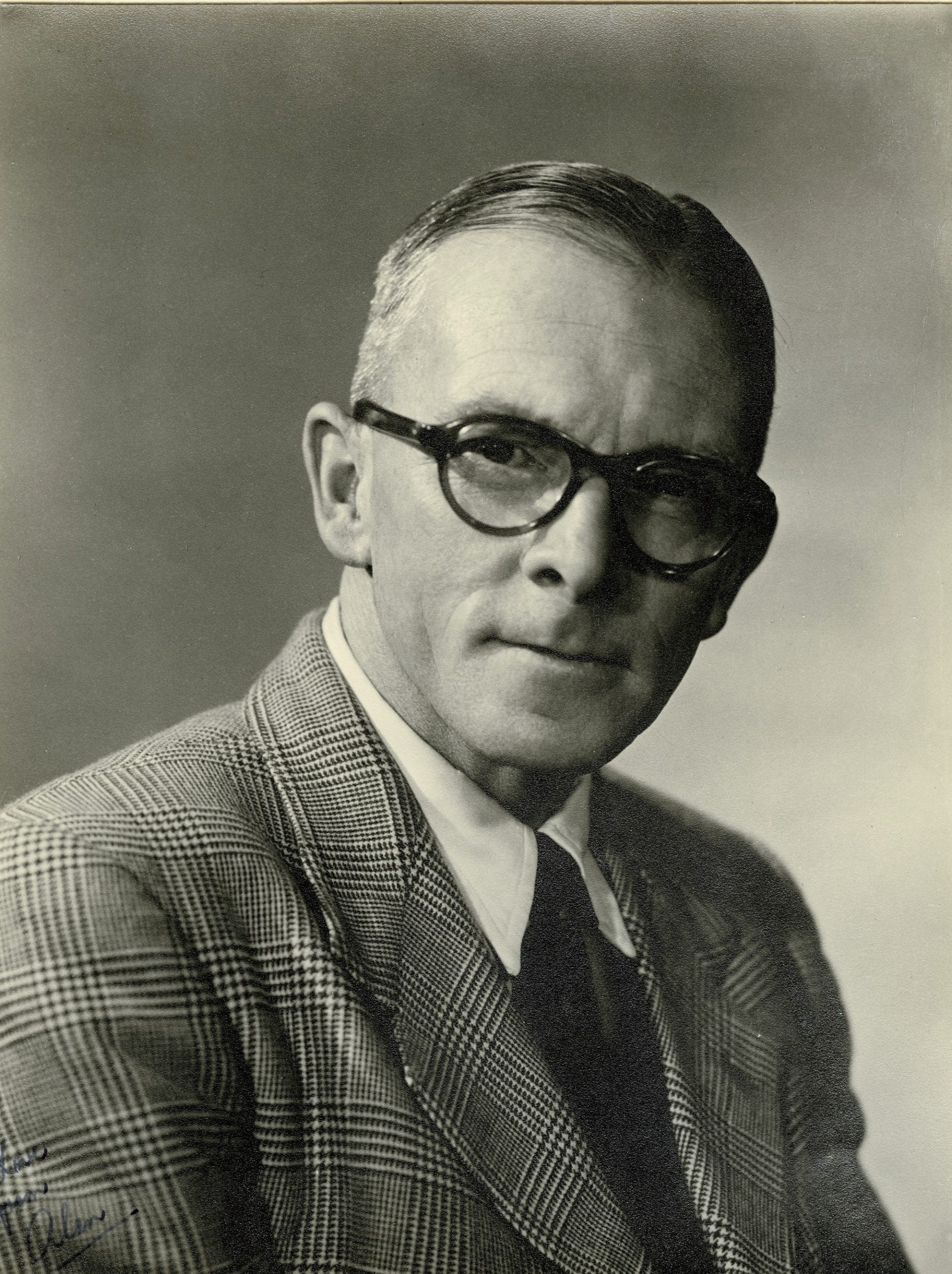
Years ago, I was introduced to the great South African liberal Alan Paton through an episode of Firing Line. In an engrossing and remarkably nuanced discussion of race and politics, Paton declined William F. Buckley’s invitation to call himself a socialist. He disliked labels, even though many of his views plainly reflected socialist sympathies.
That exchange has stayed with me for years. If Paton’s beliefs were visible for anyone willing to examine them, who really cared whether he embraced the label? The more I have thought about it, the more I have come to suspect that labels often do as much to end thought as to clarify it. Once we attach a term to a person, an idea, or a movement, we become tempted to stop examining the underlying arguments. We settle comfortably into the label and neglect the theory, the evidence, and occasionally even the facts.
Consider Bernie Sanders. During a 2025 cable television special, Sanders traveled to McDowell County, West Virginia, and spoke with voters about the issues confronting their community. What was striking was not their disagreement with Sanders but how much they had in common with him. The discussion revealed considerable common ground between residents of a heavily Republican county and a man who openly described himself as a socialist. The label had obscured the substance.
The same dynamic appears in discussions of figures such as Zohran Mamdani and Abdul El-Sayed. Whether one agrees with their prescriptions or not, they tend to offer thoughtful and detailed arguments about some of the country’s most persistent problems. Yet for many observers, the conversation begins and ends with the word socialist. Once the label is applied, curiosity evaporates. A conclusion is reached before an argument is heard.
Ironically, much of what these self-described socialists advocate would not sound particularly radical if proposed by Elizabeth Warren, a politician who sits comfortably within contemporary Democratic politics. Conversely, some of the actions undertaken by the Trump administration have reflected an extraordinarily expansive view of governmental power: taking ownership stakes in private industry, pressuring institutions over hiring decisions, influencing admissions policies, and intervening in disputes over how history is taught. This does not make Trump a socialist, but it does suggest that Americans often judge the exercise of governmental power according to who is exercising it rather than what is actually being done.
A similar phenomenon is evident in debates over whether Israel has committed genocide in Gaza. The term matters. It carries enormous legal significance and profound moral weight. If genocide is occurring, it should be called by its proper name. Yet invocation of the term can sometimes preempt rather than advance discussion. Some supporters of Israel may reflexively reject the possibility, while some critics may regard the label itself as sufficient proof. The debate quickly becomes an argument about classification rather than an examination of what is actually happening on the ground and whether the evidence satisfies the legal definition.
I am not arguing that labels are inherently useless. A socialist can certainly be an effective politician or leader. Sanders has demonstrated extraordinary influence over the course of several decades. Nor am I suggesting that we should shy away from calling genocide genocide when the facts warrant such a conclusion. Labels often have legitimate descriptive, legal, and historical value.
The danger arises when labels become substitutes for thought. They spare us the burden of evaluating ideas on their merits and events on their facts. Once a label is attached, we are inclined to inherit an orthodoxy rather than conduct an inquiry. We cease asking whether a proposal is wise, whether a policy is effective, or whether an accusation is true. We simply decide which side of the label we occupy.
Labels help us organize the world, but they can also prevent us from seeing it. The challenge is not to abandon them altogether, but to resist allowing them to do our thinking for us.
Paton understood that. Perhaps that is why he refused Buckley’s invitation all those years ago. He wanted to be judged not by the category into which others placed him, but by the substance of what he actually believed. That remains a worthy aspiration in an age increasingly dominated by labels and increasingly impatient with thought.