

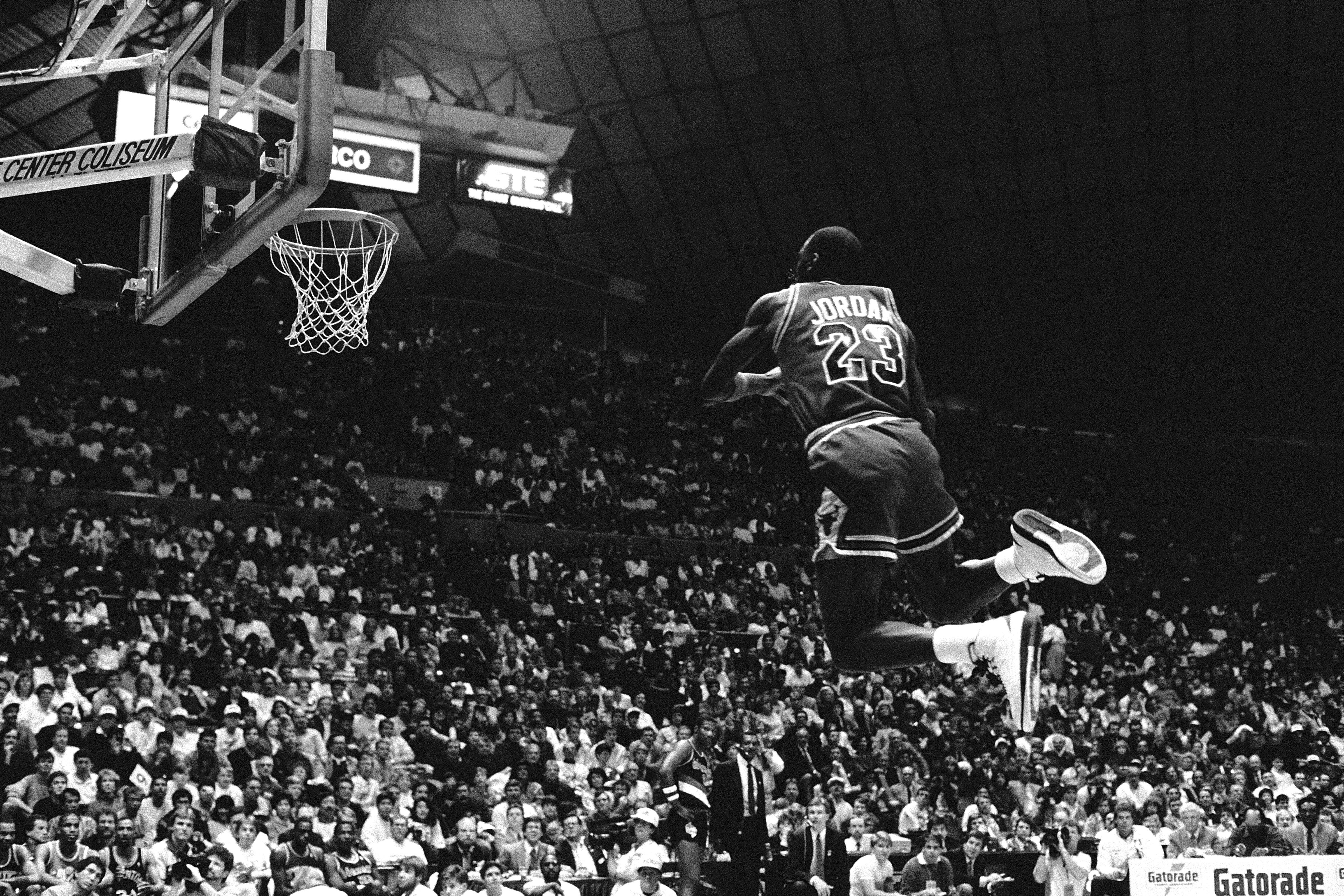
We hear debates about G.O.A.T.s so often that we no longer bother explaining the acronym. Everyone knows what a GOAT is. The only question is which sport — and then the shouting begins.
The quintessential GOAT debate, of course, is Jordan vs. LeBron, a generational divide so sharp it might as well be geological. Every father with a basketball-watching son eventually discovers that LeBron is the greatest of all time, Jordan played against plumbers, and YouTube has apparently settled the matter.
Statistics and records help. Tom Brady has the Super Bowls. LeBron has the longevity. Jordan went six-for-six in Finals appearances. Lionel Messi has the goals and the trophies.
And it is fair to acknowledge that sports evolve. Could John McEnroe dominate in an era of powerful rackets, modern strings and baseline violence? Perhaps not if we transported the 1981 McEnroe directly onto a court today.
But that is not really the question.
The modern athlete has an advantage that rarely appears in the statistics: he gets to inherit the old athlete.
My son watches old-timer highlights on YouTube. That is the point. Pelé probably never saw a soccer match on television until he was a professional. He learned from players in his region — the ones he faced, not the ones he streamed. And still, he invented moves that remain fresh today.
Messi, by contrast, could watch Pelé. And if he didn’t, he had Newell’s Old Boys and then the Barcelona academy — a pipeline of accumulated soccer knowledge that Pelé could scarcely have imagined.
Tennis offers the same lesson. Nadal and Federer could study McEnroe’s innovations, though more immediately they learned from the generations of Sampras and Agassi. Those players had inherited Borg, Connors and McEnroe before them.
McEnroe did not get to study Federer.
Federer got to live in the tennis world McEnroe and Borg helped create.
Champions build on champions.
There are limitations to this argument. It is harder for shorter guards to thrive in today’s NBA, where defending the three-point line and elite athleticism are prerequisites. Some physical differences between eras are real.
But anyone who ever watched Larry Bird — and many of us disliked him intensely — knows the folly of measuring him solely by what he could not do physically. Bird spent an entire career figuring out what he could do. Give him modern training, nutrition, shooting analytics and decades of additional basketball knowledge, and why would we assume that particular genius would suddenly stop solving problems?
Greatness adapts.
That is the difficulty with transporting athletes across time. We usually take the old athlete exactly as he was and drop him into the modern game. Jim Brown arrives from 1958 at his old playing weight. Wilt Chamberlain gets his old training methods. McEnroe brings his wooden racket.
Meanwhile, the modern athlete gets everything.
Modern nutrition. Modern medicine. Modern strength training. Video. Analytics. Specialized coaching. Better equipment. Global competition.
And, perhaps most importantly, everyone who came before him.
Yes, Jim Brown and Wilt Chamberlain would face more athletic equals today. That matters. Dominating a modern sport is persuasive precisely because today’s games are played at astonishing levels.
But the great ones are moving targets. If Brown were born into the modern game, he would train for the modern game. If McEnroe grew up with modern rackets and strings, his game would develop around them. And if Bird were taught from childhood that the three-point shot was one of basketball’s most valuable weapons, it seems unlikely that Larry Bird, of all people, would decline to notice.
We cannot evaluate the great ones without considering both the advantages and the constraints of their eras. The GOAT debate is fun, and probably impossible to settle. But it becomes meaningless if we give today’s champions everything history taught them while denying yesterday’s champions the opportunity to learn it.
Messi inherited Pelé.
Federer inherited McEnroe.
LeBron inherited Jordan.
The great ones do not merely compete with history. They leave something behind for the next great one to use.