

This is the time of year when high school soccer becomes something more than a game.
Teams are eliminated. Seniors cry. Careers end.
For many players, the post-season represents the last meaningful competition of their lives. They will never again play before a student section, wear a school jersey, or feel the peculiar mixture of dread and excitement that comes with a win-or-go-home match. There will be graduation, beach week, and whatever comes next. But there will not be another season.
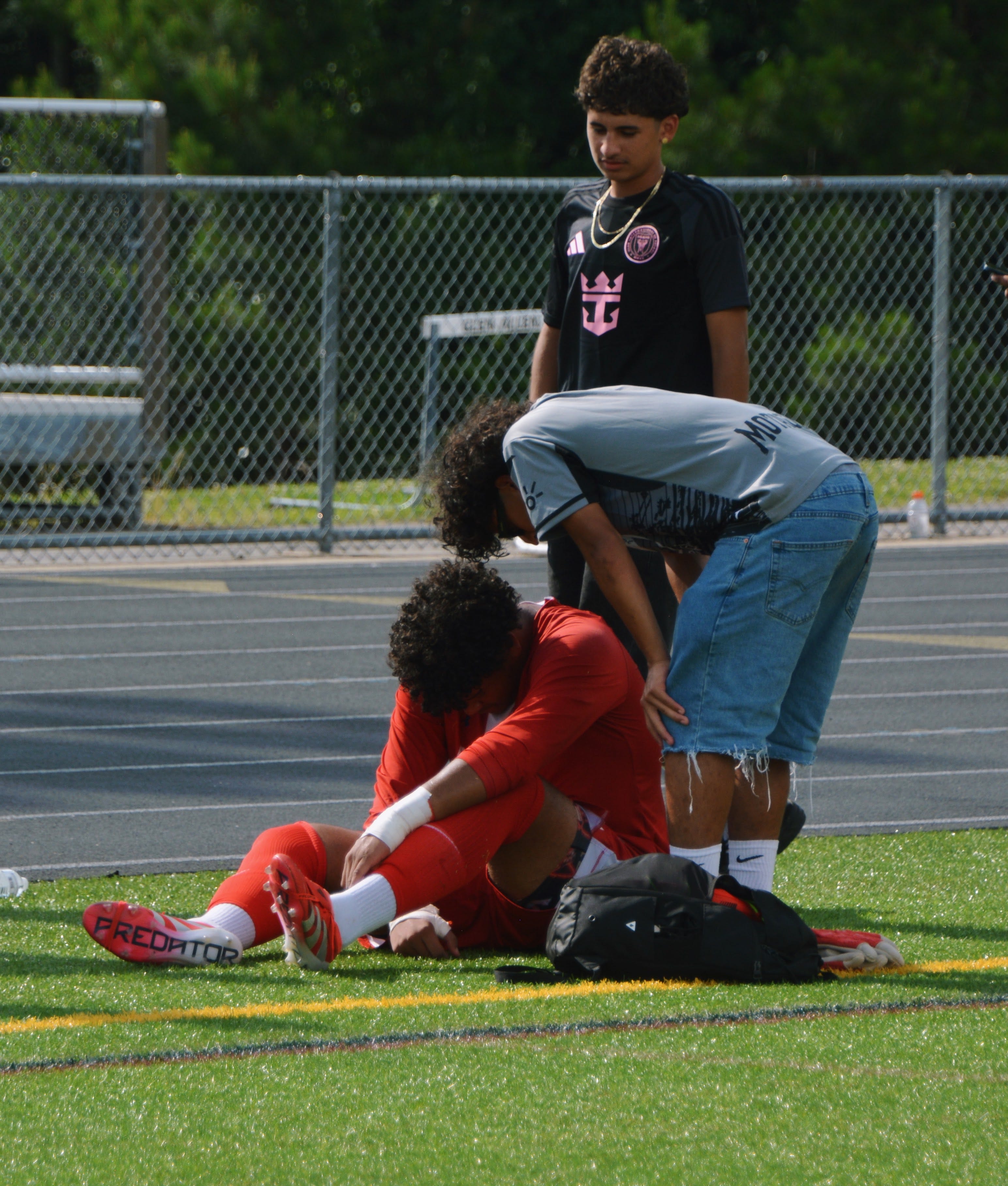
That reality gives postseason sports much of their emotional power.
It also shapes the stories we tell afterward.
When a team falls short, we naturally search for explanations. Did the coach make the right substitution? Did the striker finish his chance? Did the goalkeeper position himself correctly? Did someone simply want it more?
This year’s Northern Virginia soccer season offered no shortage of examples.
Washington-Liberty dominated much of the regular season, only to lose at home to an emerging Westfield side that seized its opportunity. Herndon may have been the most complete team in the region, yet its season ended on a long-range strike carried by a windy afternoon and the inevitable question of what might have happened had its regular goalkeeper been available. A year earlier, McLean looked nearly unbeatable before seeing its season altered by miserable weather and a red card. That same postseason, Wakefield survived three penalty shootouts as an underdog and rode those margins all the way to a state final.
The temptation is to look backward and construct a neat narrative. The winners were tougher. Smarter. Better coached. More composed under pressure.
Sometimes that is true.
But not always.
I briefly coached basketball under Charlie Thompson, one of the great coaches in Virginia history. Charlie spent countless hours preparing for specific game situations. He believed that games could be won before they were played through preparation, discipline, and repetition. His teams won a mythical state championship in 1981 and came close again in 1988.
Wendell Byrd, by contrast, was known less as a tactician than as a developer of players. Yet if a few possessions had unfolded differently, if a few free throws had fallen in 1990, perhaps Byrd’s legacy would look entirely different. Grant Hill makes a couple more free throws, and history tells a different story.
That is the uncomfortable reality of competition. Outcomes matter, but they are often built upon surprisingly small foundations.
We see the same thing at the highest levels of sports.
Michael Jordan won six championships. LeBron James has won four. The difference looms large in every debate. Jordan never lost in the Finals. LeBron has.
But from a statistical perspective, should we be as confident as we often sound?
Championships contain signal. They tell us something. Great players and great coaches tend to appear repeatedly in these moments for a reason. Preparation matters. Leadership matters. Talent matters. Personality matters.
Yet chance matters too.
Scott Norwood’s kick drifts wide. A midfielder receives a red card. A shot strikes the post instead of the net. A penalty shootout bounces one way instead of another.
The stories we inherit often make the ending feel inevitable. Looking backward, history appears orderly. Looking forward, it never is.
There was a version of history in which the Buffalo Bills won a Super Bowl. Another in which McLean advanced. Another in which Herndon found an equalizer. Another in which Wakefield’s remarkable run ended a round earlier.
Those versions simply did not happen.
The lesson is not that effort is meaningless. Quite the opposite.
Players practice thousands of shots and coaches spend countless hours studying opponents because preparation increases the odds of success. It gives us a better chance. What it cannot do is guarantee an outcome.
Vince Lombardi famously said that “the will to win is everything.” What he demonstrated—through relentless preparation—is that the will to prepare is what makes winning possible. But even Lombardi’s Packers did not win every time. The process enabled the victories; it did not predetermine them.
That is why sports remain compelling.
The result is never fully known in advance. The best teams do not always win. The most deserving players do not always advance. Sometimes the ball takes a fortunate bounce. Sometimes it does not.
All we can do is prepare, compete, and give ourselves every opportunity to succeed.
Then we see what happens.
And if we are fortunate enough to have played at all, perhaps that is reason enough to be grateful.