

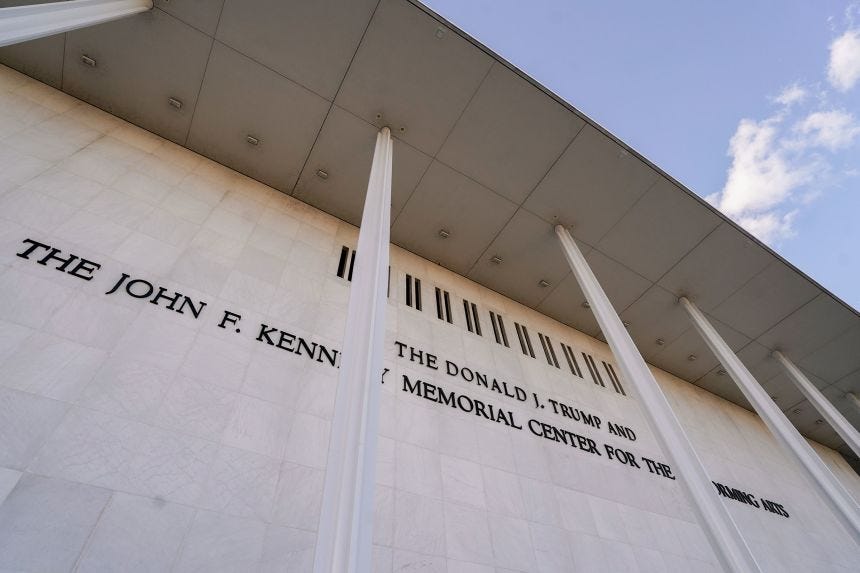
When the news comes at you like a firehose—rumors of a Venezuela adventure, masked agents in American cities, crippling tariffs—it is tempting to dismiss talk of renaming the Kennedy Center or adding a ballroom to the White House as trivial. They are not.
These gestures are not distractions from authoritarian drift; they are part of it.
Democracies have customs for a reason. We do not rename national institutions after living politicians. We do not remodel historic public spaces to flatter one man’s taste. We do not turn cultural landmarks into branding opportunities. These rules are not etiquette—they are guardrails.
The danger of the present moment is not merely the headline abuses, but the steady erosion of the smaller norms that make larger abuses possible. Once the little things are surrendered, the big ones follow. Always.
There is a temptation—encouraged by the sheer velocity of events—to shrug and say: Is this really what we should be worried about? The answer is yes. Precisely this.
Authoritarianism rarely arrives announcing itself. It advances by normalizing exceptions, by exhausting the public, by daring institutions to object—and noting which ones stay silent.
Republics survive not because they panic at every outrage, but because they refuse to let any single step go unchallenged. The processes matter. The symbols matter. The precedents matter.
If we decide that none of this is worth objecting to, we should not be surprised when we wake up to find that nothing else is either.