

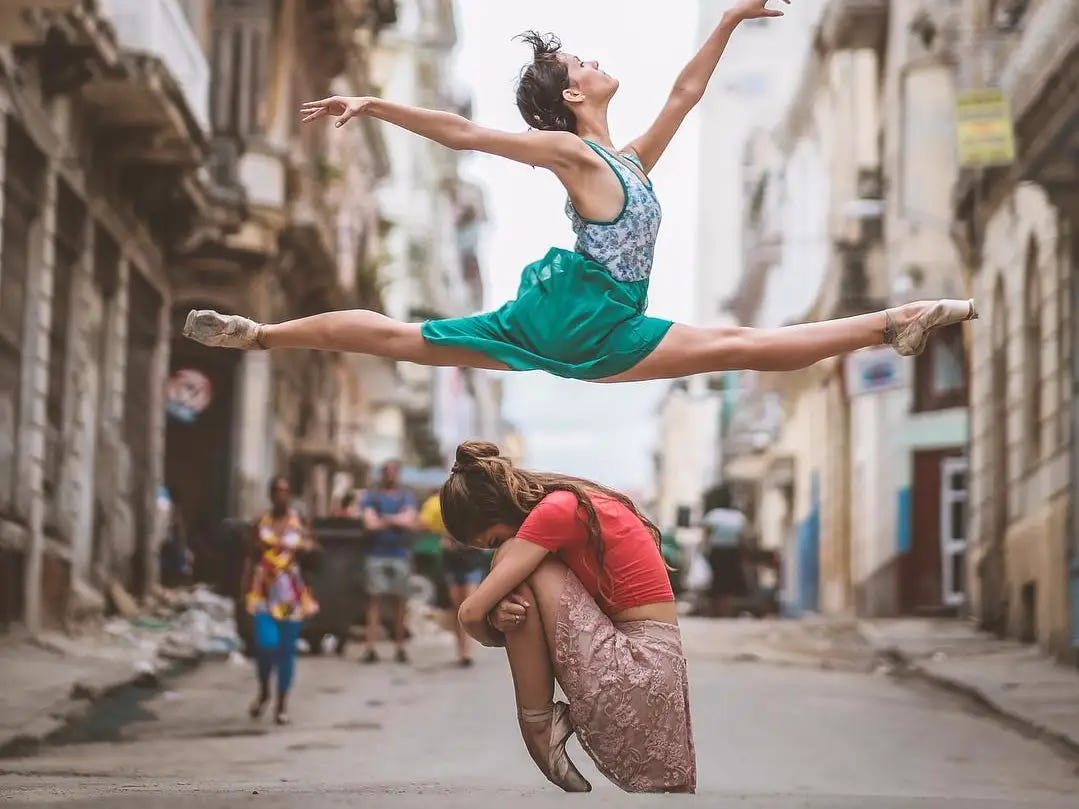
Americans have never quite known what to make of Cuba.
For some, especially on the political left, the island carried a long romance: a revolution overthrowing a corrupt dictatorship, proclaiming racial equality, expanding literacy and health care, and achieving social indicators that sometimes compared favorably with far wealthier nations. Its ingenuity became legend — cars kept running for generations, shortages navigated through improvisation, and public systems preserved under economic siege.
For others, Cuba meant something different: a one-party state, censorship, political prisoners, and the familiar pattern of a revolution speaking in the language of liberation while consolidating power.
Both portraits contain truth. Neither explains the country.
Part of the fascination has always been defiance. The American embargo offered an explanation for failure, while decades of Soviet subsidy complicated the story of heroic independence. Cuba survived both patronage and isolation, and survival itself became its mythology.
Yet what outsiders often noticed most was not ideology but vitality. Cuban music traveled across the world and back again to Africa. Its boxers and baseball players excelled internationally. Its doctors appeared in disasters far from Havana. Even critics acknowledged a society capable of producing discipline, talent, and cultural confidence under material scarcity.
Cuba unsettles our assumptions. We expect political systems to produce predictable social outcomes. Instead an authoritarian state produced both repression and notable social competence, while a sanctioned economy generated both poverty and cultural richness.
American policy has reflected similar contradictions. The United States has sought democratic change while maintaining measures that shape daily life for ordinary Cubans. Washington treats the government as illegitimate yet reinforces the external pressure that helps it endure. Moral intention and political effect have not always aligned.
Proximity encourages a sense of responsibility, and responsibility encourages a belief in authority. But influence depends less on power than on credibility. A country can pressure another society; it cannot easily persuade it. When policy appears driven by what is useful to the powerful rather than convincing to the other, resistance strengthens. The problem is not hypocrisy — every nation has some — but legitimacy. Moral authority cannot be imposed at a distance.
The Cold War ended. The posture did not.
Today the island faces another familiar crisis: energy shortages, economic strain, and the improvisation Cubans know well. The moment recalls the Special Period of the 1990s, when the Soviet collapse abruptly removed the country’s lifeline and daily life reorganized around scarcity.
Outsiders interpret according to their priors. Some see proof socialism cannot function. Others see proof sanctions cannot transform politics. Cubans see a simpler problem: how to keep the lights on and food available next week.
Cuba persists because it resists simplification. It is neither utopia nor caricature, neither heroic experiment nor cautionary tale. It is a society navigating constraint — proud, inventive, and exhausted.
Americans often treat Cuba as an argument.
Cubans experience it as a home.
Small countries near large ones are rarely granted the luxury of being ordinary. They become symbols for others.
Cuba has spent sixty years inside other nations’ debates. Its future may depend less on who wins those arguments than on whether the island is finally allowed to be judged as a country rather than a theory — a place evaluated not as a lesson, but as a life.
It has outlasted revolutions, patrons, embargoes, and expectations.
It remains what it has always been: a people, not a proposition.