

Pete Hegseth has now spent two Septembers explaining his conception of military leadership. The message has included physical fitness, appearance, toughness, a return to what he calls the warrior ethos, and a willingness to remove senior officers who do not fit his vision.
I found myself wondering what some of history’s great commanders would have made of the occasion.
George Washington led an army that was often unpaid, poorly supplied, and deeply frustrated with Congress. When his officers flirted with challenging civilian authority, he persuaded them to stand down. At the end of the war, he surrendered his commission. His greatest contribution may have been demonstrating that an army belongs to the republic, not to the man who commands it.
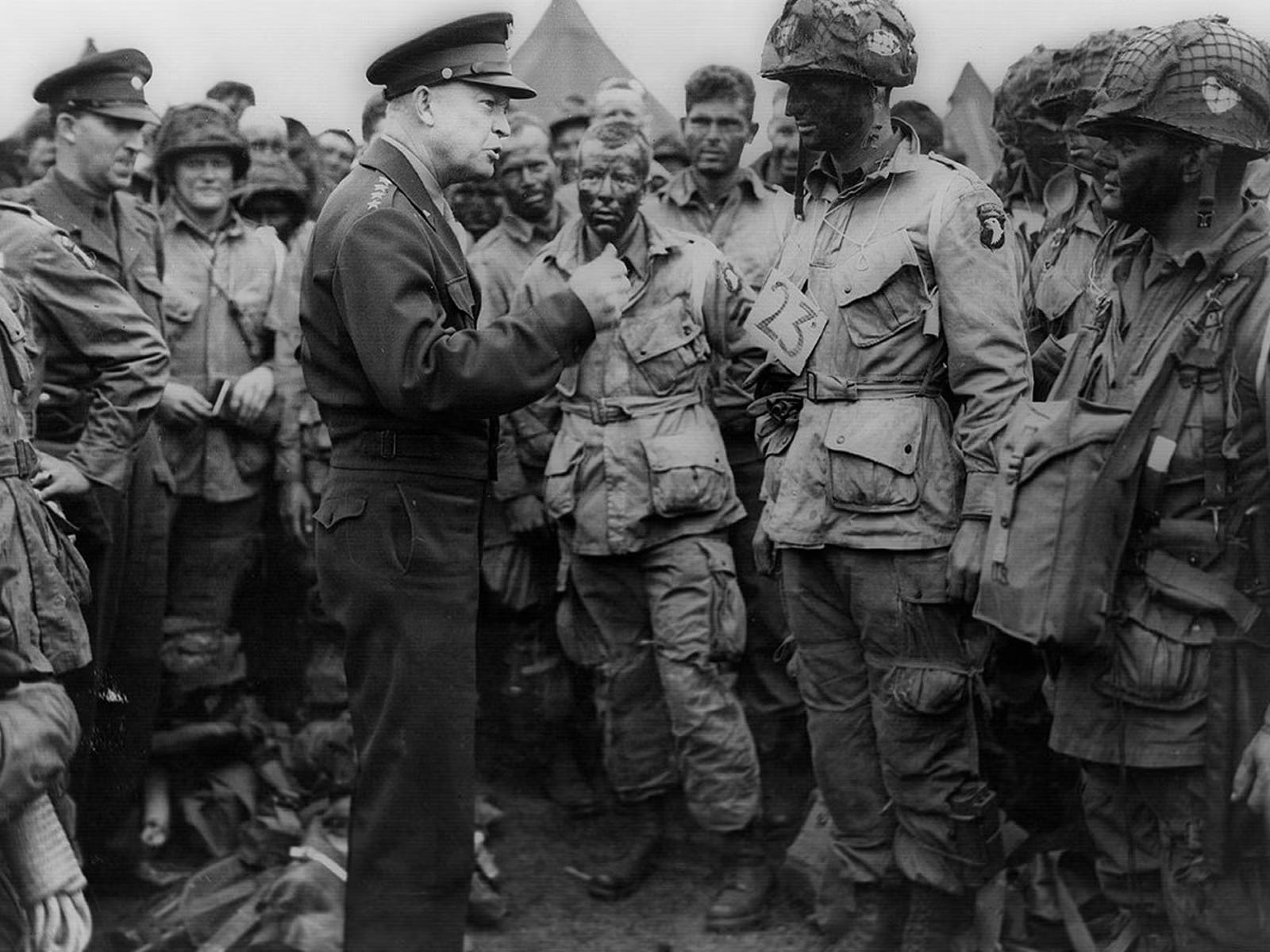
Dwight Eisenhower faced a different challenge. He had to coordinate an enormous Allied force whose senior commanders possessed formidable egos, competing national interests, and occasionally incompatible ideas about how to fight a war. His achievement was not convincing everyone he was the toughest man in the room. It was getting them to work together. Before D-Day, he drafted a statement accepting personal responsibility if the invasion failed. He did not propose to blame his generals.
Omar Bradley, who commanded vast American armies in Europe, was a notably untheatrical figure. He learned from George Marshall the importance of hearing arguments against a proposed course of action. In his own commands, he encouraged subordinates to exercise independent judgment and avoided humiliating officers who made mistakes. Bradley understood that the information a general most needed was sometimes the information his staff was most reluctant to give him.
Ulysses S. Grant understood that an army could not be run entirely from headquarters. Sherman, Sheridan, Meade, and Thomas were very different men. Grant gave them objectives, trusted their judgment, and coordinated their efforts toward a common purpose. He cared about results, not conformity.
And then there is Georgy Zhukov — not an American general, nor a model of gentle or democratic leadership, but one of the most formidable commanders of the twentieth century. He operated within a Soviet system that hardly encouraged dissent, yet he understood the difference between the appearance of military power and its effective employment. He understood that discipline and martial confidence were no substitutes for logistics, operational planning, and the ability to adapt to a changing battlefield. His example is particularly instructive because he was hardly a gentle commander. Even Zhukov knew that toughness was not a strategy.
Colin Powell spent much of his career emphasizing something that receives less attention in speeches about warriors: judgment. Before committing American troops, civilian leaders needed to understand their objectives, the resources required, the likely consequences, and the conditions under which the mission would end. The obligation of a professional officer is to provide that advice — even when it is unwelcome.
These men were hardly interchangeable. They commanded different armies in different centuries, under vastly different circumstances. Some made terrible mistakes. None would have passed every test of modern military leadership.
But their careers illustrate qualities that deserve at least as much attention as physical toughness.
These are hardly forgotten lessons. They are taught in our service academies and war colleges, studied through military history, and passed from one generation of officers to the next. The American military already understands the importance of judgment, delegation, institutional loyalty, and the obligation to offer candid advice. The danger in Hegseth’s reforms is not that he has discovered a new conception of leadership. It is that, in attempting to remake the officer corps, he may undermine qualities the institution has spent generations cultivating.
Of course, teaching these principles is not the same as consistently practicing them. Military history contains plenty of conformity, political interference, and failures of command. But that is precisely why professional education and institutional traditions matter. They give officers the tools to recognize those failures — and, when necessary, resist them.
Leadership is not principally about the qualities a commander possesses. It is about what he can accomplish through other people.
Physical fitness matters. So do courage, discipline, and the ability to endure hardship. But an army does not become more effective simply because its generals look more impressive. The qualities required to lead a platoon are not identical to those required to command a theater of war.
Modern warfare demands extraordinary organizational and intellectual ability. Officers must understand technology, evaluate competing advice, delegate authority, and recognize when an established doctrine no longer works. Above all, they must be willing to tell their superiors when they believe those superiors are wrong.
That last quality is particularly important.
Civilian control of the military does not mean that the civilian in charge is entitled to agreement. It means that elected leaders and their lawful appointees make the ultimate decisions after receiving the best professional advice their officers can provide.
An officer who refuses a lawful order presents one problem. An officer who questions a bad plan may be preventing a catastrophe.
There is another distinction a military leader ought to understand: disagreement is not disloyalty.
In his latest address, Hegseth went further, describing certain reporting about military operations and ammunition supplies as anti-American, a national betrayal, and even treason. He argued that the reporting endangered American troops. Those are serious accusations, particularly from a secretary of defense. A free press may publish stories that military leaders dislike, and its reporting can be scrutinized and challenged. But disagreement with the government’s account of a war is not, by itself, disloyalty to the country.
Hegseth has defended the removal of senior officers who resisted his reforms and has announced further reductions in the ranks of generals and admirals. There may be sound organizational reasons to reduce senior positions, just as there may be legitimate reasons to replace individual commanders. But those decisions deserve to be judged by whether they improve military effectiveness, not merely by whether the remaining officers embrace the secretary’s vision.
A secretary of defense who cannot distinguish between professional disagreement and disobedience may eventually find himself surrounded by generals who agree with everything he says.
It will be a wonderfully agreeable headquarters.
Whether it will be an effective one is another matter.
None of these principles requires an officer to be soft, unfit, or indifferent to discipline. They require a conception of leadership considerably more demanding than a physical standard or a declaration of loyalty.
The purpose of assembling America’s military leaders should be to prepare them to exercise the best judgment of their careers.
Not to teach them how to applaud.