

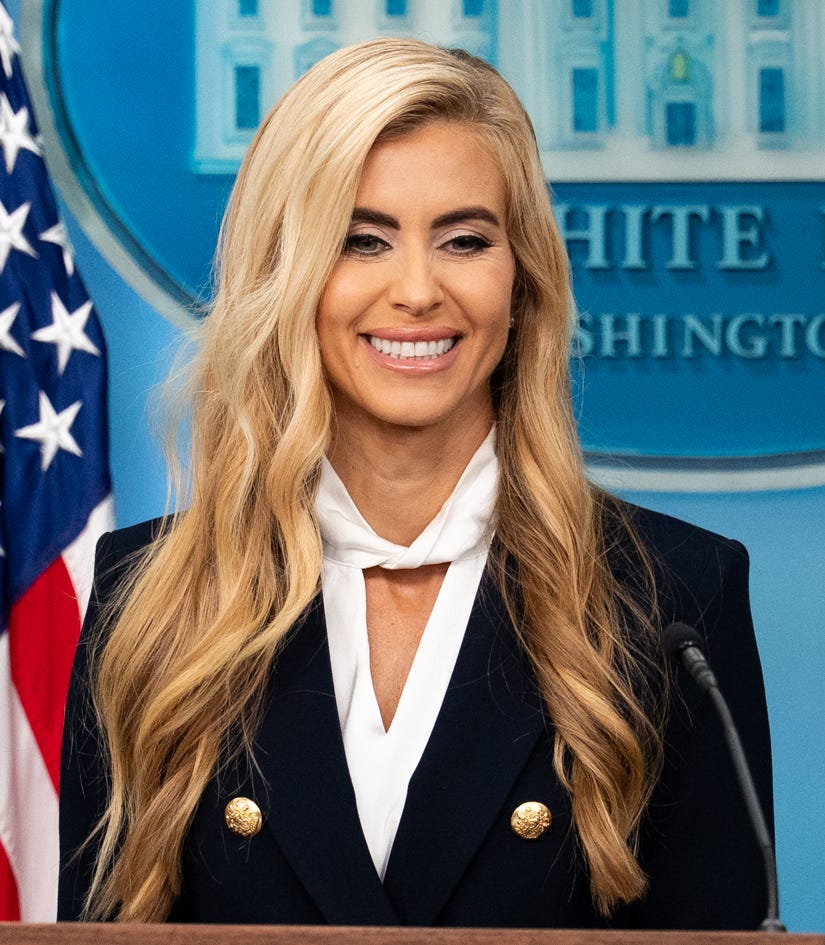
There was something painful about watching Katie Zacharia’s brief tenure as White House press secretary begin and end almost in the same breath. Here was a woman who had sought one of the most conspicuous positions in American government, only to discover that occupying the podium and commanding it are rather different accomplishments.
We had been introduced to her qualifications. She was a mother, a graduate of Pepperdine Law School, a woman with an interesting résumé and experience abroad. President Trump described her as an attorney. All of this presumably was intended to reassure us that the White House had selected someone prepared for the demands of the position.
Then she began answering questions.
Her predecessor, Karoline Leavitt, had arrived with considerably less fanfare about her professional credentials. She had not attended graduate school and was relatively unknown outside conservative political circles. Yet Leavitt proved exceptionally capable at the particular craft the administration required.
One need not admire the substance of her answers to recognize her command of the assignment. She was ruthlessly prepared, quick on her feet, and rarely allowed an inconvenient question to interfere with the message she intended to deliver. She could deflect, redirect, assign blame, manufacture an equivalence, and return to the administration’s preferred talking points without appearing especially troubled by the facts she had left behind.
It was a formidable performance of a peculiar profession.
Zacharia, by contrast, appeared uncomfortable almost from the outset. Her briefing was brief, her command uncertain, and the questions surrounding her professional background soon became more interesting than anything she had said on behalf of the president.
It emerged that she had failed the California bar examination and never taken it again. She had nevertheless described herself as a lawyer, while the president had introduced her as an attorney.
There is no requirement that a White House press secretary be admitted to the bar. Nor is failing a bar examination an especially useful measure of someone’s ability to communicate with the public. But when professional credentials are offered as evidence of one’s qualifications, their accuracy becomes a legitimate subject of inquiry.
The purpose of examining qualifications, after all, is not to admire them. It is to anticipate performance.
There is also something revealing about the impulse to embellish one’s credentials. It suggests either a lack of confidence in what one has actually accomplished or a belief that the appearance of qualification matters more than qualification itself. Neither is particularly reassuring in someone whose principal responsibility is to speak credibly on behalf of the president.
And if a press secretary cannot comfortably explain her own résumé, one wonders how she will explain the president’s.
None of this means Zacharia cannot improve. People stumble. They exaggerate their accomplishments. They have dreadful first days and occasionally recover to enjoy distinguished careers. There is no particular pleasure in watching someone struggle in public.
But the episode presents an awkward problem for an administration that has made such a spectacle of denouncing diversity, equity, and inclusion programs, questioning the qualifications of people appointed under them, and insisting that merit must be restored to government.
Apparently, the difficulty of identifying the best person for a demanding position does not disappear when the responsibility for making the appointment belongs to Donald Trump.
The White House press secretary remains an important position, although perhaps a more dispensable one in an administration whose president communicates constantly through social media, impromptu remarks, and an apparently inexhaustible supply of friendly microphones. Trump has never demonstrated much need for someone else to speak on his behalf.
Given time, Zacharia might have become proficient at speaking for him. But her first appearance, and the questions that followed, have already illustrated something about the administration’s approach to qualifications.
It is considerably easier to demand merit than to recognize it.