

Last week the United States and Canada found themselves in intense trade negotiations. Deep into the talks came American demands so astonishingly intrusive that they sparked outrage across Canada — even among factions normally friendly to Trump. Washington sought restrictions on Canada’s ability to negotiate agreements with other nations and challenged protections involving the French language and Canadian culture. For a country that preaches freedom, these were remarkable demands. One half‑expected the next clause to forbid Cubans from speaking Spanish.
And then came the executive order directing the United States government to call Lake Ontario “Lake America” — a generic label that manages to be both grandiose and confusing, resonating across a hemisphere that already calls itself America. Canada, unsurprisingly, will continue calling it Lake Ontario.
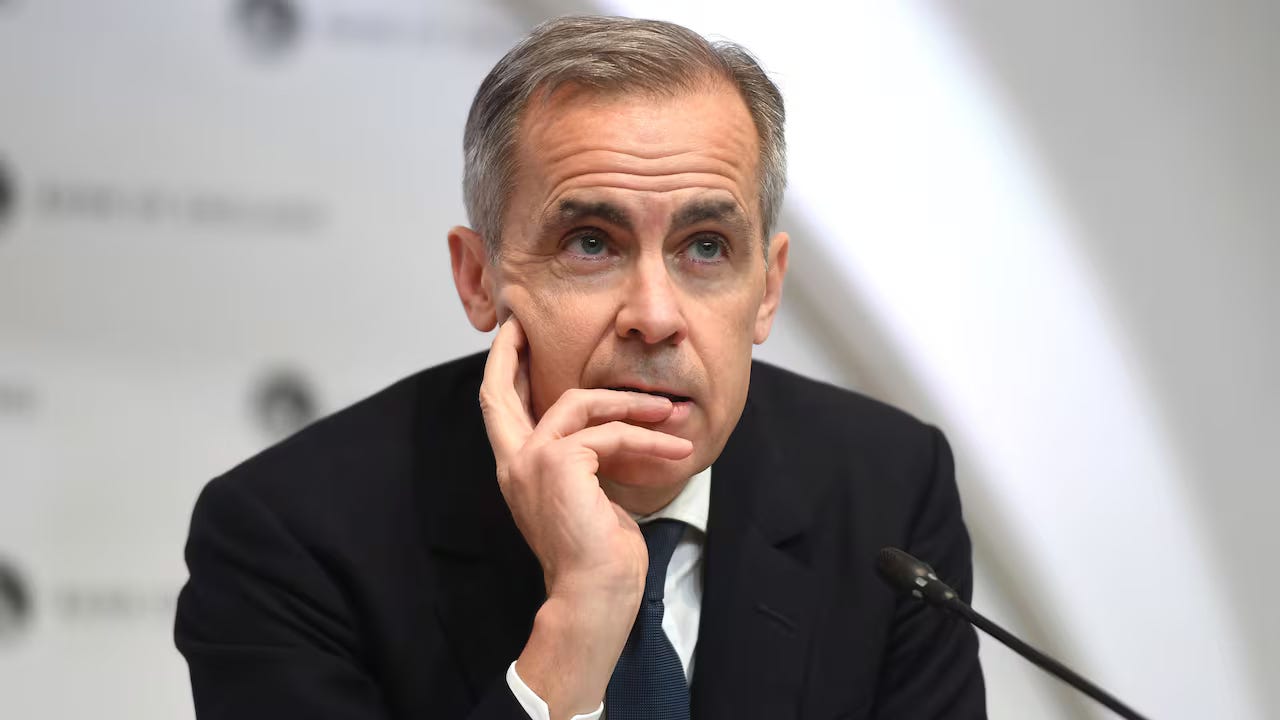
Prime Minister Mark Carney has been resourceful, creative, and brave throughout his time in office, and this is another test of his leadership. Canada entered Trump II extraordinarily dependent on the American market, particularly for its exports. As damaging as Trump’s trade wars have been to the American economy, the disruption poses an even more immediate problem for a smaller neighbor whose economy has been deeply integrated with ours for generations. At some point, some Canadians will inevitably be tempted to give Washington what it wants simply to restore stability.
That is what makes the current confrontation so consequential.
Canada cannot realistically replace the United States as its principal economic partner, nor should it necessarily want to. Geography matters. Supply chains matter. A border stretching thousands of miles matters. But importance need not mean dependence.
The objective is not to replace the United States.
It is to reduce the price of saying no.
That helps explain Canada’s increasing interest in Europe. Membership in the European Union has even been floated — by Europeans as well as Canadians — although the legal and geographic obstacles make actual accession remote, and Carney himself has emphasized partnership rather than membership. Still, the fact that the conversation exists is remarkable. Canada is a NATO member, maintains deep historical ties to Europe, and already describes itself as increasingly aligned with European partners. A much closer economic and strategic relationship is hardly fanciful.
Europe is only part of the answer. Canada will continue expanding trade ties with China, Commonwealth nations, the EU, and throughout the Americas. Diversification is not a rejection of the United States. It is insurance against a relationship in which economic dependence can be converted into political leverage.
And Canada has reason not to make permanent decisions based solely on the present government in Washington.
The American midterm elections are approaching. If Democrats regain the House, the Senate, or both, the political environment surrounding Canada could change considerably. Congress cannot dictate every aspect of foreign or trade policy, but congressional control means legislation, appropriations, investigations, hearings, and the ability to impose political costs. We have already seen the House vote to challenge Trump’s tariffs on Canada. A different Congress would not end the dispute, but it could make an aggressively hostile posture toward one of America’s closest allies considerably harder to sustain.
So Carney must operate on two clocks. In the short term, he must preserve enough economic stability to withstand American pressure while waiting to see whether November changes the balance in Washington. In the long term, Canada must make sure that no future American president possesses quite this much leverage over Canadian choices.
That may prove to be the great unintended consequence of Trump II.
An administration determined to demonstrate American leverage may instead teach one of America’s closest allies how dangerous that leverage has become.
Canada does not need to escape the United States.
It needs to make saying no affordable.