

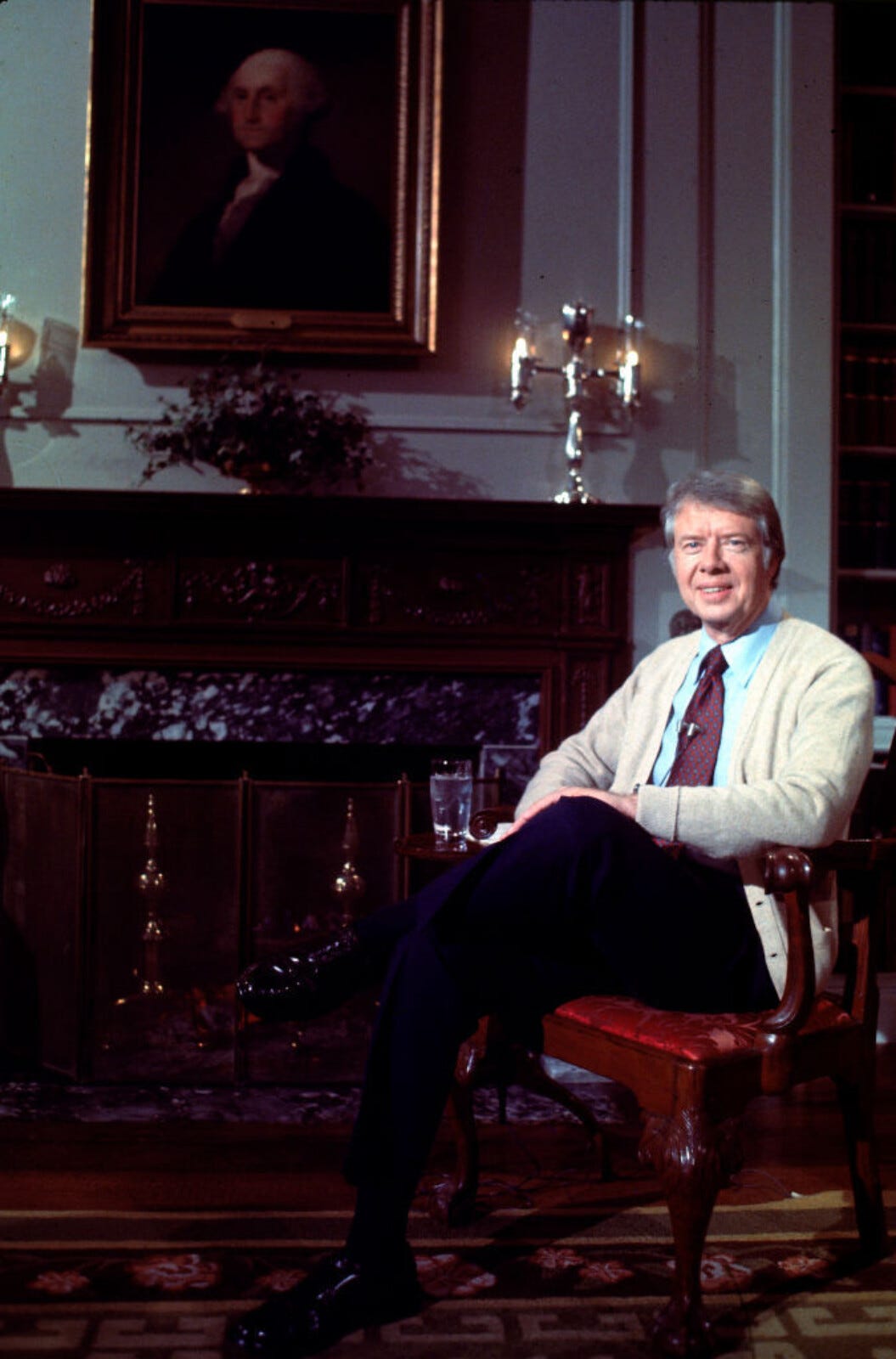
Jimmy Carter often tried to live the presidency in a way that identified with the common American. He and Rosalynn walked down Pennsylvania Avenue after his inauguration rather than ride. He had graduated from the Naval Academy and served seven years as a naval officer. During the energy crisis, he turned down the thermostat in the White House and appeared before the nation in a sweater, asking Americans to conserve energy while doing the same himself. His strategy did not always succeed politically, but it was sincere. He asked for sacrifice and offered some himself.
President Trump now argues that higher fuel prices are a sacrifice worth making to prevent Iran from obtaining nuclear weapons. Whether the war ultimately accomplishes that is a question of strategy and diplomacy. But his invocation of sacrifice raises another question entirely:
Who is doing the sacrificing?
Trump asks for sacrifice. He offers little evidence of it himself.
He did not serve in Vietnam, receiving a medical deferment for bone spurs after earlier student deferments. His sons do not serve in the military either. They are instead active in business and investment ventures that trade, at least in part, on a family name whose value has hardly diminished while their father occupies the presidency. Recent business dealings involving Donald Trump Jr. have drawn congressional scrutiny, while he and Eric Trump remain involved in investment ventures with interests extending overseas.
Meanwhile, the president surrounds himself with extraordinary displays of wealth and grandeur. His name appears prominently. His aesthetic is gilded and monumental. Though tacky, none of that is necessarily objectionable to all on its own.
But opulence makes for an awkward backdrop to a sermon about sacrifice.
That is what makes Carter useful as a comparison. Walking down Pennsylvania Avenue did not lower anyone’s heating bill. Wearing a sweater did not solve the energy crisis. Carter’s policies can be debated, and voters ultimately rejected him.
But he understood something about leadership.
When he asked Americans to turn down their thermostats, the White House thermostat was turned down too — reportedly to 65 degrees, with Rosalynn Carter wearing sweaters to keep warm. When Carter preached conservation, he installed solar panels on the White House. He attempted, sometimes awkwardly and sometimes unsuccessfully, to make the presidency participate in the burdens it asked Americans to accept.
Trump presents almost the inverse image.
Americans are asked to accept higher prices because the cause is important. Military families are asked to accept deployments because the mission is important. Taxpayers are asked to finance the undertaking because national security is important.
Perhaps all of those sacrifices can be justified.
But sacrifice acquires a different meaning when it is always someone else’s.
That is the uncomfortable part of the word. Sacrifice is not merely another term for cost. It carries a moral component. It suggests that something valuable is being surrendered for something more important.
And historically, leaders who ask for sacrifice have understood the power of being seen to share it.
Carter tried to model the burden he asked others to bear. Trump models something very different: wealth, abundance, victory, and the refusal to surrender anything.
Those may be powerful political images.
They are strange companions to sacrifice.
Leadership can ask much of a country.
But eventually a country asks something of its leaders too.