

Two more prominent journalists announced their departures from mainstream media this week: Christiane Amanpour and Bianna Golodryga. Their decisions come amid continuing changes in the ownership, economics, and influence of traditional news organizations.
They join a media landscape in which some of the most recognizable and fiercely independent voices—Jim Acosta, Joy Reid, Tucker Carlson, Chuck Todd, and others—have found new opportunities outside the networks that once made them famous.
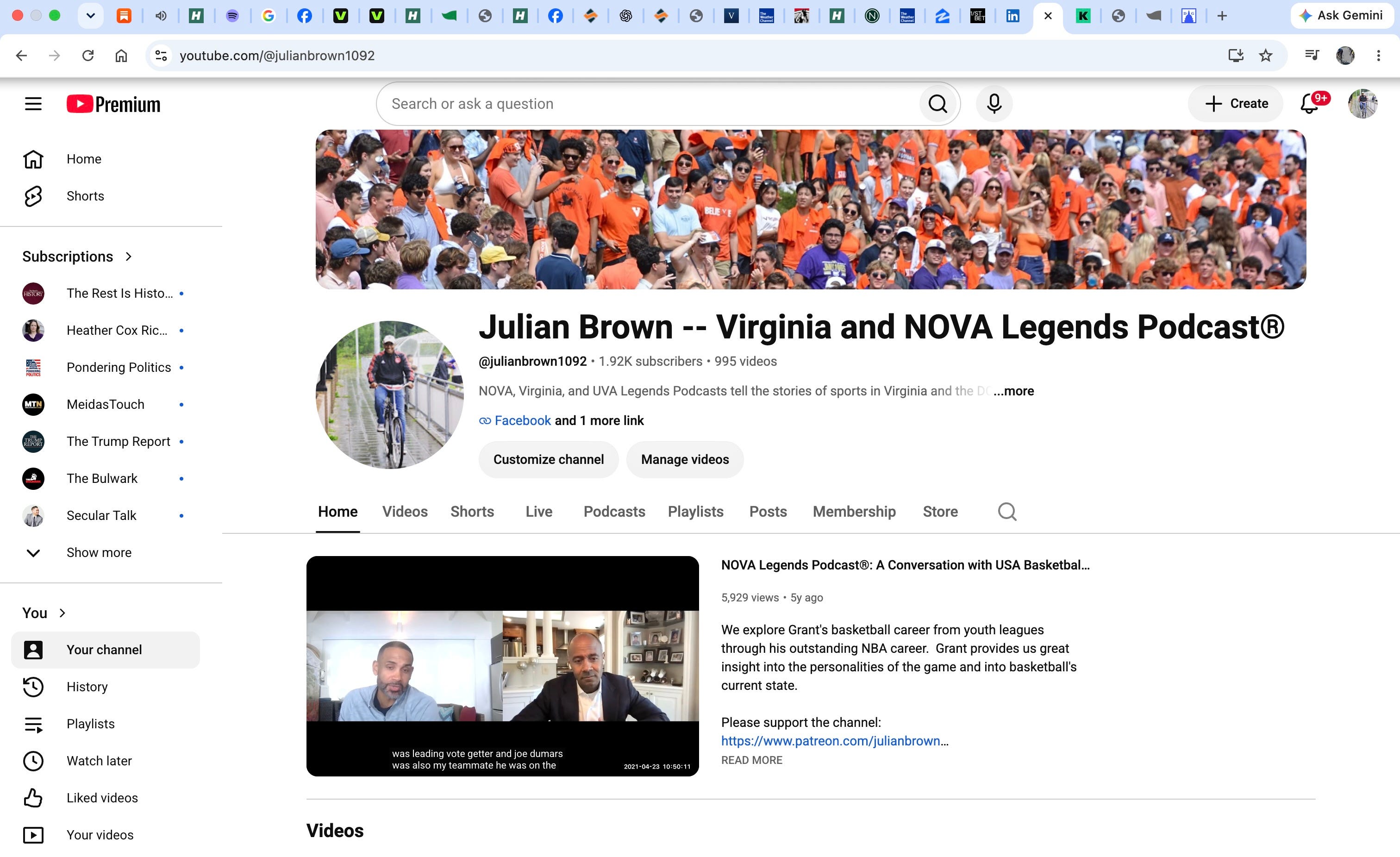
Not all have taken the same path, and neither Amanpour nor Golodryga has announced a move to YouTube. But the larger trend is unmistakable. Leaving a television network no longer necessarily means disappearing from public view.
If traditional media becomes less hospitable to journalists willing to challenge government power, there are now other places for those voices to be heard. YouTube is among the most important.
And YouTube has become something much larger than a refuge for displaced journalists.
It is an extraordinary entertainment service, offering sports, movies, comedy, news, documentaries, travel programs, music, and almost anything else a viewer might imagine. Even the traditional television networks have established their own channels. With YouTube TV and the platform’s enormous library of free programming, viewers can increasingly dispense with cable and satellite television altogether.
On a typical day, I might watch NFL highlights from the 1970s, a travel vlog from the Faroe Islands, and an episode of The Rest Is History. I can move from Franco Harris to the North Atlantic to Napoleon without changing platforms.
Try finding that combination on NBC.
And much of it costs nothing beyond an internet connection, provided you’re willing to tolerate some advertising.
We’ve discussed the disadvantages of this democratization of media. When almost anyone can become a broadcaster, almost anyone can also become a propagandist. The traditional editorial filters disappear, and viewers can retreat into channels that reinforce their existing beliefs.
We can, in effect, radicalize ourselves without ever leaving the living room.
Nor should we imagine that YouTube is entirely beyond government influence. Authoritarian governments can restrict access, intimidate creators, and pressure technology companies. Even in democratic societies, the relationship between governments and enormous communications platforms deserves scrutiny.
And there is an additional irony.
YouTube can liberate journalists from television networks without liberating them from gatekeepers.
Google owns YouTube. Its algorithms influence what we see, its advertising policies influence what creators can earn, and its decisions about permissible content can determine who reaches an audience.
The democratization of media has produced an extraordinary concentration of power in the company that distributes so much of it.
Yet for all these concerns, YouTube has become one of the most useful technologies in everyday life.
It began as a relatively simple way for people to share videos. Two decades later, it has become an immense repository of entertainment, information, education, and personal history.
And its greatest competitive advantage may not be its technology.
It is everything that has accumulated there.
Millions of creators have spent years building channels and audiences. Viewers have assembled subscriptions, playlists, and collections of favorite videos. Families have uploaded birthdays, weddings, and childhood memories. Forgotten television broadcasts, obscure sporting events, and performances that might otherwise have disappeared are available at the touch of a button.
YouTube is no longer merely a place to watch videos. For many people, it has become a personal library.
That makes replacing it an enormous challenge.
A competitor might offer a better interface, fewer advertisements, or more generous terms for creators. But how does it persuade millions of viewers to abandon their accumulated libraries while simultaneously persuading millions of creators to move their content somewhere else?
The viewers are there because the creators are there. The creators are there because the viewers are there.
And everyone has become accustomed to finding almost anything on YouTube.
Of course, technological dominance is never permanent. Companies that once appeared invincible have been overtaken by innovations they scarcely anticipated. Government regulation, changing consumer habits, or an entirely new way of consuming entertainment could eventually alter YouTube’s position.
But I suspect it will take something extraordinary.
And there is something rather exciting about that prospect.
YouTube has already transformed the way we consume news, entertainment, and history. It has given independent voices access to audiences that once required the resources of major television networks. It has made obscure interests accessible and preserved material that might otherwise have been lost.
It is far from perfect, and its immense power deserves continuing scrutiny.
But it is difficult to imagine returning to a world without it.
And if something eventually comes along that is compelling enough to knock YouTube from its perch, imagine how remarkable that something might be.