

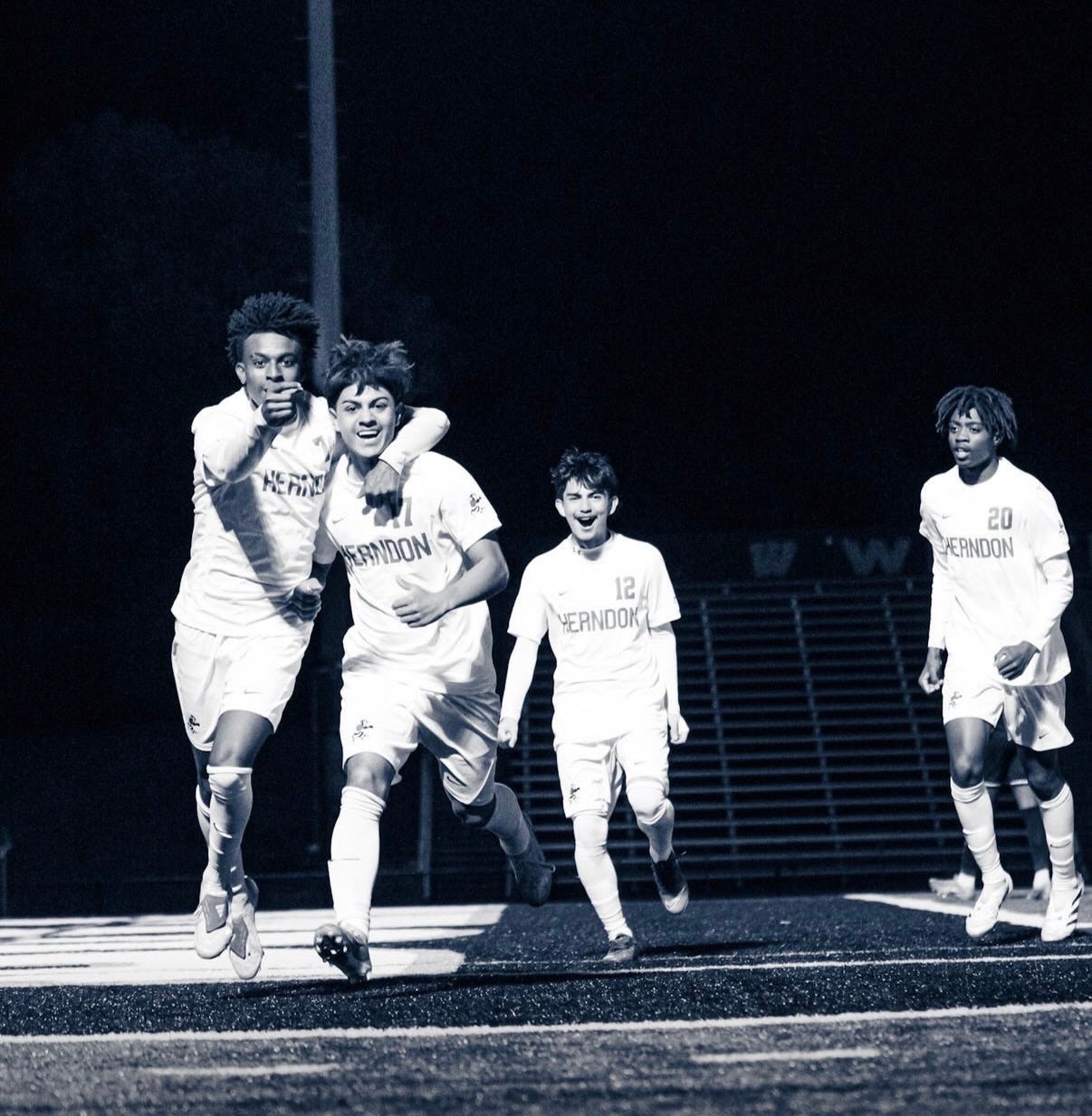
Another school year ends, and after months of football, basketball, and soccer, I am reminded again why high school sports still matter: the competition, the relationships, the student sections that behave as if every Friday night were a civic holiday. My own year ended with a flourish. Westfield’s Elroe Takele curled an Olimpico straight from the corner flag to win the Class 6 soccer title at the death. A few miles away, Kellam was outlasting Lightridge in a superb Class 5 final. Two great matches, two great champions.
And yet, the two could never meet in a game that means something.
We have grown accustomed to this fragmentation. We accept that the high school sports of 1985, or even 2012, are gone. We accept that neutrals no longer have the same stake in the postseason. We accept that we now crown twelve champions, that some districts have four teams while others have nine, that some regions have eight schools and others nineteen, and that we need power points and spreadsheets to stitch together playoff brackets that once made intuitive sense. All of this in service of maintaining six classifications when three, or even four, would make the games easier to organize, the rivalries more natural, the postseason more meaningful, and the entire system fairer.
Fewer champions make each title more historic.
The move to six classifications was understandable. More championships meant more schools could experience postseason success. Participation matters. Communities enjoy hanging banners.
But every reform has a cost.
The cost of this one was the postseason itself.
And now, somehow, it is getting worse.
Today I heard that two Loudoun schools may be moved from Class 5 to Class 6, joining Fairfax County schools that are, athletically speaking, virtually indistinguishable from them. To accommodate the shift, a Fairfax school may have to change districts, only to change back again if the Loudoun schools eventually return to Class 5.
If true, the episode would perfectly capture the current system’s logic. Schools with similar enrollments, similar demographics, similar travel patterns, and similar competitive profiles are endlessly shuffled between classifications in pursuit of numerical balance whose purpose becomes harder to identify with each passing year. Districts become temporary assignments rather than communities. Rivalries become administrative conveniences. Stability becomes impossible.
At some point, one has to ask a simple question:
What problem are we solving?
The old three classification system was not perfect, but it had virtues that mattered: geographic coherence, cultural identity, and a sense of shared occasion. Rivalries made sense. Regions felt like regions. The state championships felt like a gathering place for the entire sport rather than a scattering of isolated celebrations.
Coaches, fans, and scouts would spend entire weekends, especially in basketball, in the host city, moving from game to game because every classification felt connected to the same event.
Fans could spend an entire weekend moving from gym to gym, stadium to stadium, because every game felt like part of the same story.
Today, that story is gone.
We have more trophies, but fewer traditions. More champions, but less mythology. More brackets, but fewer reasons for the neutral fan to care.
It does not have to be this way.
A return to four classifications, grouped geographically and built around districts and regions of similar size, would restore much of what has been lost. Rivalries would deepen. Travel would make more sense. The postseason would regain its meaning. The championships would feel like a statewide event again rather than a patchwork of unrelated finals.
The goal should not simply be more champions.
It should be a postseason that matters again, not just to the schools that reach it, but to the wider community that once gathered around it.
And when the postseason matters again, the regular season will matter more.
Each game will mean more.
Great competition is already here.
What we need to restore is the sense that it belongs to all of us.
Photo by Mino Flicks on IG.