

The Possession Game
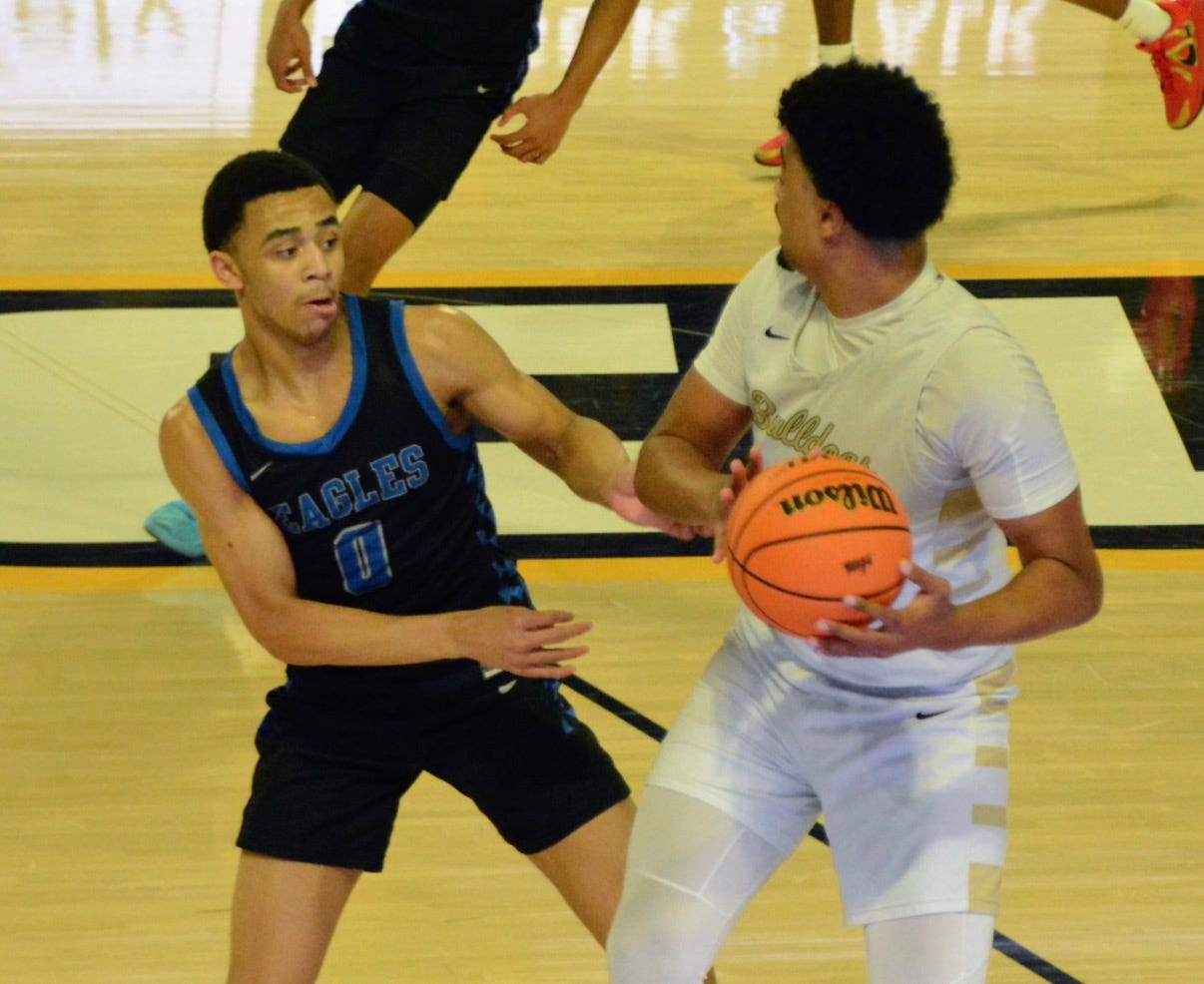
When Westfield edged Landstown 48–44 for the Virginia Class 6A championship at VCU’s Siegel Center, the scoreboard told an interesting story.
Not just about the game itself, but about the way high school basketball is played today.
For all the talent on the floor — and there was plenty — the game looked nothing like the three-point shooting contests that dominate the NBA and much of college basketball. At those levels, modern offenses are built around spacing, efficiency, and mathematics: shoot threes, generate layups, eliminate mid-range shots.
But high school basketball, at least at the championship level, still looks very different.
It remains a possession game.
The players today are unquestionably more skilled and more athletic than they were fifteen or thirty years ago. They handle the ball better, move faster, and arrive at high school already polished by years of travel basketball and individual training.
Yet many of the games I watched this season — especially in the postseason — were battles of will. Every possession felt contested. Scores stayed in the 40s or 50s. Shooting percentages were modest. The ball didn’t zip around the floor searching for a mathematical advantage so much as it fought its way through traffic.
It made for compelling basketball.
The most obvious explanation is the shot clock — or rather, the absence of one in Virginia and the dozen or so states still holding out.
Without a clock, the team in the lead has little incentive to hurry. The only thing that ends a possession is a turnover or a bad shot. Late in the state final, Westfield spread Landstown’s aggressive defense across the floor. They weren’t exactly holding the ball, but they certainly weren’t rushing either.
When Malachai Lee drove the baseline for a key layup from that spread offense, it might have made the late Dean Smith smile. Smith’s famous “Four Corners” offense once controlled tempo in much the same way — a strategy sometimes described as “four to score.”
But the shot clock isn’t the whole explanation.
Another factor may be the three-point line itself. In warmups many high school players can make those shots comfortably, but under game pressure — with defenders closing and fatigue setting in — the results are far more mixed. Especially in a big arena like the Siegel Center.
At the high school distance, the arc may actually be placed about right. College and the NBA have already moved theirs back once and may eventually need to do so again as shooting continues to improve. But at the high school level the shot is still difficult enough under game conditions that teams cannot simply live by it.
Then there is the coaching.
The quality of coaching across Northern Virginia remains remarkably strong. Many of today’s coaches were top players themselves, deeply invested in the game even while balancing teaching and other careers.
And good coaches know how to defend.
They teach teams to guard the perimeter, rotate help defenders, and shrink the floor. In a strange way, modern coaching may have caught up with modern offense. What analytics revealed about scoring efficiency, coaches have learned how to disrupt.
Defense travels well in March.
Of course, there are exceptions. Earlier this season Riverside and Stone Bridge played a shootout that ended 94–92. Programs like Woodgrove’s girls have built extremely successful offenses around the three-point shot.
The skill level is clearly there.
But postseason basketball often produces something different. Teams like South County and Marshall have shown that disciplined defense and careful possessions can still win games with scores in the 40s — and sometimes even the 30s.
Westfield’s defense throughout the state tournament was a perfect example. Explosive offensive teams like Edison, Manchester, and Landstown struggled to find rhythm against the Bulldogs.
In the end, the championship game followed one of basketball’s oldest truths.
Paint touches win.
Local coaches had predicted as much on my podcast all week. And when Westfield’s 6-foot-7 Wil Robinson stepped forward to dominate the final with 22 points, the lesson was clear.
Basketball may be evolving everywhere else.
But in Virginia high school basketball — especially in March — the game still belongs to the toughest team on the floor.
And honestly, that makes it pretty great to watch.
March Madness will provide plenty of shooting contests soon enough.