

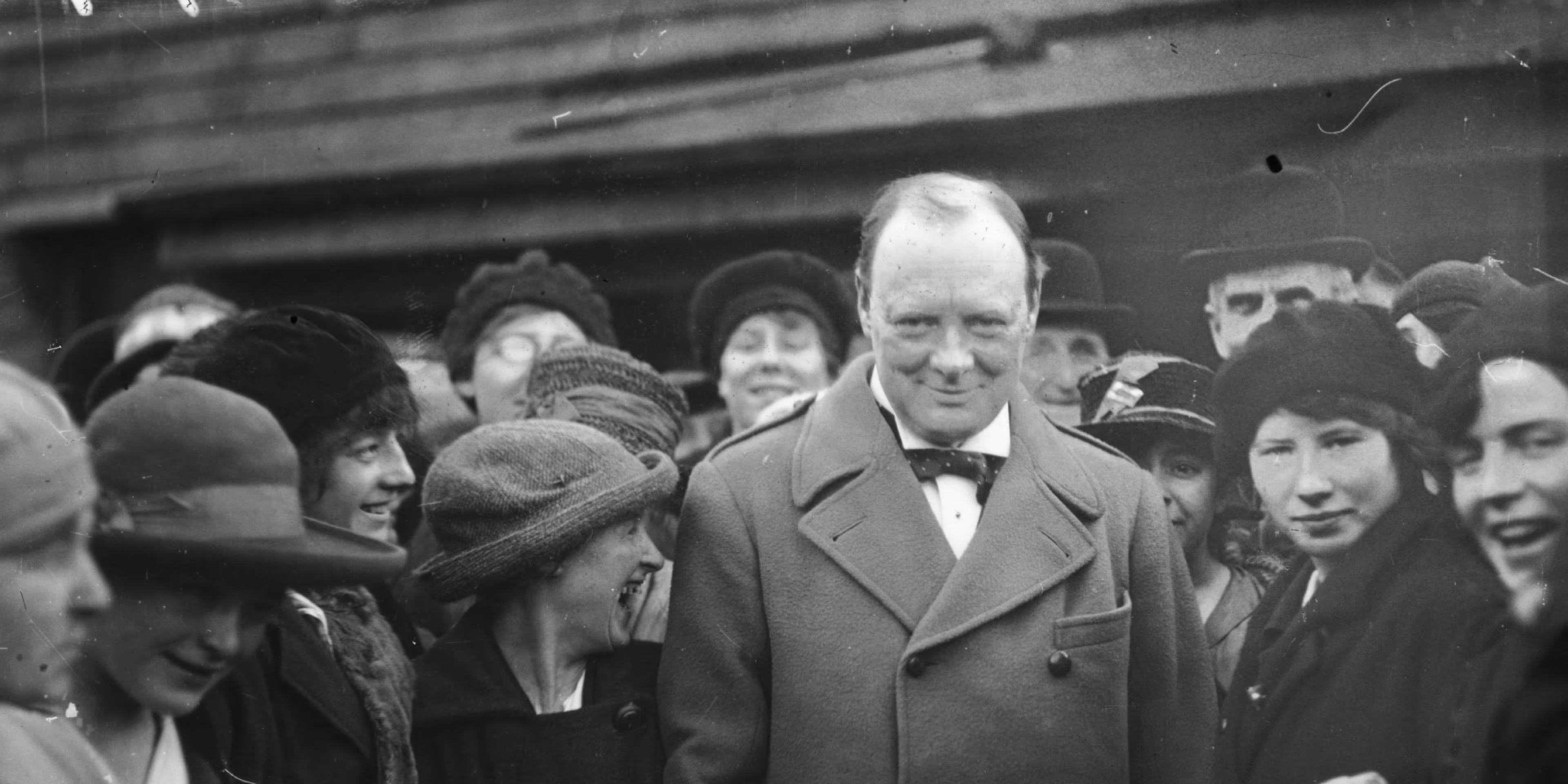
There is almost no faster way to look foolish than to compare a living leader to one of history’s great figures. Once a person becomes a Churchill, a Mandela, a Lincoln, they cease to be human beings and become narrative devices—myths shaped by politics, memory, and national need. In that sense, they are almost unusable as comparisons. They have been polished into symbols so thoroughly that the messy reality of their lives has been sanded away.
One wonders what Sir Winston himself would make of his current reputation. Would the architect of Gallipoli, the man thrown out of office immediately after winning World War II, recognize the marble statue we have made of him? Would he see himself as the statesman who kept Britain committed to the fight, honored its alliance with Poland, rallied London through the Blitz, and held the island long enough for American power to matter? Or would he be baffled by the selective memory that turned a flawed politician into a secular saint?
Part of the difficulty, of course, is that Churchill was not yet “Churchill” in 1940. He was a controversial politician whose future—and whose reputation—remained unwritten. History had not yet settled on the story it would eventually tell about him. That is precisely why comparisons made in the present are so perilous.
And yet, if there is a modern figure who invites the comparison, it is Volodymyr Zelensky. Not because he is Churchill reborn, but because he is a leader confronting a moment that demands Churchillian qualities. As with Churchill, he has detractors. As with Churchill, we lack the benefit of hindsight. But it is rare to witness history in real time without needing a historian to explain why it mattered.
“I need ammunition, not a ride.”
When American intelligence agencies predicted Kyiv would fall in days, Zelensky stayed. When Russia, a nuclear power with vastly greater resources, launched its invasion, he led Ukraine into a resistance that surprised the world. Even as American support has become increasingly uncertain, Ukraine has regained the initiative in important sectors of the battlefield, expanded the war far beyond the Donbas, and carried out drone strikes into Moscow itself and deep into Crimea. More than three years after the invasion, the Ukrainian state not only survives but continues to adapt, innovate, and fight.
Many have wondered how Zelensky has survived at all, let alone how he has marshaled a nation’s resources against a far larger adversary. Ukraine, under his leadership, is reshaping how we think about war: the use of drones, decentralized command, rapid communication, and asymmetric tactics in a conflict that military academies around the world are now studying.
Churchill’s leadership helped buy the Allies time—time for Germany to falter, time for the alliance to strengthen, time for the world to mobilize. Zelensky is doing something similar. He is pushing back against a nuclear power and buying the world time to rethink security, deterrence, and the future of conflict. These are dangerous times, but also transformative ones.
To compare Zelensky to Churchill is not to elevate him to myth. It is to recognize that, every so often, history presents circumstances that demand a certain kind of courage—and that some leaders rise to meet them.