

A defining feature of this White House — and increasingly of agencies such as the Pentagon — is its contentious relationship with the press. When people in power speak, it is news by definition. Their words affect Americans and often the wider world.
The president understands this. He makes himself available, bronzed and camera-ready, hair arranged, long tie in place, prepared to deliver the administration’s latest narrative.
This week brought something more troubling. President Trump announced that CNN, MS NOW and Politico would be barred from the White House. His complaints included what he called “fake news,” but he also offered a particularly revealing explanation: “They purposely write negative news.”
The idea that news should be supportive is a category mistake. News is supposed to tell us what is happening, not how we should feel about it. There are countless feel-good platforms for those who want uplift. Journalism is not one of them.
Barring reporters because the government objects to their coverage creates an obvious problem. It rewards softballs and discourages scrutiny. The press has long been described as the fourth estate precisely because it performs a function different from that of government. It informs the public and subjects those exercising power to questions they might prefer not to answer.
But there is another problem, and it runs in almost the opposite direction.
Covering every presidential utterance can also play into the administration’s hands.
The performance becomes the story.
An administration can be hostile to the press while simultaneously craving its attention. It can restrict particular reporters while producing an endless supply of announcements, confrontations, remarks and controversies for everyone else to cover. The cameras remain pointed toward the president. The argument changes. The subject changes. Tomorrow brings another performance.
And much of the actual news is somewhere else.
There may be news in that briefing room or in the Oval Office. It is not where journalism ends.
The news is in data and images from battlefields. It is in the experiences of military families. It is in gas prices posted in Peoria. It is in the quiet transfer of people into detention facilities across the country. It is in what Congress is doing, what courts are deciding, what governors are implementing, and what the administration’s opponents are actually saying and doing.
If an administration says the economy is thriving, go look at the economy. If it says a military operation is succeeding, examine the battlefield and talk to the people fighting the war. If it describes immigration enforcement as orderly and necessary, go to the communities and facilities where that enforcement is occurring.
That is journalism too.
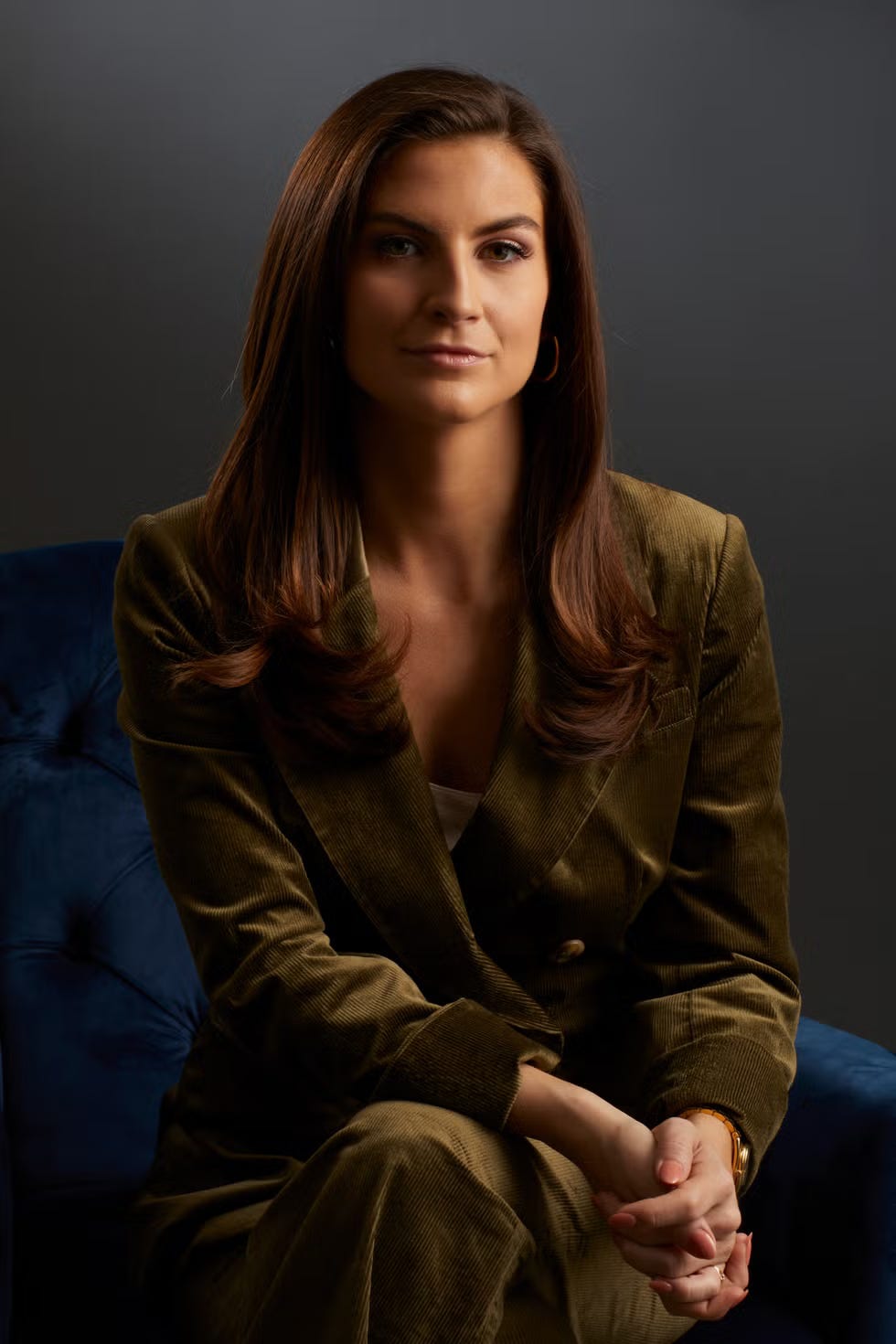
Kaitlan Collins is talented and prepared, and there is genuine journalistic value in pressing a president with facts and forcing him to answer questions he would rather avoid. There can even be satisfaction in watching a reporter expose a contradiction or hypocrisy.
But even a successful confrontation takes place on the president’s stage.
There is a practical cost as well: lengthy, improvisational Oval Office exchanges can leave reporters spending hours determining which presidential assertions are true, false or somewhere in between, before they ever get to the underlying story.
That is the difficulty.
The administration wants the media focused on its message, even when the coverage of that message is hostile. A confrontation can dominate a news cycle just as effectively as a favorable announcement. The rhetoric itself becomes part of the communications strategy, and the press can find itself spending enormous amounts of time covering the administration’s description of the world rather than the world itself.
There is a civic cost too: the more government becomes a succession of presidential announcements, the easier it is to forget that much of domestic policy is supposed to emerge from legislation — debated and enacted by Congress — rather than from whatever the president announces before the cameras that afternoon.
A free press requires access to government. It should resist efforts to condition that access on favorable coverage.
But access is only the beginning.
The president will keep talking and tweeting. There will always be another statement, another confrontation, another camera, another performance.
Journalism cannot merely record the performance.
It has to leave the room.
The news is outside.