

Fifteen or twenty years ago, it was common to hear grumbling as European national teams grew more diverse, some fielding more players from former colonies than from the country’s historic majority. Mario Balotelli became emblematic of the debate: a gifted striker born to Ghanaian parents, adopted and raised in Italy, who, despite the controversy that often surrounded him, was ultimately judged by most Italian supporters the same way they judged every striker.
By the goals he scored.
In the 2026 World Cup, Black players representing Norway, Switzerland, Austria, England, and many other nations contribute with remarkably little public controversy. Diversity, once a source of political debate, has become ordinary.
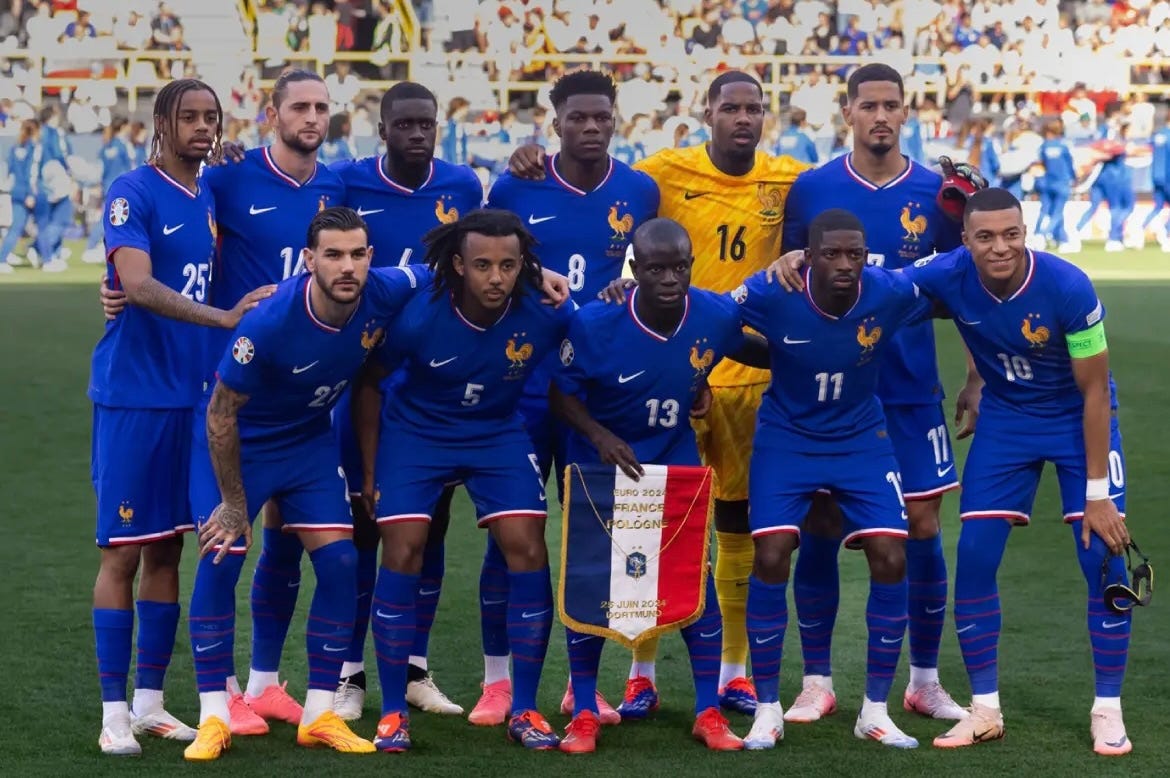
But recent remarks by a Spanish politician questioning whether France is truly “French,” along with crude comments from a Paraguayan official after an emotional defeat, have returned questions of national identity and football to public discussion.
World Cup eligibility is not a DNA test. FIFA permits players to represent a country through birth, ancestry, or, in limited circumstances, naturalization coupled with a substantial period of residency. Most footballers dream of representing the nation where they grew up or where their family roots lie. Yet the World Cup is also the sport’s greatest stage, and one outstanding tournament can transform a career.
This year has already offered an example. Vozinha, Cabo Verde’s 40-year-old goalkeeper, captivated audiences around the world and is now reportedly attracting interest well beyond his current second-division Portuguese club. Many others will leave this tournament with opportunities they did not possess a month ago.
Players choose national teams for reasons that are rarely simple. Loyalty matters, but so do opportunity and practicality. Breaking into France, Brazil, or England may be far more difficult than becoming a regular for another country to which a player is equally entitled. For those already competing in Europe’s top leagues, representing a distant home nation often means long travel, interrupted club schedules, and demanding qualification campaigns. Some African internationals have also spoken openly about federations that struggle to meet financial commitments or provide adequate support. None of that makes them less patriotic. Complaining about one’s country is something many of us do. It is often a sign of investment rather than indifference.
For Americans, the conversation feels different. The United States is a young nation built by immigrants, and most of us have grown comfortable with that reality in sport. Even Donald Trump, whose immigration policies have been arguably the most restrictive in American history, supported efforts that helped Folarin Balogun overturn a suspension for the United States while simultaneously advocating broader immigration policies that would have made many similar stories more difficult. It is one of those curious contradictions that politics occasionally produces.
Americans have long understood that athletic excellence has a way of eroding rigid ideas about identity. College football learned that lesson during integration in the South. International football has been learning a similar one for decades.
Choosing a national team is, in its own way, a compliment. It is a declaration of belonging. If a player qualifies under the rules, earns a place in the squad, and contributes to his country’s success, that contribution stands on its own.
International football has always been a story about nations.
Increasingly, it is also a story about migration.
Those two realities are no longer in conflict.
They are simply the modern world.
Today’s French team includes players who could have represented African nations—or even other European countries—through birth or ancestry.
But today they wear blue. On Bastille Day.
Vive la France.