

One possible explanation offered for why Donald Trump chose to join Israel in its confrontation with Iran was the shocking report that tens of thousands of Iranian civilians had recently been killed during protests against their government.
If that calculation played any role in the decision, it carries a troubling implication.
History suggests that regimes willing to inflict extraordinary suffering on their own populations are rarely easy adversaries in war.
Trump has maintained cordial relations with leaders whose governments have been similarly ruthless toward civilians, both within their borders and beyond them. Yet even if humanitarian concern played some role in the decision, the reports themselves should have served as a warning rather than an invitation.
A state capable of absorbing that level of internal violence often proves extraordinarily difficult to coerce from the outside.
In ordinary life we sometimes say the most dangerous opponent in a street fight is the person who is not afraid to get hit. The same logic occasionally applies to nations.
When a government signals that it is prepared to endure immense civilian suffering, it alters the strategic equation. Deterrence weakens. Pressure loses leverage. The costs that might persuade other states to compromise no longer function the same way.
Modern warfare only magnifies this dynamic.
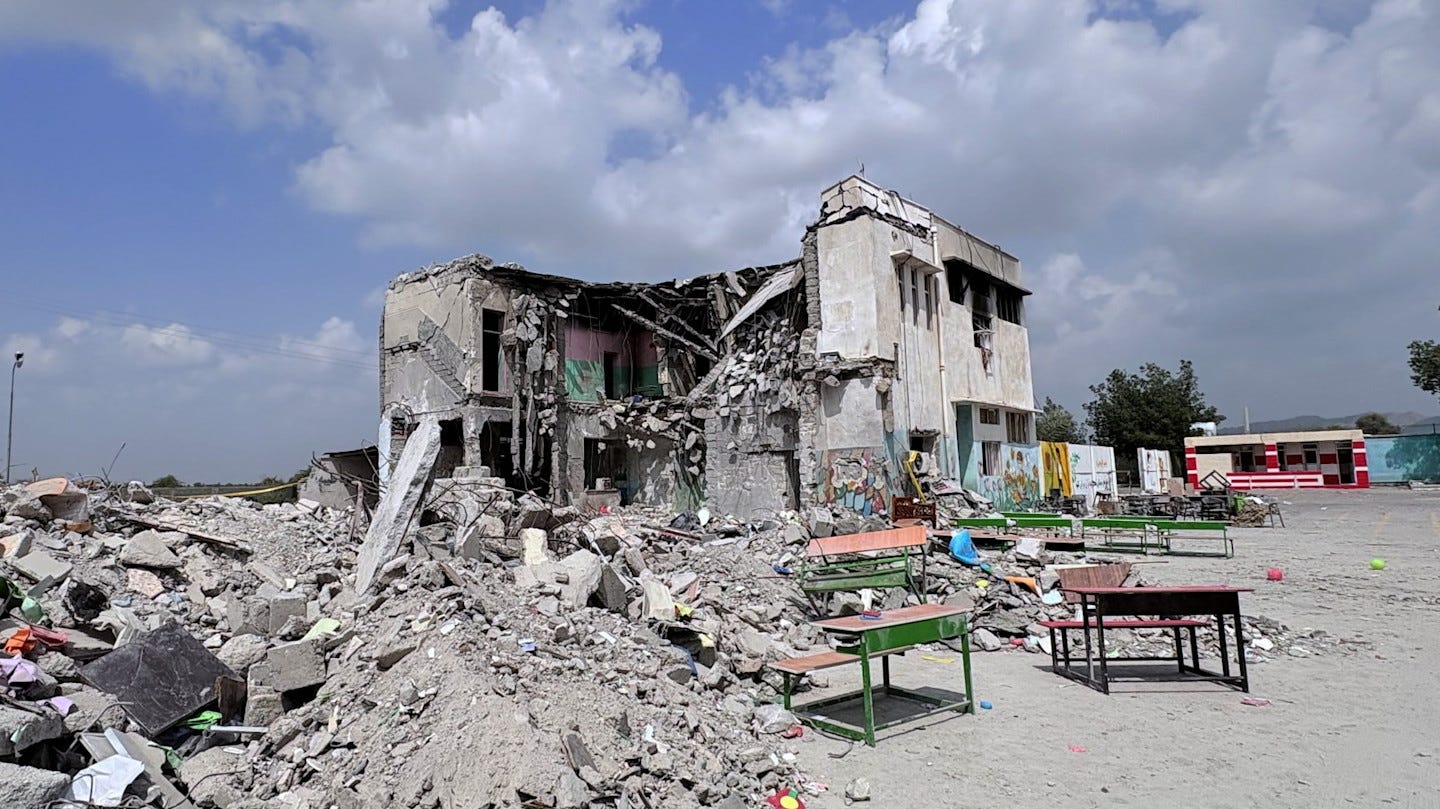
Wars are no longer measured the way eighteenth-century conflicts once were, by how many miles a front line moves across a map. In many contemporary conflicts the outcome becomes something starker: surrender, stalemate, or devastation. The destruction in Gaza offers one grim illustration of how such wars unfold.
Recent reports suggest that elements of Iran’s military have been given authority to act even if communication with central command is disrupted. Such instructions are not unusual in modern conflict, particularly when leadership believes its command structure could be targeted. But they also create a battlefield environment where retaliation and escalation may occur without careful coordination.
That kind of decentralization makes wars harder to control.
There is another asymmetry worth noting.
The United States is unlikely to tolerate prolonged suffering of its own citizens. Democracies rarely do. Public patience for war is limited, and political leaders know it.
But the same leaders may show far greater tolerance for suffering that occurs elsewhere.
Statements suggesting that populations in Gaza might be relocated or that devastated regions could someday be redeveloped into resort landscapes may be rhetorical flourishes. Yet they also hint at a troubling possibility: that civilian suffering has become something policymakers believe can be managed at a distance.
When one side believes it can inflict great pain on others while remaining relatively insulated from the consequences itself, diplomacy becomes harder and wars become easier to begin.
The hope, of course, is that these fears prove exaggerated.
But history offers a sobering lesson: conflicts fought with that kind of imbalance rarely end quickly — and rarely end well.