

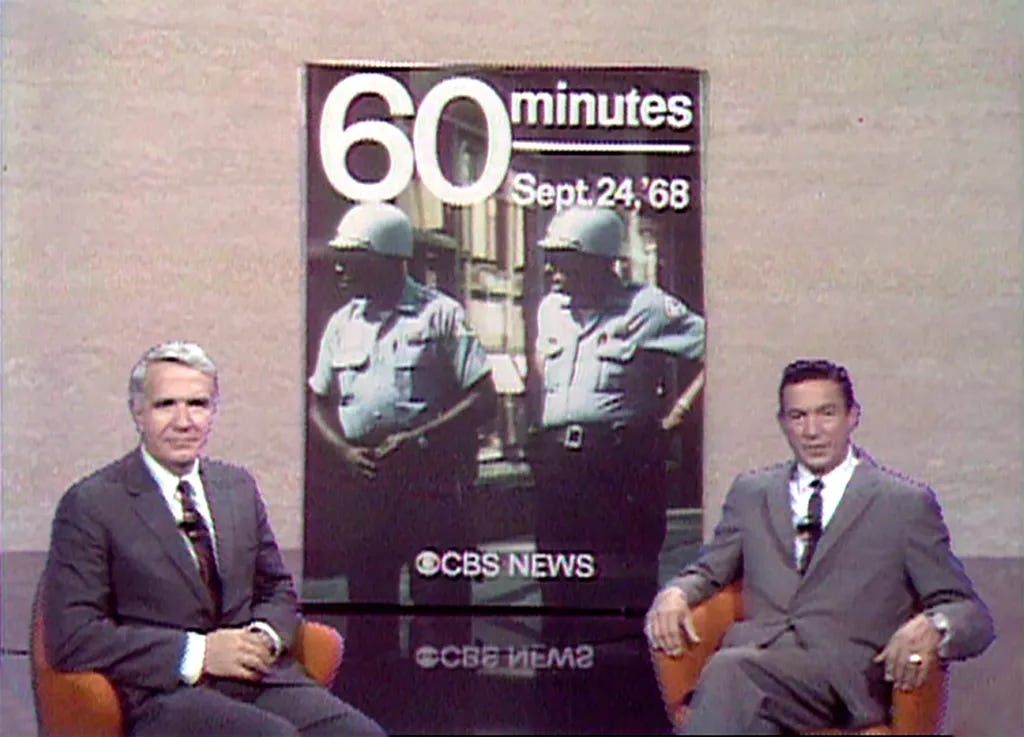
For much of my life, Sunday evening carried a small ceremony. The ticking stopwatch, the restrained narration, the sense that serious adults were explaining the world in a calm and orderly way. 60 Minutes was not simply a television program. It was an assurance that facts existed and could be discovered.
Viewers once approached reporting expecting to learn something. Today we increasingly approach it expecting confirmation. We no longer first ask whether a story is accurate. We ask whose side it helps.
What made the program distinctive was not perfection. It made mistakes, sometimes serious ones. But it projected a posture: facts mattered and could be investigated. Reporters were adversarial without being theatrical. Interviews were pointed without being performed. The viewer was not asked to join a team, only to listen.
The change, however, is not confined to journalism. It is in the audience. We now encounter reporting with pre-existing verdicts. A segment is judged less by its evidence than by its usefulness to one’s position. If it confirms prior belief, it is brave truth-telling. If it contradicts it, it is propaganda.
The press was never meant to be a priesthood, but it did serve a civic function: to create a common starting point for disagreement. Citizens could argue about policy because they were arguing about the same events. When that foundation weakens, argument changes character. Politics becomes less persuasion than prosecution, a permanent exchange of accusations rather than an attempt at judgment.
We consume reporting the way sports fans consume officiating — every call evaluated by the scoreboard. Evidence is secondary to outcome. The question is no longer “What happened?” but “Who benefits from saying it happened?”
This produces a perverse symmetry. Every investigation is described simultaneously as courageous and corrupt. Persuasion becomes difficult because persuasion is no longer the goal. The public sphere shifts from inquiry to adjudication, from deciding what is true to defending what is useful.
Cynicism presents itself as wisdom. It protects us from embarrassment; if nothing is trustworthy, we can never be fooled. But it also removes responsibility. It allows us to dismiss information without examining it, replacing the possibility of error with the certainty of disbelief.
The consequence reaches beyond journalism. A free society depends on citizens willing to revise their views when confronted with evidence. Democratic argument requires not agreement but a shared description of reality. Without it, debate becomes narrative combat and citizenship becomes spectatorship.
Journalism has changed partly because its incentives have changed. It now competes with countless voices offering immediate reassurance. Yet the deeper problem is not media fallibility. Institutions have always been imperfect. The deeper problem is our intolerance for uncertainty. We increasingly grant either blind belief or automatic disbelief — both of which relieve us of the discipline of judgment.
If every report is manipulation, inquiry becomes pointless. Public life turns into performance, and evidence loses its authority.
The stopwatch still ticks on Sunday nights. The question is no longer simply whether journalists can earn credibility. It is whether we remain willing to grant provisional trust long enough to discover what is true.
A republic cannot function on affirmation alone.
It requires citizens willing, at least occasionally, to be persuaded.