

Every four years, once the American men’s national team has taken its leave from the World Cup—often earlier than hope or hubris had forecast—the familiar liturgy begins anew.
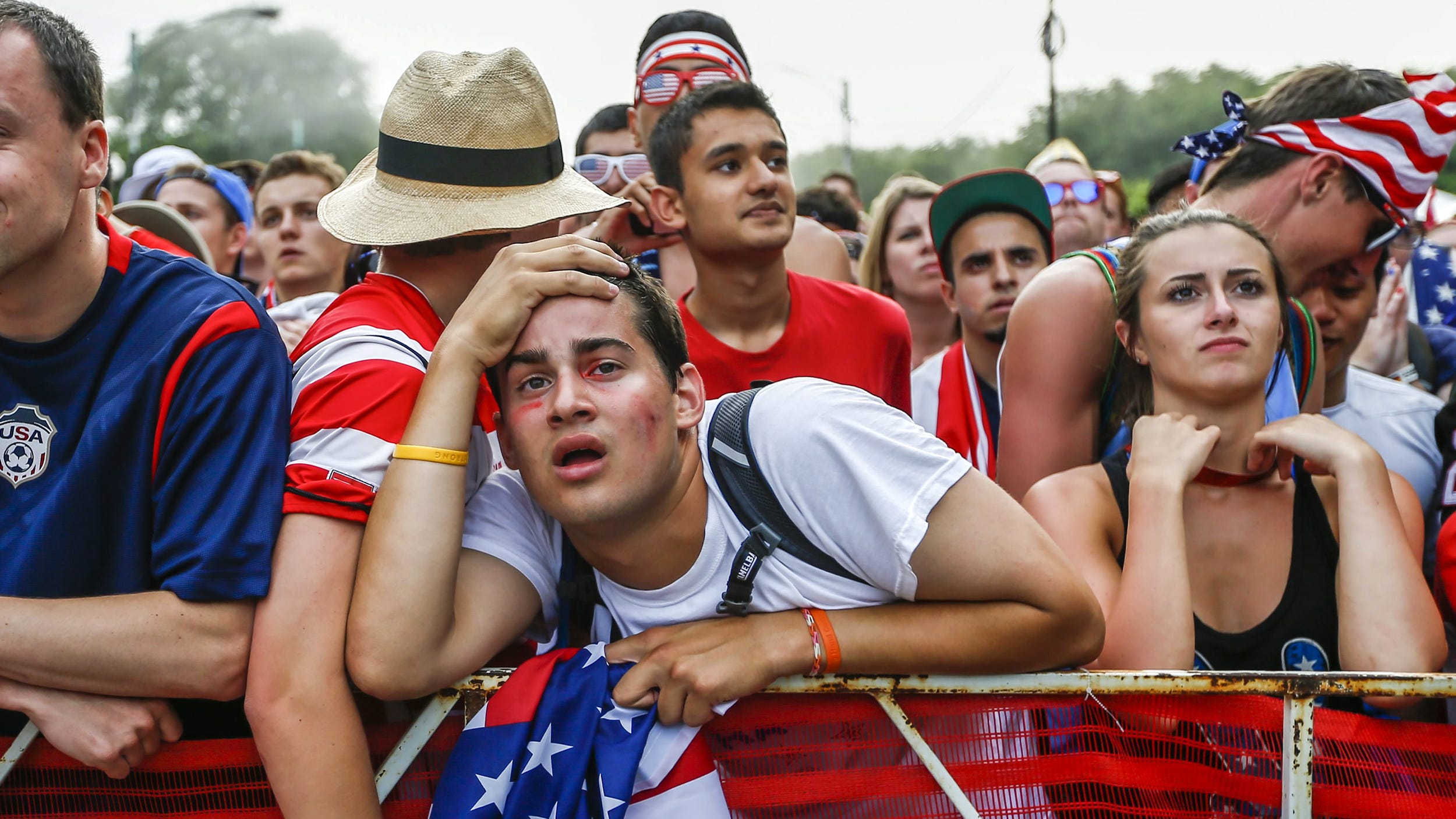
Explanations are offered, laments rehearsed, and the contrast with our far more decorated women’s side is invoked with ritual solemnity. Yes, we usually survive CONCACAF’s qualifying gauntlet, slipping past Costa Rica or Honduras with enough competence to book passage. But the World Cup is a different realm entirely, one in which the top ten nations play with a level of sophistication and relentlessness we encounter only in these quadrennial examinations.
Mexico, our greatest North American rival, remains, for all its admirable qualities, a half-step below Europe's aristocracy, whose squads are stocked with players hardened by the weekly demands of the world’s elite clubs. And yet, perhaps because we were hosts, perhaps because we began brightly, perhaps because we could point to players like Folarin Balogun and Christian Pulisic—men who have scored meaningful goals in meaningful leagues—there was genuine optimism. Even among my own circle of local players, a reasonably discerning bunch, 84 percent believed we would dispatch Belgium, a nation whose footballing pedigree is substantial even if its current roster lacks the incandescent stars of recent vintages.
When President Trump intervened to accelerate the bureaucratic machinery that made the suspended Balogun eligible, optimism swelled further. It became one of the defining storylines of the tournament. The intervention reflected something many may find admirable—a president eager to see his country succeed on the world’s biggest sporting stage. But it also illustrated a recurring American temptation: believing that enthusiasm, influence, or administrative solutions can substitute for the slower work of developing footballing culture. Balogun made us better. He could not make us Belgium.
From the opening whistle, Belgium made such questions moot. Freese was forced into action within minutes, and soon Charles De Ketelaere arrived at the back post to turn in Nicolas Raskin’s low cross for his first international goal. His second came later, a forceful header over the 38-year-old Tim Ream, who endured a night he will not wish to remember. Malik Tillman briefly restored parity through a deflection that owed more to fortune than design, but Belgium’s immediate reply told the truer story.
The difference was not merely technical. Belgium anticipated danger sooner, escaped pressure more comfortably, and seemed to know where the next pass would be before it was played. The United States spent much of the evening reacting rather than dictating. It was less a question of effort than of accumulated football education—the product of players raised in one of the world’s deepest football cultures.
The second half brought more of the same: two additional Belgian goals, several near misses, and only one moment requiring Thibaut Courtois to exert himself—when Balogun finally wriggled free. Belgium played with the serenity of a side accustomed to high stakes: comfortable passing out of pressure, unhurried in possession, yet capable of accelerating the tempo at will. Soccer is a sport of moments, yes, but tournaments reward the ability to create chances, convert them, and deny them. This single match revealed, with clinical clarity, the gulf that still exists between the United States and the sport’s upper tier. A win over Paraguay in group play, however admirable, does not constitute proof of parity with Germany or France.
And so the perennial questions return. Is our pay-to-play system throttling the development of our most promising prospects? Does the absence of promotion and relegation dull competitive edge? Are our best athletes still choosing other sports? The difficulty is that we rarely receive enough meaningful tests against this caliber of opposition to isolate any single explanation. Our diagnostic opportunities arrive only every four years.
Meanwhile, basketball offers a quiet warning. A sport we once dominated with near-feudal authority has become fiercely competitive as the rest of the world steadily closed the gap. Excellence is never permanent. It must continually be renewed.
We have the crowds, the enthusiasm, even a national government willing to involve itself in the fortunes of the team. But none of that substitutes for the fundamentals. Passion cannot compress generations of football culture into a few promising tournaments.
The uncomfortable reality is that wanting to become a soccer power is very different from being one.