

Watching the latest missile exchanges in the Middle East, one is reminded how little modern war resembles the battles that once defined it.
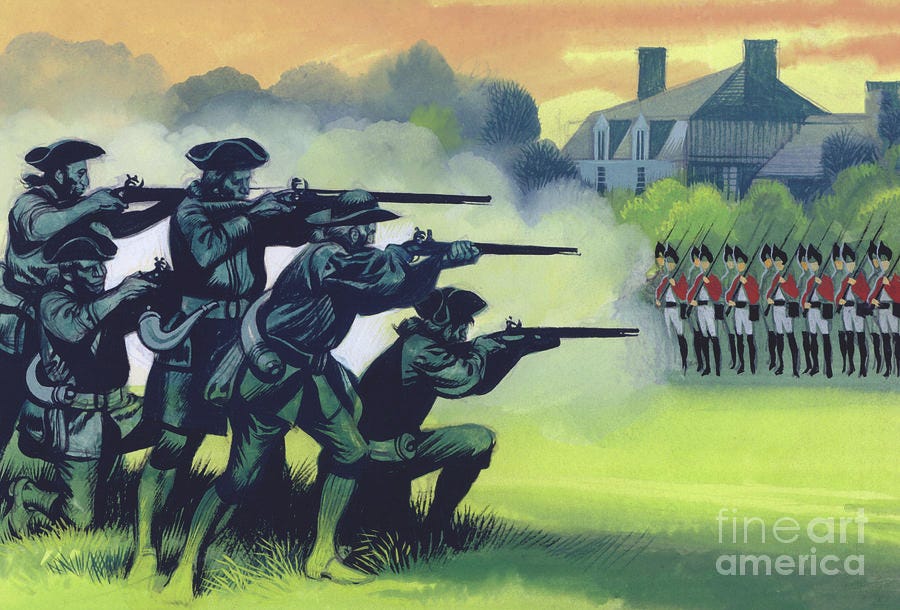
There was a time when war possessed a kind of grim symmetry. Armies lined up in open fields and fired upon the line in front of them. Soldiers advanced in formation, sometimes even allowing the opposing side the first volley. Brutal as it was, combat followed a certain geometry: two forces visible to one another, each accepting roughly the same danger.
Modern war no longer observes that arrangement.
Over time warfare has become more indirect, more defensive, and often more patient. Victory is less about heroic charges than about the quieter arithmetic of suffering fewer casualties. The Wilderness campaign in the American Civil War hinted at the change. The trenches of the First World War confirmed it. The guerrilla struggles of Southeast Asia made it unmistakable.
In such conflicts the battlefield becomes harder to define.
Civilian populations move closer to the center of events. Armies require industry, transport, and supply. Guerrilla forces operate among local communities. Strategic bombing and terrorism alike draw civilians into wars that once belonged primarily to soldiers. Each side condemns the other’s tactics while discovering reasons to defend its own.
History offers sobering examples. The destruction of Hiroshima and Dresden was defended as a way to shorten the war and spare additional military casualties. Terrorist movements, by contrast, often target civilians precisely because they are vulnerable and because fear multiplies the political effect of violence. Russia’s war in Ukraine has at times appeared designed not only to defeat Ukrainian forces but to impose sustained hardship on civilian life.
These patterns are not unique to any single nation or ideology. They are features of modern conflict itself.
Recent criticism of Iran reflects the same dilemma. Tehran has responded to pressure by striking neighboring states that host American bases or support Washington’s strategy. Critics argue such actions merely widen the circle of enemies. Others question why Muslim neighbors should become targets at all.
Yet from the perspective of a weaker power confronting stronger adversaries, the menu of options is often narrow. When direct confrontation proves difficult, governments search for targets within reach. Short-range missiles, proxy forces, and regional pressure become substitutes for decisive battlefield victories.
None of this makes such choices admirable. It merely explains why they occur.
The uncomfortable truth is that modern war increasingly rewards those who can impose costs without exposing themselves to equal danger. The temptation to exploit that imbalance has proved strong in every generation.
The imbalance also distorts our language of bravery. When one side can strike from afar with little immediate risk while the other absorbs the consequences on its own soil, courage becomes a difficult word to apply cleanly. Modern warfare often separates those who make decisions from those who bear the danger.
For that reason the moral vocabulary surrounding war remains indispensable. Statesmen must still speak of restraint, proportionality, and the protection of civilian life — even when those principles are imperfectly observed. Without such language the conduct of war risks drifting entirely into the realm of calculation.
Peace rarely emerges from battlefield exhaustion alone. It comes when adversaries conclude that the costs of continuing exceed the risks of compromise.
There is little sign that moment has arrived. But history suggests that even the most hardened conflicts eventually return to negotiation.
The challenge for statesmen is to remember, even while wars are being fought, that the world which follows them must still be inhabited together.