

One of the administration’s most persistent initiatives has been its campaign to “restore integrity” to voting. Never mind that documented voter fraud in recent American elections has been exceedingly rare; the stated goal sounds noble enough. Ensure that everyone who votes is eligible. Ensure that no one votes twice. Make certain that the person declared the winner actually won.
Who could object to that?
The problem begins when election integrity is quietly transformed into election perfection — when no amount of verification is sufficient because no human system can eliminate every conceivable possibility of error.
Courts are not infallible. Election officials are not infallible. Voting machines are not infallible. Human beings counting pieces of paper are certainly not infallible. But the grievances of a losing candidate are not evidence either. And the striking fact about modern American elections is how little adjudicated voter fraud we actually find compared with the enormous number of votes cast.
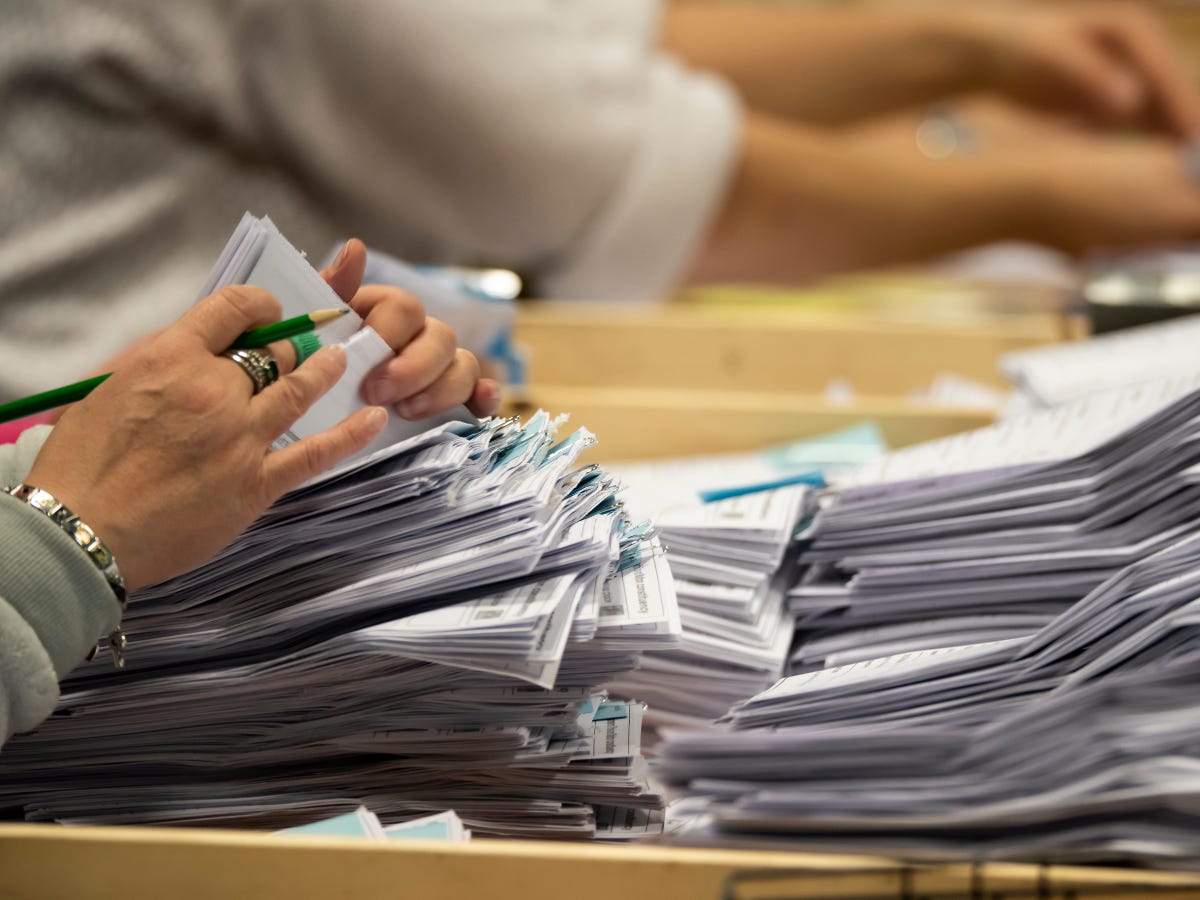
We also tend to forget how comfortable we are with statistical certainty everywhere else in life.
Medicine does not require every possible test before reaching a diagnosis. Manufacturers do not inspect every molecule in every product. Pollsters can tell us a great deal about millions of voters by speaking with a relatively small sample. Courts themselves do not demand absolute certainty even before taking away a person’s freedom; our criminal standard is proof beyond a reasonable doubt.
Elections can be approached with the same understanding of probability.
That does not mean replacing actual vote counts with exit polls or statistical models. Votes should be counted. Paper ballots should be preserved. Machines should be tested. Fraud should be investigated and prosecuted.
But there are already sophisticated ways to determine whether a reported election result deserves our confidence. Risk-limiting audits, for example, examine randomly selected paper ballots and use statistical analysis to determine whether the reported outcome is reliable. If discrepancies appear, more ballots are examined. If necessary, the process can expand all the way to a full hand count.
The closer the election, the more scrutiny it deserves.
Florida in 2000 demonstrated why. When a presidential election is decided by 537 votes out of millions cast, tiny imperfections suddenly matter enormously. Hanging chads, machine tolerances, judgments about voter intent and recount procedures can conceivably affect the result. An election that close deserves extraordinary examination.
But a 537-vote margin and a 537,000-vote margin do not present the same problem.
At some point, the possibility that enough errors exist to change a large result becomes so remote that continuing to search for them ceases to be a meaningful exercise in election integrity. It becomes the pursuit of certainty that no election — and indeed almost no human endeavor — can provide.
That distinction seems increasingly lost.
We devote extraordinary political energy to searching voter rolls, changing identification requirements, challenging mail ballots and constructing new mechanisms to verify eligibility, all in pursuit of imperfections that may exist but rarely appear in sufficient numbers to affect an election. Meanwhile, every additional safeguard carries costs of its own: money, bureaucracy, confusion and, potentially, eligible voters who find it more difficult to cast ballots that should count.
Election integrity matters. Eligible voters should be able to vote. Votes should be counted accurately. Fraud should be prosecuted. Close elections should receive heightened scrutiny.
But integrity is not the same thing as perfection.
At some point, every functioning system must decide what constitutes sufficient evidence that it worked. If no amount of auditing, recounting, litigation or statistical confirmation can ever answer that question, we are no longer protecting elections. We are creating a system in which no election ever has to be accepted.
The danger is not that our elections can never be perfect.
It is that we may someday require perfection only from elections whose results we dislike.