

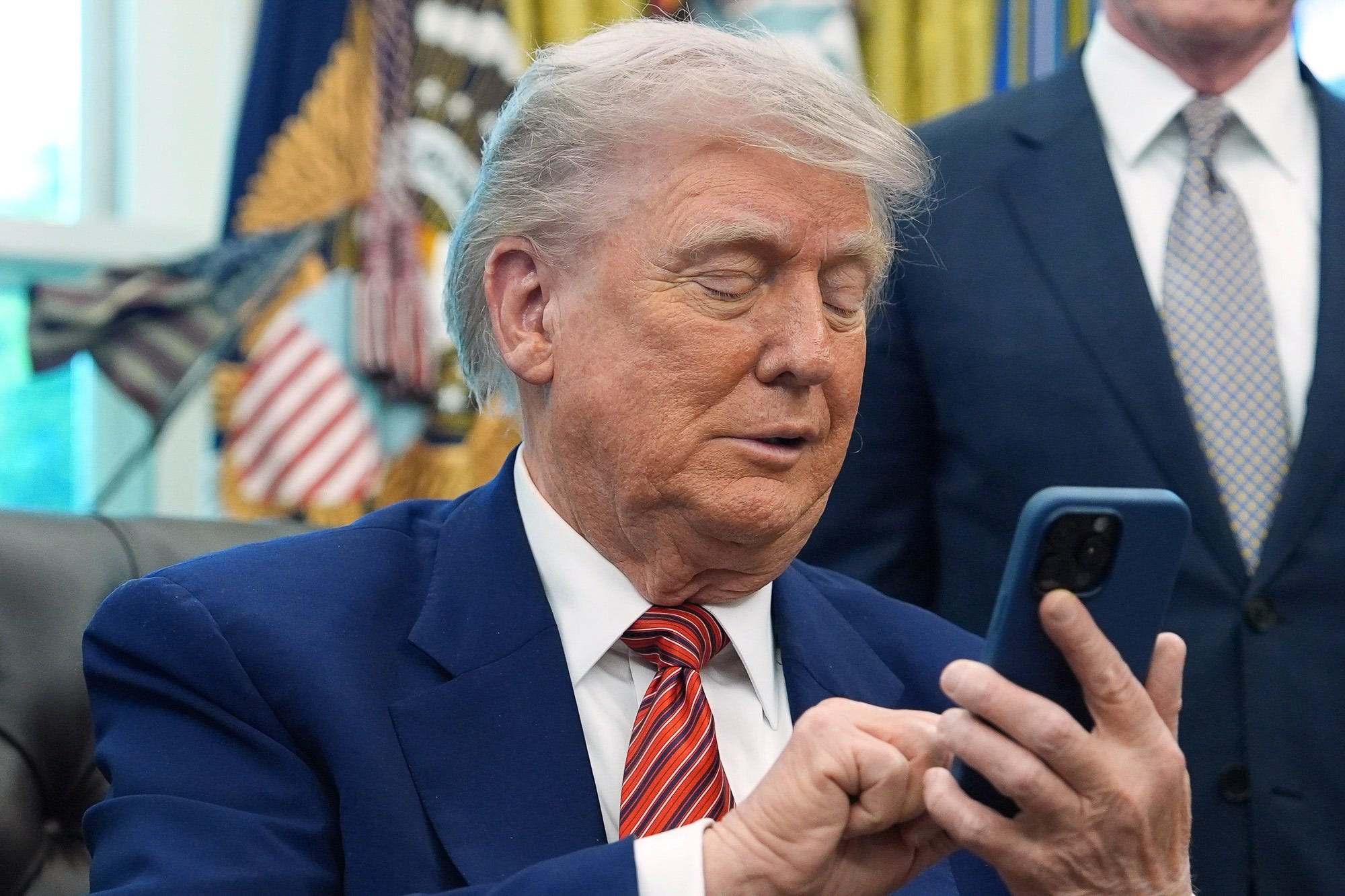
There was a time when a president of the United States did not own and control the means of his own broadcast. Communication with the public moved through formal channels—press conferences, prepared statements, briefings shaped by deliberation. The distance between thought and expression was not a flaw in the system. It was a feature.
That distance has largely disappeared.
Today, the president can communicate instantly, directly, and without mediation. What once required coordination and consideration can now be transmitted in real time, often as it occurs. The result is not merely more communication. It is a different kind—more immediate, less filtered, and, at times, less considered.
In an era already saturated with information, the consequence is not clarity, but accumulation. There is more to react to, but less space in which to think. The pace of events begins to crowd out the discipline of reflection.
This shift might be manageable were it confined to tone. But communication, particularly at the level of national leadership, is not incidental. It shapes expectations, signals intent, and, in subtle ways, defines the boundaries of policy itself. Words, once released, do not remain isolated. They are interpreted, amplified, and, at times, acted upon.
For that reason, presidential communication has traditionally been treated as a matter of strategy rather than impulse. It has been constructed, not merely expressed.
We were told that this administration would operate differently—that structure would be restored, that communication would be more disciplined. And in some respects, efforts have been made to impose order on a system that resists it.
But there are limits to structure when the principal resists constraint.
Donald Trump has long operated with a preference for immediacy—favoring direct expression over deliberation. That instinct, while central to his political identity, presents a challenge in governance. The presidency is not merely a platform for expression; it is an office in which communication carries consequence.
The difficulty is not simply one of style. It is one of function.
A system in which no one is positioned to meaningfully temper or refine presidential communication risks becoming reactive rather than strategic. Messages shift. Signals blur. Allies and adversaries alike are left to interpret not only policy, but the meaning of its articulation.
At times, this may disrupt or even undermine aspects of the administration’s own agenda. At others, it may complicate governance more broadly. In either case, the effect is cumulative.
None of this is easy to correct. The modern communications environment rewards immediacy, and the presidency now operates within that reality. But the demands of the office have not changed as quickly as the tools surrounding it.
The question, then, is not whether a president can speak freely. It is whether the office can sustain the discipline required to ensure that what is said serves a purpose beyond the moment in which it is delivered.
In a system that permits constant expression, restraint is no longer assumed—it must be chosen.
Silence, in such a context, is not absence. It is judgment.
And in a system that now permits constant expression, that judgment may matter more than ever.