

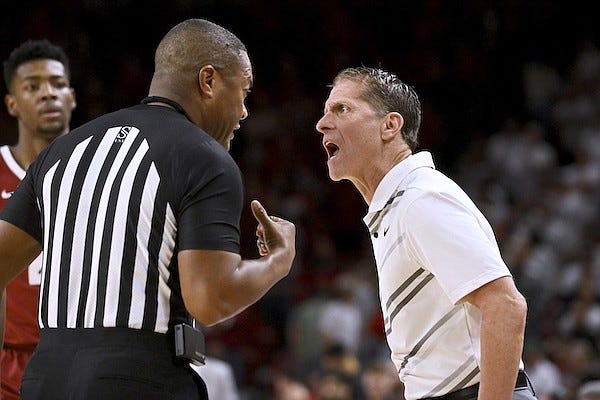
Imagine a basketball game in which the rules are changed so that coaches are no longer subject to the officials. The referee can still call fouls on players, but cannot issue a technical to the bench. The whistle still exists—but only partway.
What happens next is predictable.
If the coaches are serious people—acting in good faith, committed to the integrity of the game—they will still respect the officials. They will model restraint, reinforce discipline, and help keep the contest fair. Authority, in that case, survives even when formal enforcement weakens.
But if a coach decides those things no longer matter—if winning, ego, or grievance overrides legitimacy—the official is left with persuasion alone. The rulebook still exists. The power to enforce it does not.
One begins to wonder whether the Supreme Court has placed itself in a similar position by granting the president immunity for official acts.
The Court may assume that a president will still care about legitimacy, reputation, or the long-term health of the system—that impeachment, history, or public judgment will restrain him. But that assumption is not a rule. It is a hope.
Some will argue the Court merely recognized political reality—but courts exist precisely to decide which realities must be resisted.
What if the president does not care how the Court is viewed? What if impeachment is treated as inconvenience rather than threat? What if institutional damage is acceptable collateral in the pursuit of power? In that world, the Court still has opinions, but fewer tools. It can speak, but it cannot compel.
In effect, the Court has weakened its own whistle at a moment when restraint, oversight, and institutional steadiness matter most. It has traded enforcement for expectation—authority for trust—without knowing whether trust will be honored.
That is a dangerous bet.
Courts, like referees, are not meant to rely on the goodwill of the most powerful actors in the room. They exist to provide structure when goodwill fails. When authority becomes conditional on character, the system works only as long as the characters behave.
And when they do not, the whistle is missed only after the game is already out of control.