

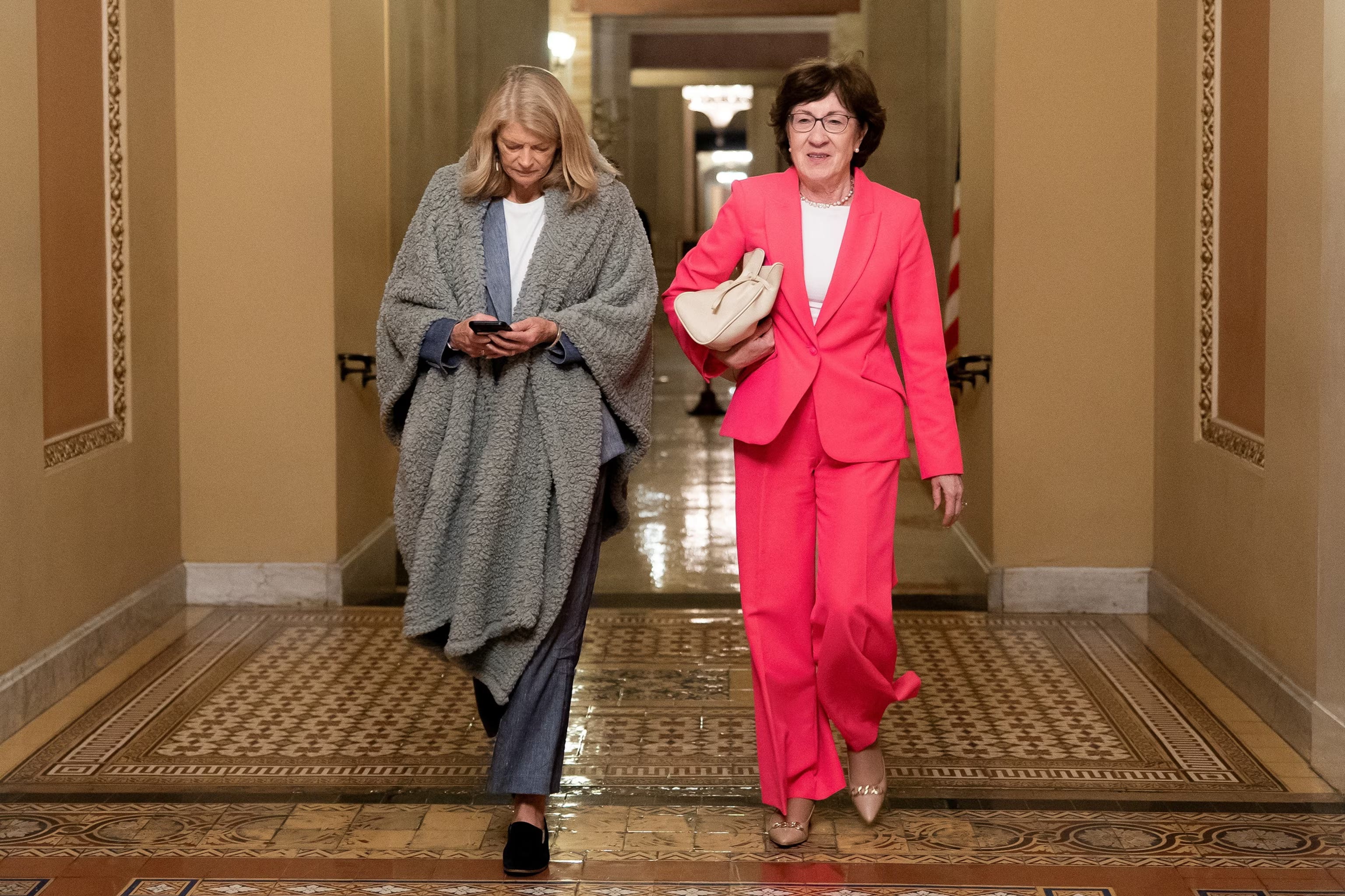
We often talk about the lack of courage among Republicans. Susan Collins, Lisa Murkowski, Rand Paul, and the occasional retiring senator will sometimes break ranks. But the pressure falls almost entirely on the handful willing to oppose the president. The list of moments that might have produced greater resistance is long — controversial appointments, arguments over monuments to the president, war in the Middle East, the removal of a South American leader, sweeping tariffs. Yet meaningful Republican pushback has often been limited.
If more senators stood together, there would be safety in numbers.
We would not be left scrutinizing the same few.
And yet, for some reason, the Republican Senate has repeatedly found its courage when defending the filibuster. It is a procedural device that many outside Washington barely understand, but inside the chamber it inspires a degree of unity that appears much harder to achieve elsewhere. Even under considerable pressure from President Trump, most Republican senators have continued to defend it.
Why here, and not everywhere else?
Part of the answer may be simple: numbers reduce the personal cost of dissent.
If most of the conference is defending the filibuster, a senator can speak freely. If the question is whether Robert F. Kennedy Jr. should run the nation’s health bureaucracy, dissent becomes considerably lonelier. Kennedy was confirmed 52–48, with Mitch McConnell the only Republican voting against him. More recently, four Republican senators — Collins, Murkowski, Paul and Bill Cassidy — joined an effort to restrict further hostilities with Iran and were publicly attacked by the president afterward.
Standing apart carries a cost.
Standing together distributes it.
But perhaps there is another explanation.
Maybe senators defend the filibuster so fiercely because it is one of the remaining places where being a senator still matters.
The filibuster gives individual senators and political minorities leverage. It can stop legislation that otherwise has majority support. It forces negotiation, delays action and sometimes prevents action altogether. Whatever its virtues or defects, it makes the Senate different from a legislative body governed entirely by simple majority rule.
And, not incidentally, it makes senators more powerful.
That matters because Congress has gradually surrendered substantial discretion to the executive branch, particularly in areas such as military action, emergencies and economic policy. Presidents of both parties have made use of authorities delegated by Congress, while legislators frequently find themselves debating afterward how much power they intended to surrender in the first place. Federal law itself reflects this tension, granting presidents broad emergency economic authority while retaining congressional reporting and oversight requirements.
Perhaps that helps explain the peculiar attachment to the filibuster.
Congressional power can be abstract.
A senator’s power is not.
The filibuster protects the Senate as an institution, but it also protects the relevance of the people who serve there. A senator who might tolerate another expansion of presidential discretion may feel rather differently about surrendering one of the few procedural weapons that makes his or her individual vote unusually consequential.
Maybe, then, what looks like an unusual outbreak of political courage is something more complicated.
Interests have aligned.
When confronting a president of their own party, senators who dissent can expose themselves individually to political retaliation. When defending a Senate rule that preserves their own institutional influence, resistance protects the institution and distributes the political risk.
But that reveals something important too.
There is safety in numbers.
A senator standing alone against a president risks becoming the story. Twenty senators standing together become a faction. Forty become an institution.
We spend a great deal of time asking why individual senators lack courage.
Perhaps we should spend more time asking why they so often have to find it alone.