

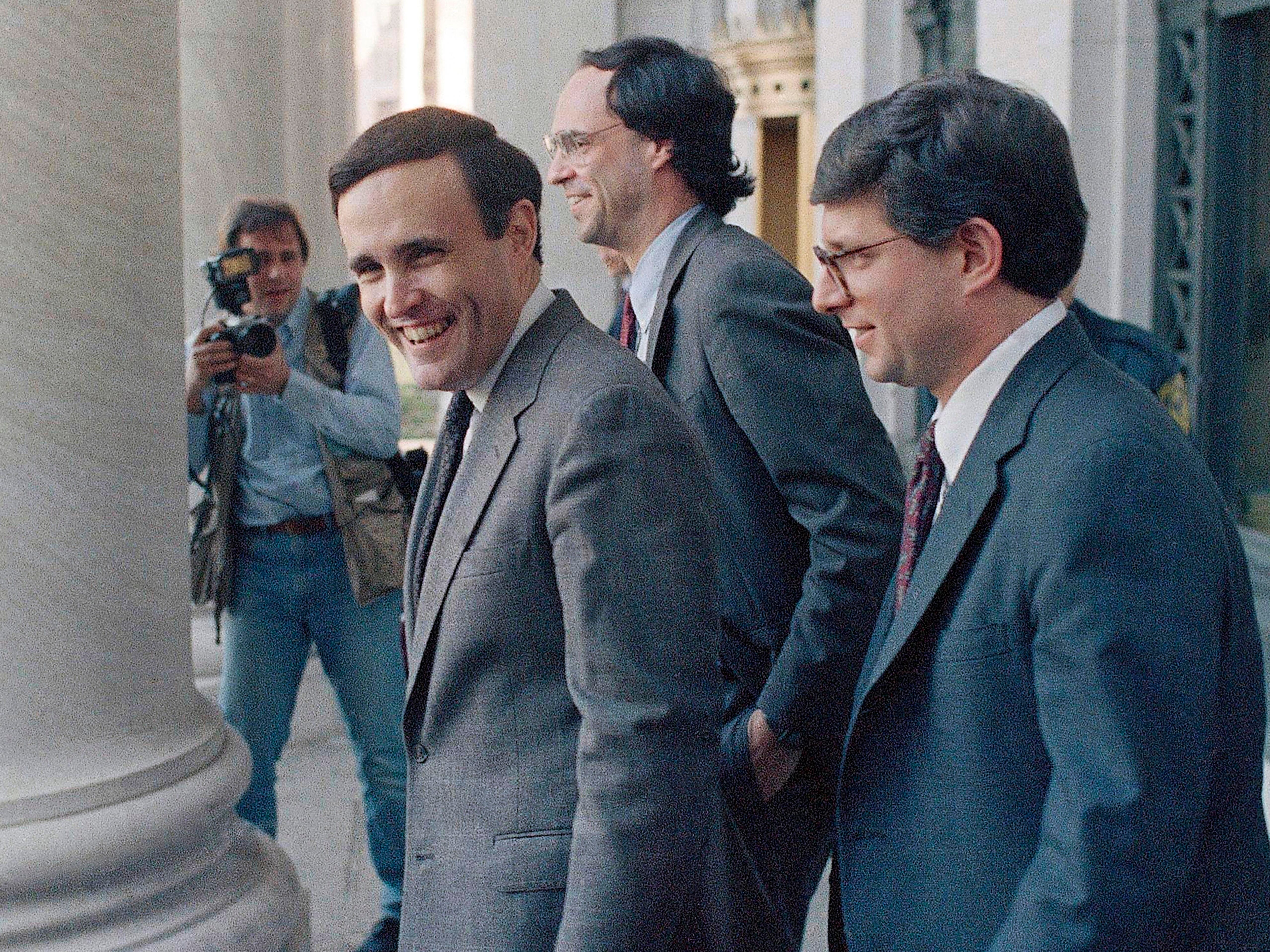
Rudy Giuliani used to argue that every broken window must be fixed if a city hopes to restore order. The idea, broadly speaking, was that attending to the small things prevents the larger things from collapsing. Apply that to the Trump administration and you quickly discover the limits of the metaphor. If you try to repair every broken window, you will lose your mind. If you ignore them, you risk losing something far more important.
A UFC fight on the White House lawn may offend every civic instinct we associate with the capital — decorum, restraint, a sense of national dignity — but we have learned to triage. People focus on what matters most to them, and the list varies: a war in Iran launched without congressional or international approval; covert operations near Venezuela; masked federal agents in American streets; the razing of the East Wing; the president’s name affixed to the Kennedy Center. The catalogue is long.
We once assumed that limited government meant limited mischief. Elected leaders, we believed, were constrained by good intentions, institutional checks, and the quiet discipline of constitutional design. Impeachment existed. Midterms could rebuke excess. Courts would intervene. Yet it has become clear that a president with sufficient will — or indifference — can stretch the system to its breaking point. Congress struggles to compel compliance. Courts struggle to enforce it. A parliamentary system might handle such a figure differently, but even that is not guaranteed.
So the question becomes: if we ever return to something resembling “normal,” what then? If more traditional leaders take office, if checks and balances reassert themselves, if courts become more vigilant about executive power — will we act to prevent a repeat? Will we write laws forbidding a sitting president from placing his likeness on currency, from radically altering the White House grounds, from settling disputes between himself and his own Justice Department, from appointing relatives and business partners to represent the nation abroad? The system is straining under Trump. But was a Trump always inevitable?
We have seen hints of this before — the expansion of executive authority, the erosion of congressional oversight, the steady drift toward a presidency that governs by impulse rather than process. Perhaps this was the logical destination of decades of institutional neglect. Perhaps the way we think about government will have to change.
And even if the political climate cools, can things truly return to normal when the executive branch now commands so much media attention, so much institutional leverage, so much capacity to shape reality in real time? That remains the unanswered question.
We will see, I suppose. But if broken windows theory teaches anything, it is that ignoring the cracks rarely ends well — and that repairing them requires more than hope. It requires a system willing to restrain power before the glass shatters.