

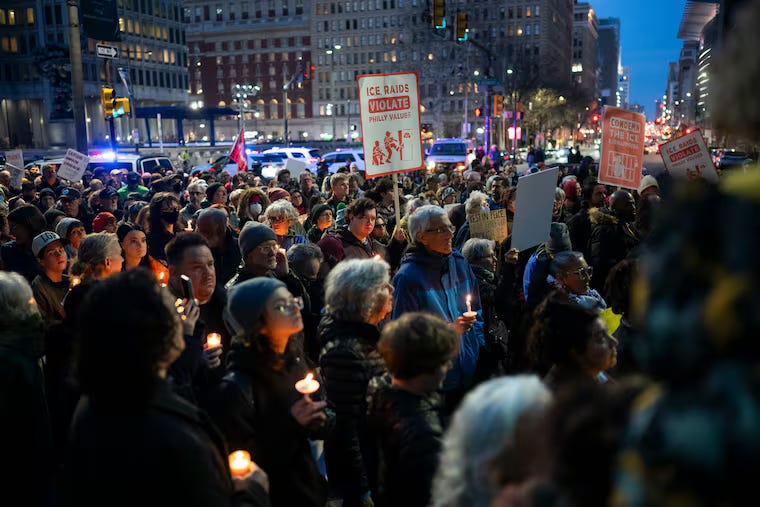
The citizens and civic leaders of Minnesota have won a battle in their recent standoff with federal agents in Minneapolis. After violence, death, and the use of force against nonviolent protesters, restraint—not fear—prevailed. But it was only that: a battle. The broader campaign continues.
Facilities are being planned across the country. Immigration raids have spread to new regions. There was no single, cinematic tipping point—no Tiananmen Square moment that clarified everything at once. Instead, there is the slower work of deciding what kind of country we intend to remain.
The Administration’s full-throated defense of the shooters—offered before facts were settled—made escalation seem inevitable. The expectation, perhaps, was that fear would do the rest, that people would stay home. History offered another option.
In a tradition that runs from the Freedom Riders to SNCC—quietly remembered this month whether or not it is officially celebrated—Minnesotans showed up. Not once, but repeatedly against masked agents. Unarmed. Unrelenting. They did not provoke. They did not retreat. They made it impossible to pretend nothing was happening.
This was more than symbolism. It revealed something practical and important: there is little public appetite for a violent crackdown on suspected immigrants, for roadside demands for papers, or for detention centers quietly erected and administratively explained. Power depends not only on force, but on consent—or at least acquiescence. When neither is freely given, authority begins to falter.
What matters now is not celebration, but clarity—about what this moment revealed, and what it demands beyond Minnesota. Democracies do not vanish all at once. They recede through routine—through ordinary people performing assigned roles without asking what those roles require of others. The most dangerous moment is not when violence occurs, but when it becomes administratively normal.
Each person who refuses to look away reduces the burden placed on those who already cannot. Each person who chooses visibility over comfort makes repression harder to sustain. The opposite is also true. Every absence transfers risk to someone else.
This is not a call to heroics. It is a reminder of responsibility. The work of preserving a democracy does not belong only to the brave or the targeted. It belongs to everyone who benefits from its protections.
Minnesota showed that restraint and presence still matter—that force does not always get the final word. Whether that lesson spreads depends on what the rest of us decide to do with it. History is unsparing on this point: recognizing misrule and treating it as someone else’s problem is itself a choice. And it is one history rarely forgives.