

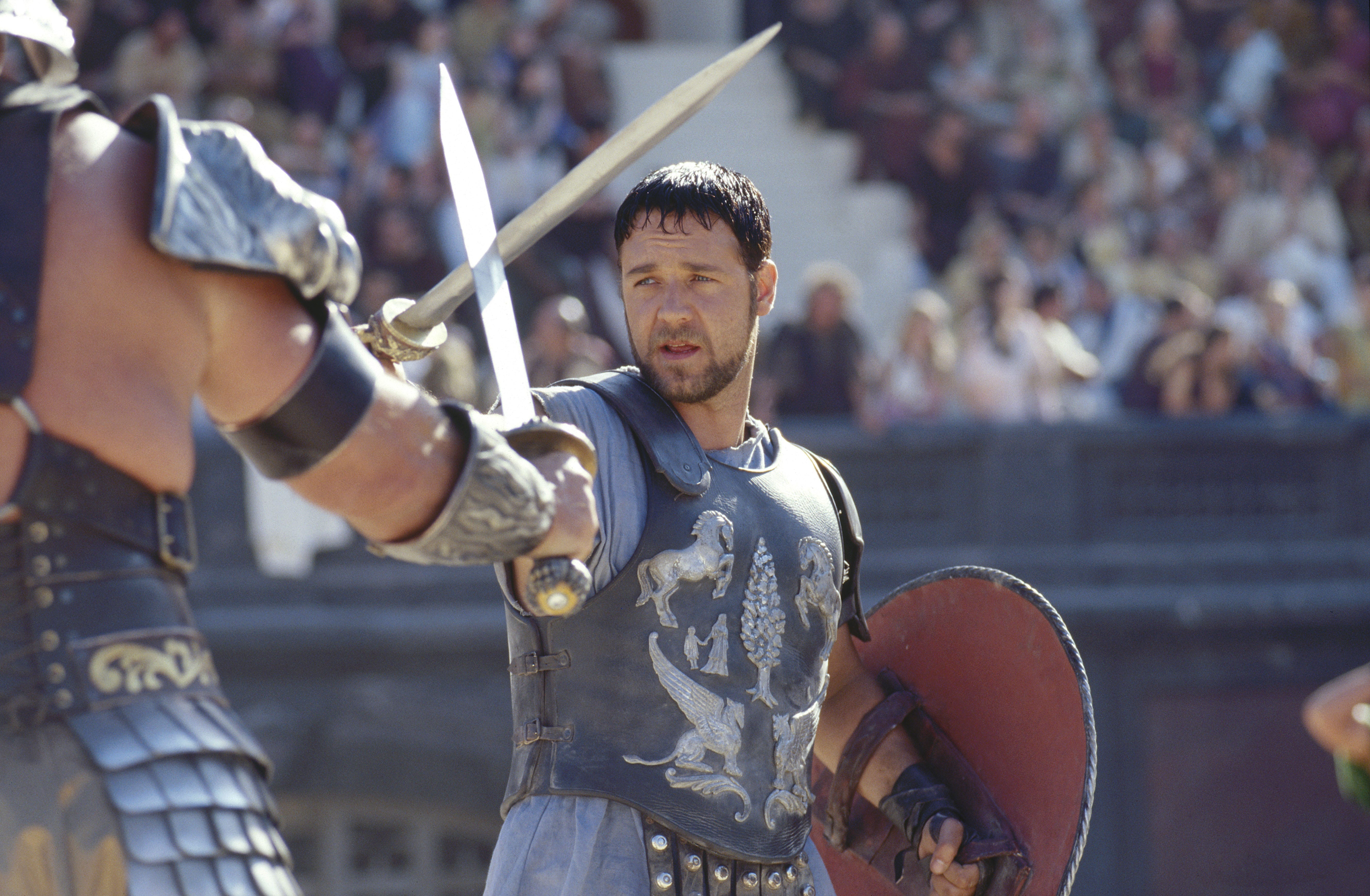
The premise of Gladiator has always struck me as curious. Russell Crowe’s Maximus fights his way to the top of the chariot-and-sword circuit, humiliating the emperor by winning contests that were supposed to be fixed, defeating the emperor’s men, and thrilling the Roman crowd. Why any of this should affect the governance of an empire is never adequately explained. But the film understands something essential: what happens in the arena matters, even when it shouldn’t.
We have our own versions of this. Recently, President Trump brought a UFC event to the White House grounds. I wasn’t there, but the videos looked faintly absurd—combat sports staged on one of the most symbolically austere lawns in the country. And yet I have no doubt that for the people present, the experience was intense, electric, and meaningful. At least for a few hours.
Europeans understand this instinctively. Football supporters will spend weeks talking about a derby, and on the day itself they must be separated before, during, and after the match. The opportunity to fight—symbolically, vocally, and sometimes literally—for your club on a public stage is deeply meaningful. Do I want to pick a fight with the random Chelsea supporter who lives in my building? Of course not. No one is watching anyway.
The arena has simply taken new forms. Social media has become one. Political rallies have become another. People increasingly perform their disagreements before an audience because the public stage transforms private conflict into something larger. The contest becomes a vessel for identity, belonging, and spectacle.
That may explain why arenas have endured for thousands of years. They give us a place to enact conflicts that might otherwise remain private, abstract, or unresolved. Better, perhaps, to settle rivalries in stadiums than on battlefields. Sport, politics, entertainment—even the endless arguments online—allow us to channel passions that have always been part of human nature.
None of this has to matter. We can choose not to watch, not to care, not to invest. And yet we do. Like sport itself, these contests acquire a significance far beyond their intrinsic stakes. They become symbols through which we express loyalty, rivalry, hope, and belonging.
Will any of it determine the fate of an empire, as in ancient Rome? I doubt it. But it is remarkable how much meaning we continue to pour into the arena—how deeply we feel the outcomes of contests that, rationally speaking, should have no bearing on our lives.
The arena endures because we insist on giving it power.