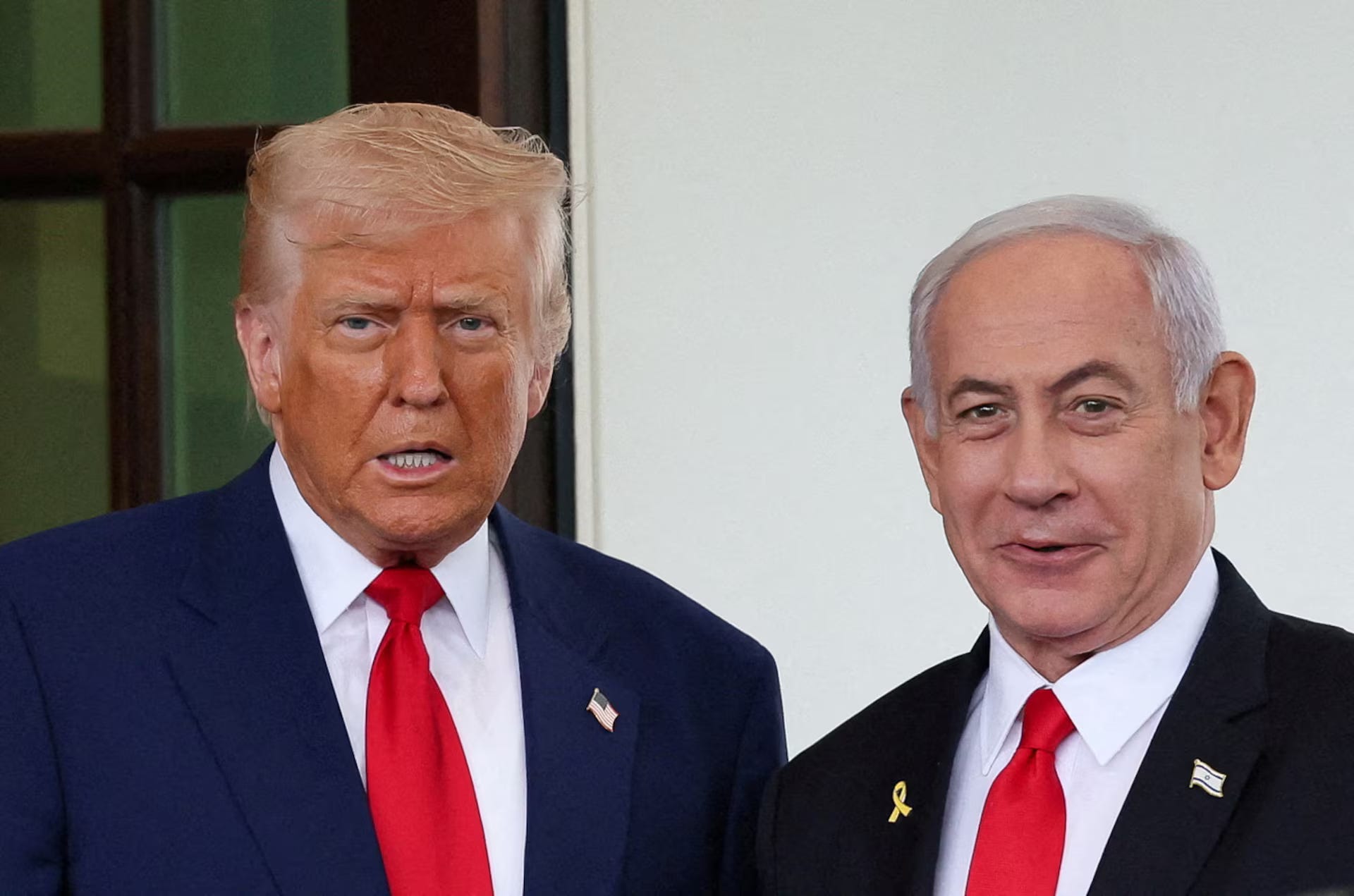
There is a striking contrast in posture between the Israeli government and the United States in their respective approaches to the war with Iran.
One might expect the opposite.
Israel, after all, operates within immediate geographic reach of its adversaries, in a region where escalation is not theoretical but lived. The stakes, at least in physical terms, are plainly higher. And yet its posture—particularly under Benjamin Netanyahu—has appeared steady, even settled. There is little public suggestion of hesitation, less still of reconsideration. The objective, once set, is pursued with a kind of consistency that suggests not merely resolve, but comfort with the conditions that follow. This is an observation about consistency of posture, not a judgment on the justice, proportionality, or human cost of the policies pursued.
The American posture has been different.
There is, at times, a visible oscillation—between the language of imminent resolution and that of sweeping escalation. One day suggests closure, the next something closer to rupture. Public threats, abrupt reversals, and impulsive messages issued in real time have often been treated as familiar features of the Trump style. Familiarity, however, should not be mistaken for harmlessness. In matters of war, erratic signals carry risks of their own. Unpredictability may unsettle adversaries; it can also confuse allies and invite error.
It is not necessarily incoherence; it may reflect competing impulses within a large and plural system. But to observers, it can register less as strategy than as variability.
It is tempting to attribute this difference to leadership style alone. Netanyahu is a known quantity—a nationalist, disciplined in his framing, comfortable operating within a security-first paradigm. Donald Trump is more difficult to categorize: transactional in instinct, rhetorical in approach, at times inclined toward maximalism, at others toward abrupt recalibration.
But temperament, while relevant, is not sufficient.
Leaders, after all, do not merely operate within systems—they shape them, particularly in moments of stress.
Structure matters, and it is never neutral. It reflects accumulated choices—of power, priority, and history—that shape what is possible long before decisions are made. Israel exists in a state of persistent security tension. Conflict, in some form, is not an interruption but a condition. As a result, both its political system and its economy have adapted accordingly. Risk is not eliminated; it is absorbed.
The economy reflects this adaptation. Israel’s growth is driven disproportionately by technology—software, cybersecurity, and increasingly artificial intelligence—sectors less dependent on physical continuity and less exposed to regional chokepoints such as the Strait of Hormuz. Inflation, while present, has remained comparatively contained. There is a sense, in market behavior, that these risks are not novel. They appear, at least partially, priced into expectations.
The United States operates differently.
Its economy is larger, more diffuse, and more deeply entangled with global flows of energy, capital, and sentiment. Events in the Middle East reverberate more broadly—through oil prices, through financial markets, through expectations of future policy. The system is not fragile, but it is more reactive. Signals travel further, and faster.
This difference in economic structure may help explain, at least in part, the divergence in tone. A system accustomed to volatility can afford a degree of steadiness; a system more exposed to global feedback may reflect that sensitivity in its rhetoric.
None of this, of course, resolves the more important question of outcome. Steadiness may project control; variability may reflect debate. But in matters of war, results—not posture—ultimately determine judgment.
There are, of course, other considerations. It is possible that sustained external focus serves domestic purposes. It is also possible that, in Israel’s case, the primacy of security is not merely strategic but existential—shaping not only policy but political culture itself.
But even here, caution is warranted. It is easy to over-interpret coherence, just as it is easy to mistake variability for weakness.
The deeper point may be simpler.
Nations, like individuals, tend to act in ways that reflect the environments they inhabit. Israel’s environment has produced a posture of continuity under pressure. The American environment—global, interconnected, and politically plural—produces something less linear, and at times less predictable.
Whether one approach proves more effective is an open question.
But the contrast itself is instructive.
It reminds us that what appears to be a difference in leadership is often something deeper: a difference in systems, in how risk is borne, and in how power learns to speak under pressure.