

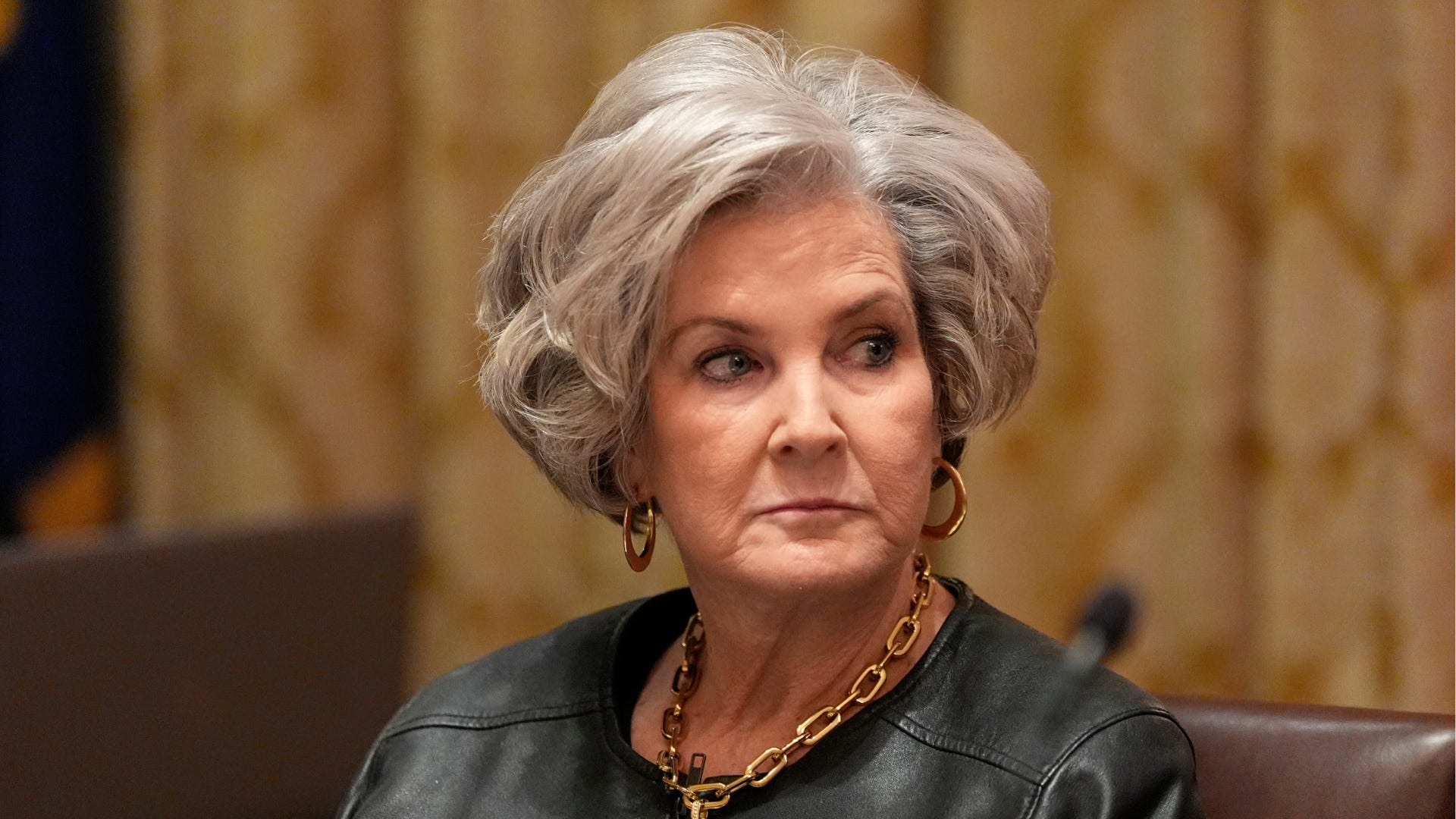
Progressive media has been in a mild frenzy over the revelations involving Susie Wiles, Trump’s chief of staff, following the release of the first installment of a two-part series by Chris Whipple, who shadowed her and spoke with her over an extended period. The excitement is understandable, if somewhat misplaced.
Certain statements attributed to Ms. Wiles were initially denied. When it became clear that the quotations were accurate, the defense shifted—not to refutation, but to clarification. The remarks were now said to be “disingenuous,” or worse, wrenched from context. This is a familiar maneuver, and a fairly deft one. The release of transcripts creates the impression of candor while revealing remarkably little that we did not already suspect.
What we learn, in essence, is that the administration may occasionally register discomfort with its own excesses—particularly when those excesses are small, technical, or safely procedural. The case against Letitia James, for example, may be political. This is treated as a revelation rather than a premise. The effect is to steer attention toward the lightest possible transgressions, while the heavier ones remain politely offstage.
Ms. Wiles is thus cast—by admirers and critics alike—as the lone adult in the room. As she gestures toward the surrounding chaos, she carefully identifies only a few objects that appear slightly out of place. The larger disorder is acknowledged, but never named.
Many of us have been waiting for the kind of internal dissent that defined Trump’s first term—the leaks, the warnings, the whispered alarms from within. But that interior has been hollowed out. What remains is a disciplined inner circle focused on a narrow agenda and a single message: everything is under control, and all is well.
Whether the country finds that reassuring may depend on how much it remembers about how these stories usually end.