

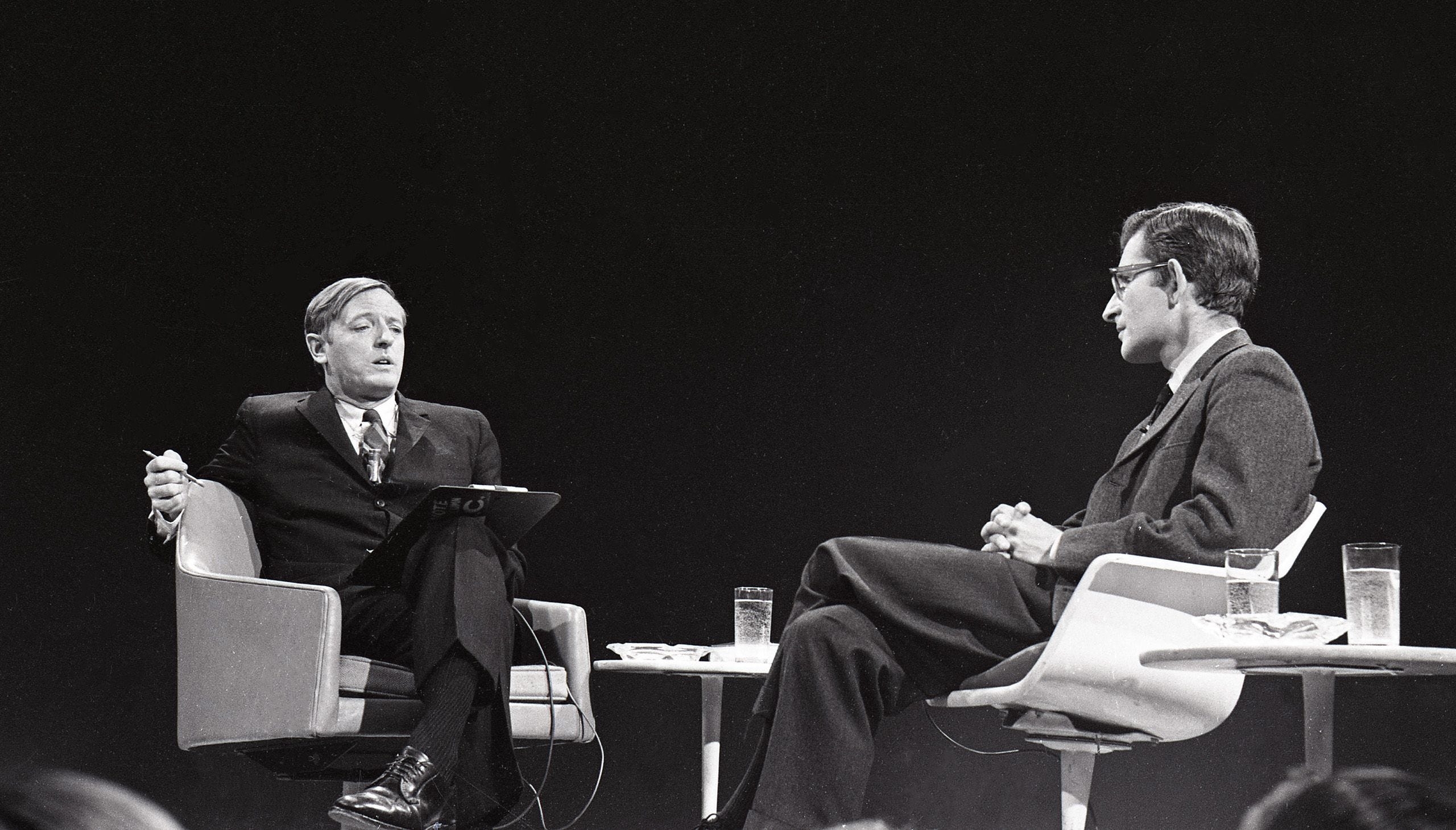
During their famous exchange on Firing Line, William F. Buckley once teased Noam Chomsky for suggesting that Americans should engage in ever more desperate acts to protest what Chomsky viewed as immoral uses of force abroad. Buckley’s point was not that protest was wrong, but that moral seriousness requires more than outrage—it requires judgment.
This weekend, a European leader finally said aloud what many have carefully avoided: that Americans who returned Donald Trump to office bear responsibility for what has followed. On social media, that idea is usually treated as impolite, even dangerous. We are encouraged to soften our language, to avoid blame, to explain away rather than confront.
And explanations abound.
Trump supporters, we are told, are misinformed by Fox News. They live in media deserts. Globalization stole their jobs. Cultural change moved too fast. Immigration is framed as chaos, crime, or invasion. Venezuela emptied its prisons. Mexico and Central America sent their worst.
These narratives are familiar—and not entirely false. Context matters. Propaganda works. Fear distorts judgment. Grace is essential in any moral society.
But grace is not the same as absolution.
In 1930s Germany, voters had explanations too. Many did not foresee extermination camps. But they knew people were being othered, disappeared, stripped of rights. Some voted enthusiastically. Many went along. Most told themselves they had little choice.
History did not excuse them for being misinformed. It judged them for what they tolerated.
That is the uncomfortable parallel—not equivalence, but moral structure.
We extend extraordinary patience in America, especially toward white men who continue to hold most of the nation’s power and resources. We bend over backward to explain their choices. We assume good faith long past the point where outcomes demand scrutiny.
Understanding matters. Compassion matters. But agency matters too.
At some point, a democracy must ask not only whether people were manipulated, but whether they were willing to see. Authoritarianism does not arrive alone; it is carried forward by those who excuse it, normalize it, or decide it is someone else’s problem.
The question is not whether blame is productive. The question is whether responsibility is optional.
History, unfortunately, has already answered that one.