

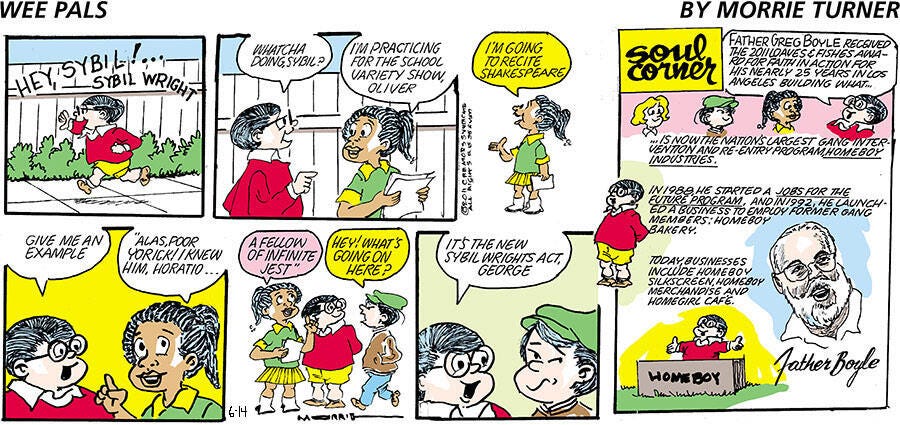
When I was ten years old, the bicentennial felt like the greatest celebration imaginable. I loved history, my father had fought in Vietnam, and patriotism came easily. The country was turning two hundred, and I was thrilled in the uncomplicated way only a child can be. I had a comic book—Wee Pals/Kid Power—with a hundred bicentennial strips, and I read it until the pages curled. When July 4th ended, I remember feeling genuinely disappointed. I knew I would never see another bicentennial. It did occur to me, though, that one day I might live long enough to see the 250th.
And here we are.
The feeling is more complicated now, for reasons I talk about every day in this column. Even without a lightning rod like Trump, a sixty-year-old views holidays differently than a ten-year-old. You think about logistics, traffic, and whether you remembered to buy charcoal. But with Trump, the complications multiply. There is very little in his leadership style that I admire. He blames, he divides, he plays favorites, and his policies do not align with mine. Perhaps his ability to play a poor hand well deserves a kind of grudging respect. Perhaps it does.
But he has turned the 250th into a political event. And even if he hadn’t, his name now appears on bureaus, passports, and old buildings. The holiday feels partisan before it even begins. Americans seem more unified about the World Cup than about the country’s birthday. That perception alone changes the atmosphere. Many Democrats will understandably feel awkward celebrating an event so closely identified with a president they oppose, and independents—who now outnumber both major parties—may wonder whether attending has become a political statement rather than a civic one. If performers won't come, why would anyone else?
I drove across town for work these last two days and saw the preparations for the celebration. I expected traffic to be impossible. Instead, I sailed through the city and arrived early to every meeting. People aren’t here. It was remarkable.
Even many Trump supporters may not come. His wealthier supporters have beach houses, lake cabins, or island plans. Everyone else faces a harder question in inflationary times: do you spend the money to stay in Washington, pay for gas, food, and lodging, all to attend an event that now feels like a political declaration? That is a significant sacrifice for a moment that is supposed to belong to the country, not to one man.
African Americans have always had a complicated relationship with July 4th. The day did not mark our freedom. But many of us still support the home team. And white women were not exactly free that day either. Perhaps supporting the holiday can be aspirational. The country is what we make of it—the people who vote, the leaders who govern, the citizens who insist on better. If we stop believing in any of it, how will it improve?
It is a hopeful thought. Not one that will send me downtown, but one that will make me cheer for the idea of the country, even if the celebration feels different than it once did.
The ten-year-old who read his bicentennial comic book until the pages curled imagined this anniversary as another great national celebration. Reality turned out to be more complicated than he knew. But perhaps he understood something I had forgotten. Loving a country has never required believing it is perfect. It requires believing that it is worth improving.
And maybe that is enough.