

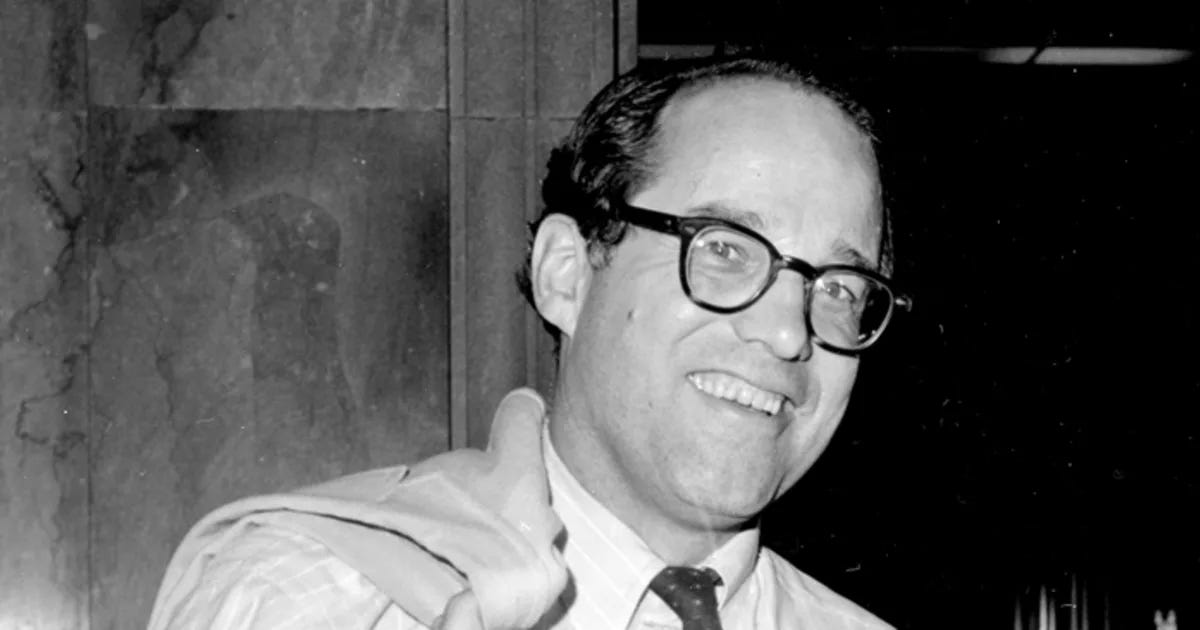
In one of the finer televised arguments of the last century, William F. Buckley Jr. sparred with fellow Yale divine William Sloane Coffin over the role of the church in politics and public life. Coffin believed the church must lend its voice to the moral crises of the age—segregation, civil rights, war, poverty. Buckley argued that the church should be wary of becoming a political instrument. Its central charge, as he saw it, was the interpretation of Christ’s life, the care of souls, and the preparation of man for eternity. Once the pulpit becomes another platform for temporal campaigns, something essential risks being lost.
In the age of Martin Luther King Jr., one is inclined to think Coffin had the stronger argument.
There are moments in history when silence becomes complicity, and when the pulpit, if it says nothing, forfeits its own claim to moral seriousness. King in America, Desmond Tutu in South Africa, and Dietrich Bonhoeffer in Germany each demonstrated that religious witness can serve as a necessary counterweight to political injustice. There are seasons when the church must speak plainly. There are times when injustice itself is the greater excess.
But Buckley’s caution was not without substance.
Organized religion has never spoken with one voice, nor always on the side one might hope. Authority marshaled for liberation can just as easily be marshaled for domination. The same scriptures that inspire humility can be conscripted into certainty. Religious language, when joined too eagerly to temporal power, can confer upon ordinary men a confidence they have not earned.
Buckley understood something further: politics has a way of absorbing every institution it touches. Causes that begin in conscience can end in faction. Clergy who enter public controversies as moral witnesses can, almost imperceptibly, become party auxiliaries. What begins as prophetic speech can harden into ideological habit. Institutions that speak for eternity are diminished when they begin campaigning for Tuesdays.
History has vindicated both warnings.
Contemporary examples are not difficult to find. In recent years, certain religious figures have acquired influence in political circles while advancing arguments that revive older hierarchies and certainties. Doug Wilson is one such example—his defenses of slavery, hostility to women’s suffrage, and Christian nationalist framework illustrate how theological authority can drift toward reactionary politics when joined too closely to power.
The concern is not merely the presence of such voices, but the dynamic they reveal: when political actors seek religious sanction, they often gravitate toward interpretations that affirm rather than challenge their aims.
This is why the argument between Buckley and Coffin remains enduring rather than historical.
Coffin reminds us that faith severed entirely from public life can become decorative—pious in language, absent in courage. Buckley reminds us that faith fused too tightly with politics can become something harsher: sanctified partisanship, in which the vocabulary of salvation is enlisted for the ambitions of the moment.
Both warnings deserve respect because both have repeatedly proved true.
The problem is not that religious people enter public debate. In a free society, they should. Nor is the problem that moral traditions seek to illuminate questions of war, justice, poverty, or human dignity. They inevitably will.
The problem arises when religious authority is treated as self-validating—when invocation replaces argument, and certainty substitutes for judgment. In unsettled times, that temptation grows stronger. Politics seeks legitimacy; religion can be tempted to lend it too cheaply.
Some traditions have developed internal disciplines against this tendency. The Catholic just war tradition, shaped by thinkers such as Augustine of Hippo and Thomas Aquinas, represents one attempt to restrain power rather than merely bless it.
Government, wisely, cannot regulate every sermon. Nor should it try. The liberty to preach freely is among the liberties worth preserving.
But citizens need not suspend discernment at the church door.
Religious leaders, like political ones, deserve a respectful hearing and sober judgment. They are capable of wisdom, courage, vanity, error, and ambition—sometimes in the same afternoon.
The church serves the republic best not when it seeks to rule it, nor when it retreats from it, but when it speaks with moral seriousness while remembering that it, too, stands under judgment.
On that point, Buckley, Coffin, and Bonhoeffer might perhaps share a glass in temporary accord—though not, one suspects, for very long.