

We are beginning to talk about high school football again on local social media. My own loves are basketball and soccer, but in America, high school football remains king. The new narrative this summer is that with so many transfers to private schools and sports academies, the public school competition will be weak. It’s a familiar worry, and once again it will prove wrong. We will have a great football season.
Public schools have always lost talent to private programs. O’Connell, Paul VI, Bishop Ireton, and the Washington Catholic powers have been attracting elite athletes for generations. Today the choices have expanded with sports academies, hybrid educational models, and increasingly online instruction. Parents and players have more options than ever, but the underlying dynamic is hardly new.
In the past, I would have advised against these paths. Public schools, and the traditional brick‑and‑mortar private schools, offer more than athletics. They offer culture, community, and the ordinary rhythms of adolescence. Seven hours in a building is not wasted time. It’s part of growing up. Homecoming, prom, senior superlatives, Beach Week—these are the small rituals that make an education memorable. Going all in on sports risks missing moments that can’t be replayed.
I used to believe that student‑athletes needed the normality of public school life, or at least the structure of a traditional private school. Most kids won’t build a future from sports beyond personal development, so it seemed wise to choose the school where the experience was broadest. But that advice doesn’t travel as well in this era of economic anxiety and serious money being offered, not as professionals but in college. And perhaps later as professionals. The stakes have changed, and parents who support those decisions aren’t being irrational. The incentives are real.
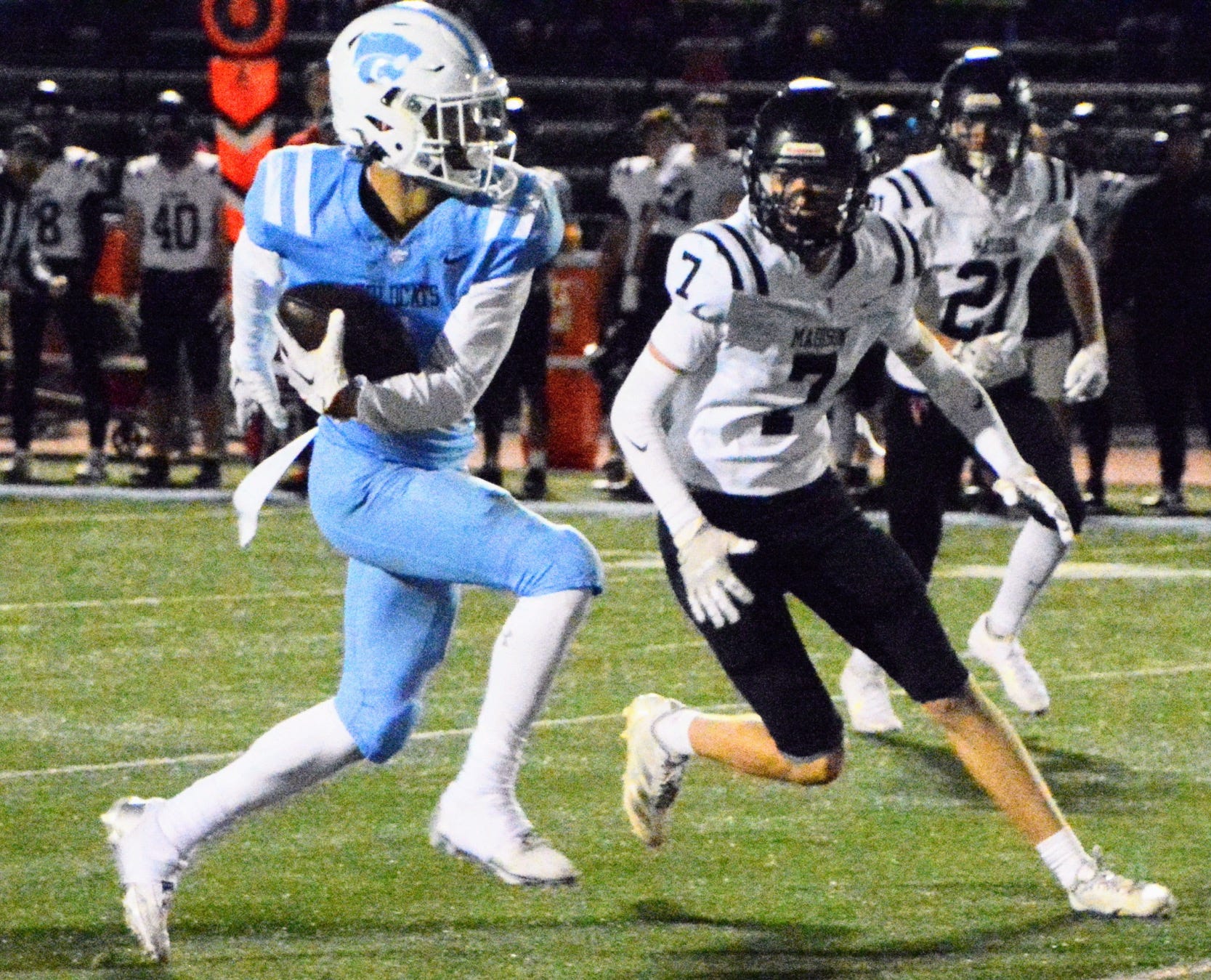
None of this means public‑school football will be diminished. A team may lose a player or two, but the rosters will be full and the stands will be packed in September. Madison vs. Lake Braddock will still be a battle between two excellent coaches and two proud programs. Last year Madison graduated virtually an entire defense, its quarterback, and its Division I running back. Most observers expected a rebuilding year. Instead, the Warhawks came within one possession of defeating powerful Oscar Smith in a state semi. Along the way they faced memorable opponents like Centreville, whose quarterback and receivers could trouble anyone.
Yes, the private schools and academies will have great players. They always do. But Loudoun County vs. Loudoun Valley will still be an event. No one will want to miss Langley vs. Yorktown. Will the quality be high? By the end of the season, it will be. And the journey to get there will be as compelling as ever.
The more interesting question is why predictions of decline return every few years. Every generation becomes convinced that something has fundamentally changed—that transfers, club sports, academies, specialization, or now NIL will finally drain the life from Friday nights. Yet every autumn the same thing happens. The lights come on. The marching bands play. Parents, students, supporters fill the stands. Communities rediscover why the games mattered in the first place.
High school football isn’t fragile. It’s resilient because it belongs to communities, not institutions. It has never depended on keeping every great player. It has depended on giving people something worth gathering around. The players may move, but the games remain, and the games still matter.