

George Washington did something rarer than victory.
He led a rebellion against one of the world’s great powers, endured years of deprivation that would have tested any man—let alone one of his social standing—and emerged not only triumphant, but indispensable. He was then called to preside over the new republic.
And then, one day, he went home to Mount Vernon.
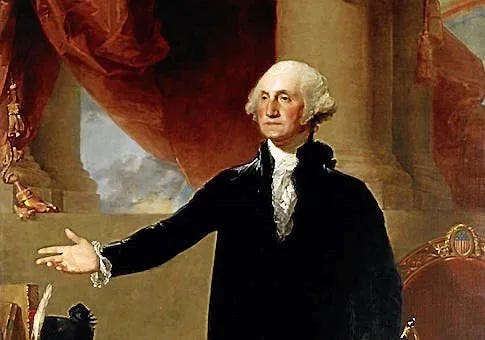
He surrendered power he could have kept, authority he had earned, and influence that no one could have denied him. In doing so, he established something more durable than conquest: a precedent that power, in a republic, is held in trust—not possessed.
Nearly two centuries later, the United States found itself in a similar position, though on a far larger stage.
In 1945, America emerged as the dominant power in the world, having helped defeat Nazi Germany and Imperial Japan. It had demonstrated unmatched force at Hiroshima and Nagasaki. And yet, rather than consolidate that dominance unilaterally, it chose a different path.
It helped create the United Nations.
It rebuilt Europe through the Marshall Plan.
It embedded its strength within institutions that extended stability beyond itself.
Power did not disappear. But it was exercised in a way that made others stronger—and, in doing so, made the system itself more secure.
That was not weakness. It was strategy.
Over time, however, a different instinct has taken hold.
To some, strength has come to mean assertion rather than restraint. Deference to institutions is dismissed as hesitation. Cooperation is recast as concession. Power is measured not by whether it stabilizes a system, but by whether it dominates a moment.
But power that must always be demonstrated is power that is not fully trusted—even by those who wield it.
We see the consequences most clearly in places like Iran.
Military strength remains overwhelming. But influence is more complicated. Asymmetric actors do not respond to power in predictable ways, and actions meant to display control can instead invite entanglement and dependency. The strongest nation in the world can find itself seeking assistance—European naval support, regional cooperation, shared burden.
And when that moment arrives, the question is no longer what power we possess, but how much of it others are willing to reinforce.
That is where recent choices matter.
Alliances, once assumed, require maintenance. Credibility, once established, can be weakened. Soft power—the accumulated trust that others will act with you, not merely observe you—cannot be summoned instantly when needed.
Europe may hesitate.
Regional partners may recalculate.
Not out of hostility, but out of uncertainty about the direction of American power.
This is not a failure of strength. It is a test of how strength has been used.
Washington understood something that remains true, even in a world he could not have imagined: power is most effective when it is bounded, shared, and disciplined.
To lead is not simply to decide.
It is to create conditions under which others choose to follow.
The United States still possesses extraordinary capacity. That is not in question. What remains uncertain is whether it will continue to exercise that power in a way that sustains the system it helped build—or gradually revert to one in which power must be asserted because it is no longer trusted.
Restraint is not the absence of strength.
It is the form of strength that endures.