

There is something quietly reassuring about the first soccer match of the spring. March in Northern Virginia rarely cooperates—39 degrees, a steady chill—but after the rhythm and finality of basketball season, the return to the pitch feels less like a beginning than a reopening.
Westfield, a program that has built a strong case as one of the best in the state over the past two years, hosted Annandale on opening night. The Bulldogs have been close—very close. A single regular-season loss last year, followed by a penalty shootout exit to eventual champion Herndon. The year before, another shootout defeat, this time to McLean in a regional semifinal that still lingers in memory. The margins have been thin, but the standard has been high.
Early on, Westfield looked every bit the part.
The midfield, anchored by Reyes Torres and Joel Geraban, controlled the tempo with quiet authority, recycling possession and probing for openings. Ahead of them, juniors Ethan O’Connor and Yannis Cardoza offered the kind of attacking threat that makes pressure feel inevitable rather than forced. It had the shape of a match in which the first goal would come through accumulation.
Annandale, though, resisted in a way that was both risky and revealing.
They insisted on building from the back, even under sustained pressure—a choice that invites danger but also signals belief. Against a side like Westfield, where pressing moments can quickly turn into chances, that approach can unravel. But it can also, if executed with discipline, establish a rhythm of its own. Annandale did not abandon it, and over time, that decision began to matter.
Still, the first half belonged largely to Westfield—except on the scoreboard.
Goalkeeper Jose Vera Puna was central to that. His saves were not always spectacular in their mechanics, but they were consistent in their effect. Positionally sound and calm under pressure, he dealt with what came his way without inviting second chances. One effort, pushed just over the bar, stood out. The rest were a reminder that reliability, at this level, is often more valuable than flair.
And as so often happens in soccer, dominance without conversion invites consequence.
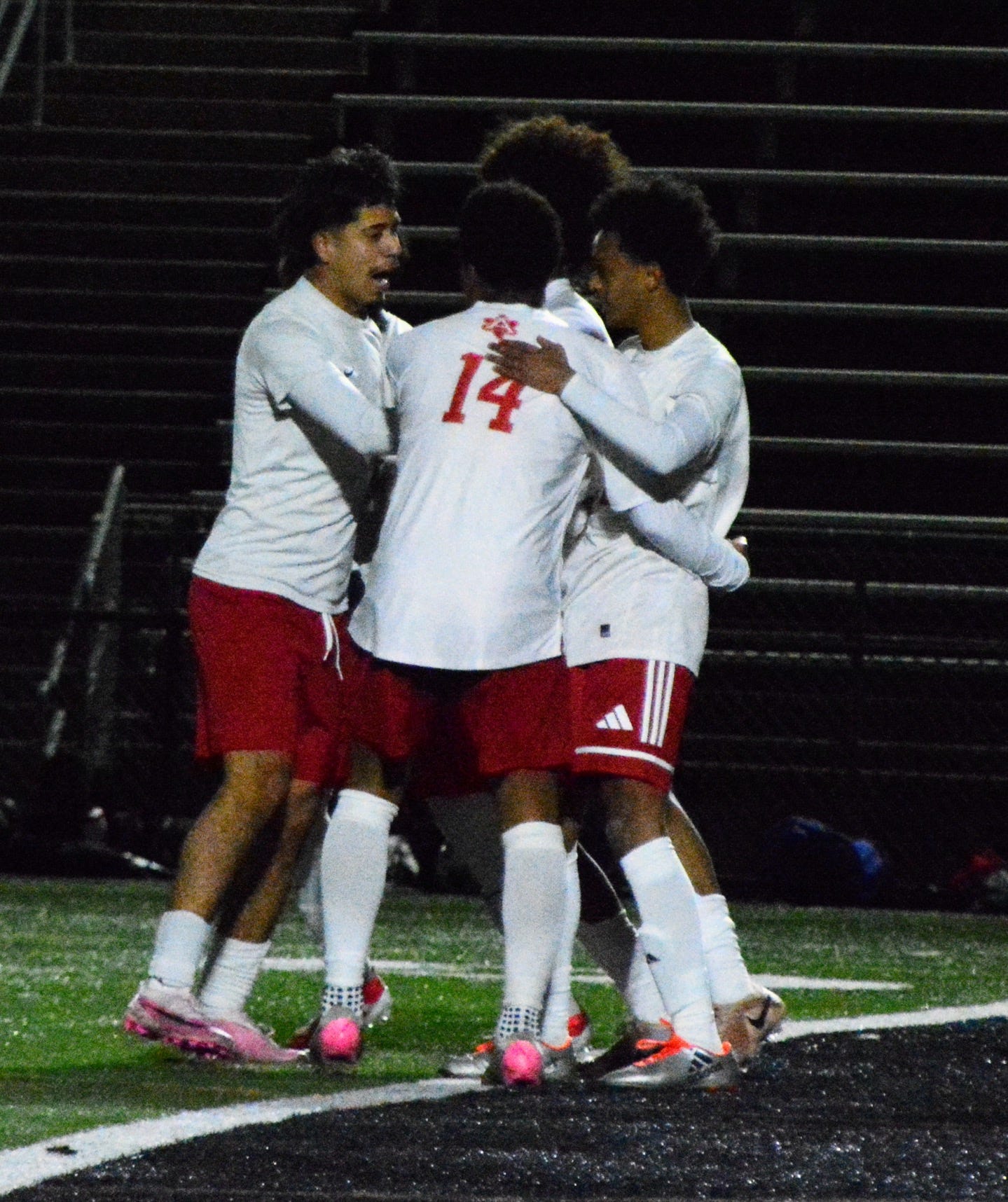
Annandale took the lead from a set piece—delivered with intent, finished with awareness as Habib Yasin reacted quickest to a loose ball in the area. It was not a goal that reflected territorial control, but it reflected something else: attentiveness, and readiness when the moment arrived.
The match shifted subtly after that.
Annandale grew more comfortable, even as injuries forced adjustments. Their possession became more assured, their defensive shape more settled. And when the second opportunity came, it arrived not through buildup but through transition. Yaw Boateng finished a sharp counterattack to make it 2–0 with fifteen minutes remaining—a goal that changed not just the scoreline but the tone.
Westfield responded as strong teams do—with urgency.
A set piece pulled one back, and the final minutes were played almost entirely in Annandale’s half. Crosses, second balls, half-chances—the kind of sustained pressure that feels inevitable when it is happening and incomplete when it ends. Vera Puna remained composed. The defense, undersized but organized, held its line. And in a final moment that might have sealed the night entirely, Annandale struck the crossbar on a late break.
The result, in the end, was not just about execution, but about contrast.
One team controlled much of the game. The other controlled the moments that mattered.
I watched the match alongside Steve Tunley, whose son Andrew captained Herndon’s state championship side last season. Like many of us, he had come not just for the game itself, but for what the game represents—the continuity of it, the familiarity. Around us, younger players pointed out names, connections, possibilities. Seasons pass, players move on, but the structure remains.
It took hours to warm up afterward.
But there is a particular satisfaction in that first cold night of soccer, when the season is still undefined, and every match feels like it might be the beginning of something.