

There is, at present, a degree of confusion about the administration’s posture toward the Pope and the Vatican.
Recent statements from Donald Trump have been erratic and pointed—at times openly hostile of the Pope’s remarks on the conflict with Iran and on domestic policies involving federal enforcement. Others in the administration and in Congress have echoed that tone across interviews and social media. In some corners, the rhetoric has gone further still, into language that sits uneasily alongside the subject itself—less a matter of disagreement than of how that disagreement is expressed.
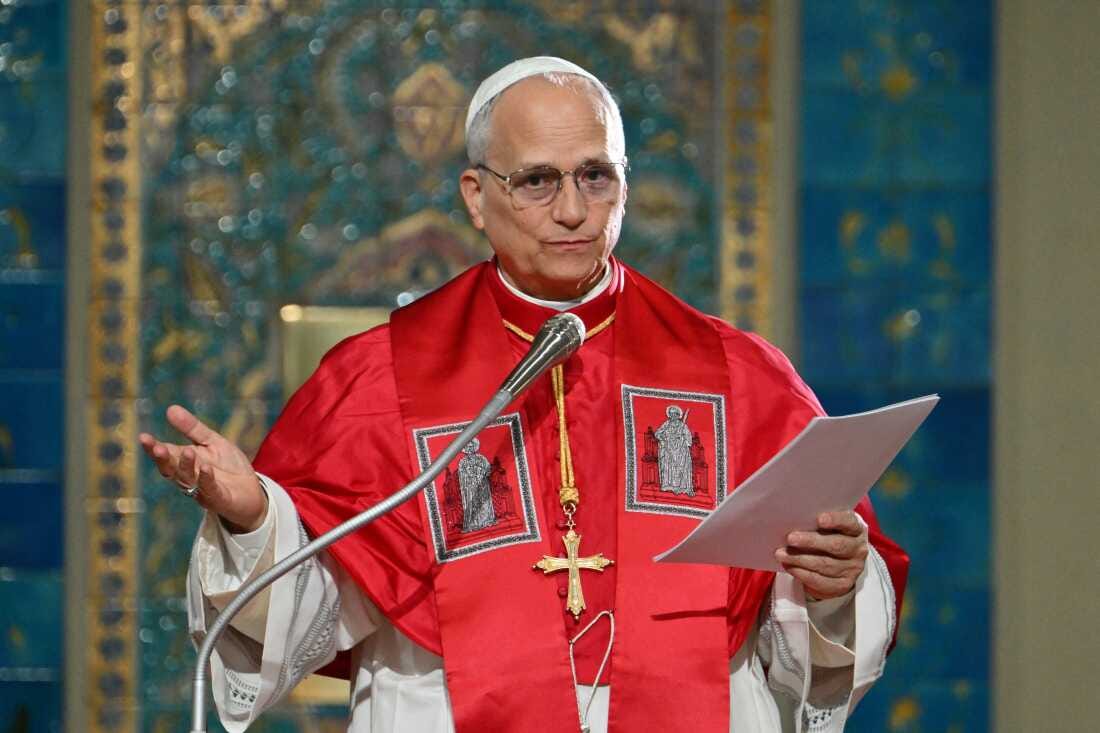
For much of the postwar period, such tension would have felt unfamiliar. While political disagreements with the Vatican were not uncommon, they were typically framed with a measure of distance—an acknowledgment, implicit if not explicit, of the institution’s unique standing. Recently, however, that distance appears to have narrowed, as political alignment and domestic considerations increasingly shape not only the substance of disagreement, but its tone.
I was born just five years after the inauguration of John F. Kennedy, the first Catholic president, and for most of my life Catholicism registered simply as another denomination within Christianity. I came to understand it a bit more closely when I married into a Catholic family, but the older tensions—the Ku Klux Klan’s hostility toward Catholics, the anti-immigrant suspicion directed at Irish and Italian communities—felt distant, almost historical abstractions.
I was taught that America had once been understood as a Protestant nation, but those distinctions seemed to belong to another era. The most notable interruption of Catholic life in my own childhood, apart from a pre-Cana course years later, was when an NFL broadcast was preempted for the installation of a new pope.
On its face, this is a familiar dynamic. The Pope, particularly one who is American, occupies a position that is both spiritual and public. When he speaks on matters of war or policy, he enters a domain where disagreement is not only possible but expected. Governments respond. That, in itself, is not remarkable.
The Vatican, however, is not simply another political actor. It operates with a degree of independence unusual among global institutions—its authority rooted not in territory or military power, but in moral and religious standing. That does not place it beyond criticism. But it does suggest that the manner of that criticism matters.
Some will look for deeper explanations: an internal tension between Catholic and non-Catholic influences within the administration, or a broader religious framing of the conflict with Iran. Figures such as Pete Hegseth have, at times, employed religious language in describing that conflict, which invites such interpretations. These questions, however, quickly move into terrain that is difficult to assess with confidence.
What is clearer is the risk of escalation—not in military terms, but in rhetoric.
Religious figures, like political leaders, should be open to disagreement. But when political leaders elevate those disagreements—making them sharper, more personal, or more symbolic than necessary—they do more than rebut them. They enlarge them. They amplify the very voices they seek to diminish, extending the reach not only of the Pope, but of the Vatican itself.
It is possible—and preferable—to engage seriously with what is said without inflating the stakes of who is saying it.
The Vatican will continue to speak as it has for centuries, sometimes in alignment with governments, sometimes in tension with them. The United States, for its part, benefits from responding in a manner that reflects not only its power, but its judgment.
Because in matters that touch both politics and belief, tone is not incidental.